In Part I of this series, a call to action was made for clinicians to swap out prescribing metered dose inhalers (MDIs) for dry powdered inhalers (DPIs), decommission the use of nitrous oxide (N20) gas, and reduce the overall use of anesthetic gases such as desflurane in order to reduce the overall impact of pharmaceuticals on the climate. MDIs and anesthetic gases are not the only impact on climate produced by the pharmaceutical industry. The production and waste of pharmaceuticals is another area that can be targeted.
Studies involving chemotherapy medication have found that extending dosing intervals of pembrolizumab from 4 weeks to 6 weeks resulted in reduction in greenhouse gas emissions by reducing waste from compounding, emissions from patient transport, and waste from drug production. Disposal of medication waste through flushing or use of household trash have also been shown to have significant impacts on fish and other wildlife (including mortality, behavioral changes, reproductive impacts, and physiologic effects), however, there is a lack of studies evaluating long-term effects of pharmaceutical products on wildlife. Antibiotics, nonsteroidal anti-inflammatories (NSAIDs), and endocrine medications have also been shown to negatively affect wildlife. In the US, the Food and Drug Administration (FDA) recommends disposing of prescription or over-the-counter medications through drug take-back programs, via DEA-authorized collectors or through prepared drug mail-back envelopes.

Photo From: iBanPlastic
Production of intravenous medication utilizes more energy than manufacturing of oral formulations. A study conducted by the UK’s National Health Service found that intravenous ciprofloxacin production had an impact 60 times more than that of the production of the tablet. Another study found that 1 gram of intravenous acetaminophen produced was equivalent to 310g CO2e (in a plastic vial) or 628g CO2e (in a glass vial) versus 38g CO2e to produce a tablet of acetaminophen. Greenhouse gas emissions from production of pharmaceuticals come from energy to run manufacturing facilities, materials purchased to produce medications, delivery of supplies for production as well as the medication itself, disposal of packaging by healthcare workers, and disposal of unused product. The energy needed for production is the greatest contributor to the carbon footprint, one reason being that many products are produced in China or India, which rely on coal. Thirty-five biotech and pharmaceutical companies have, however, committed to the “Race to Zero” effort and exploring other options for medication production. Some specific examples of drug company initiatives include Novartis’ goal to be fully carbon neutral by 2030, AstraZeneca’s “ambition zero carbon” program, Merck’s “low carbon transition playbook”, and Pfizer’s net-zero by 2040 standard.
There is an overall lack of information available regarding the total carbon footprint of any given medication. This, along with hospitals having limited flexibility in buying options, makes it difficult for hospitals to make environmentally conscious buying decisions. Hospitals purchase medications largely through Group Purchasing Organizations (GPOs) that represent multiple facilities allowing them to negotiate the best price, which isn’t always the most environmentally conscious choice. Intravenous medications are often produced in single-use containers with more medication per container than a standard dose. That extra product gets disposed of, creating unnecessary waste versus if more products were produced (or purchased) in standard dose sizes. For example, a study in England showed a reduction from 585 syringes per year to 93 per year through purchasing prefilled syringes of standard doses of a medication.
The carbon footprint of IV medication also includes the equipment needed to administer (e.g., IV catheters, tubing, syringes, alcohol swabs, gloves, dressings, etc.). Often, an additional substance is also needed for mixing or diluting and these all may then be placed into a single use plastic IV bag. Focusing on use and prescribing of oral over IV medication can help reduce the environmental impact. A study from France showed a reduction of CO2e from 556g to 8.36g and reduction of waste water from 12.2 L to 1.16 L when oral acetaminophen or ketorolac was used instead of IV.
Antimicrobials are another group of medications where use of oral instead of IV medications have been shown to have a positive impact. The Vancouver Medical, Dental and Allied Staff Association found that IV formulations had 60-170 times the carbon footprint of the oral equivalent antimicrobial. They identified that 60% of patients receiving IV antimicrobials in their institution could have been safely given oral medication instead of the IV formulation, reducing the carbon footprint. Many institutions have developed protocols to help make the transition from IV to oral medications when clinically appropriate, and have been shown to be effective.
While prescribing oral instead of IV medication can reduce the environmental impact, focusing on overall deprescribing and evaluating the necessity of the prescription can also be impactful. A UK study identified that 10% of prescribed medications were unnecessary. A 5% reduction in medication use in a 200 bed hospital could lead to a reduction of 100 tons of greenhouse gas emissions (the equivalent of driving nearly 250,000 miles).
Expiration dating also contributes to significant waste. Expiration dates take into consideration stability and sterility but are not set at the maximal date proven to be safe and efficacious. Meaning, companies cannot guarantee safety and efficacy beyond the chosen date but only because they didn’t study it beyond that date, not because it was the date proven to be when the medication becomes ineffective or unsafe.
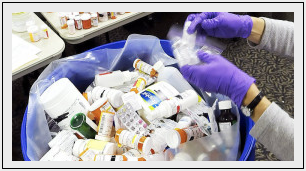
Photo from: Biowaste
Working with pharmacy stakeholders to partner with purchasing groups committed to reduction of climate impact is another step hospitals can take to reduce their overall carbon footprint. Additionally, pharmacy stakeholders can utilize resources such as Medicine Carbon Footprint (MCF) Formulary when making formulary decisions. Medshorts is another resource available that connects pharmacies and manufacturers and allows procurement of excess inventory to help reduce outdating and waste by manufacturers. CASCADES provides a resource toolbox for health systems and pharmacies to identify opportunities for medication sustainability optimization.
Global organizations like the International Pharmaceutical Federation, which signed the #HealthyClimate Prescription, and the International Association for Health Professions Education have urged high income countries to make greater contributions to reduction in greenhouse gases and all nations to make sustainable healthcare decisions. Healthcare without Harm is a collaboration of global healthcare providers committed to reducing the health care industry’s climate impact. My Green Doctor is a practice management resource for clinics and medical practices to help improve their carbon footprint while also saving money. In addition to partnering with these organizations, clinicians can begin to make impactful changes by prescribing oral medications over IV, when appropriate, and working with pharmacy partners to develop guidelines for automatic switches to oral from IV. They can also work with pharmacy partners to optimize the purchasing of climate friendly products with the assistance of resources like MCF and Medshorts. The impact of pharmaceuticals on healthcare’s carbon footprint is multifaceted and requires action from all healthcare team members to make environmentally conscious clinical decisions and systemic changes to lessen the overall impact on our climate.