Which is bluer, the sky or Phoksundo? Preparation for Phoksundo Lake trek began with the query going round my head right from childhood days, triggered by the images of Phoksundo Lake in my geography textbook. Since it is extremely far from Kathmandu, the first barrier to overcome was the cost of the trek. After managing it somehow, a team of three set off on this adventure.
The journey began with over 36 hours of bus travel, 10 torturous hours on poor-quality unpaved roads, leaving us with sores on our fatless buttocks. Our trek officially started from Suligadh (2,080m), the entrance point of Shey Phoksundo National Park, Nepal's largest national park. We trekked for two hours and passed through Kageni (2,272m) and reached Chhepka (2,670m) for an overnight stay. We departed early the next morning at 6 a.m. and arrived at Rigmo Village (3,660m) at about 3pm. The village, located just adjacent to Shey-Phoksundo lake, is a traditional settlement in Dolpa District with 65 houses and seasonal population of about 600. The residents, who are primarily of Tibetian origin, practice the Bonpo religion and engage in trade, yak herding, and tourism. Along with discovering whether the lake or the sky is bluer, my mission was to experience the lifestyle, climate, scenery, and hardships faced by the people living in this remote region.
The Lake
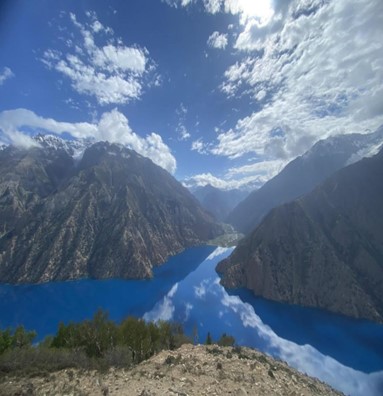
Y-shaped Phoksundo Lake does look bluer than the sky. (Shankar Poudel)
Phoksundo Lake, designated as Ramsar site in 2007, is located in Dolpa district of Nepal. It is the second deepest lake in Nepal, and at maximum depth reaching up to 145 meters. The lake is 5.93 kilometers long and 1.80 kilometers wide with a surface cover area of 4.95 square kilometers. Uniquely Y-shaped, Phoksundo is primarily fed by water of kanjirowa and Sagar Himalayas. Its turquoise-colored water shifts according to the changing sunlight and weather, turning it into a mesmerizing nature wonder. Locals there regard the lake as sacred, associating it with spiritual significance in Bonpo and Buddhist traditions.
The Houses

Typical houses seen in the region. (Shankar Poudel)
The houses we encountered on the trek were unique and well adapted for the harsh environment. Typically one or two stories, they were constructed of mud and stone with flat roofs made from wood, mud and sometimes stone slab. Their flat roofs act as insulation to the cold, protect from strong winds, and also used for drying crops such as barley and buckwheat. The homes are built for two reasons: the ground level is used for livestock and storage, and the second floor is where the living areas are. Despite being simple, the homes offer good resistance to the year round windy conditions and the heavy snow during winter.
The Life

Herd of donkeys helping to collect the goods. (Shankar Poudel)
For me, Dolpa is among the hardest of Nepal, if not the world. There are no road networks, transportation relies on donkeys and human porters requiring a number of days to reach key locations. Phoksundo Lake is a two-day walk from the closest road or airport, while Upper Dolpa is practically five walking days from Suligadh.
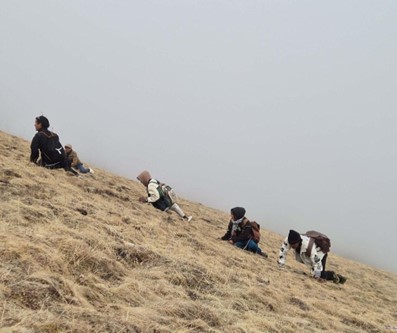
School kids searching for Yarsa. (Source: ronbpost.com)
Despite all of these challenges, the locals have adapted impressively. Potatoes are the staple crop here, grown widely to sustain the community. The local economy also benefits from the harvesting and selling of Yarsagumba, Cordyceps sinensis, an extremely valuable medicinal mushroom. Locals claim that each piece of Yarsagumba fetches around Rs. 500 to traders. Even schools in the region shut down during the harvesting time as children accompany their families to look for Yarsagumba, demonstrating how significant it is in their economy.
Conclusion
Phoksundo Lake, in its own striking turquoise color, is evidence of the fantastic nature artistry. Even though the trek to this isolated spot was tough, it was a reminder of this popular saying, "The best view comes after the hardest climb." Each step along Dolpa's rough trails and each pain from the trek was worth it for those stunning views and the chance to learn about the local culture.
The one question I've pondered since being a kid-whether the lake or sky is bluer was finally answered. The lake’s beauty is beyond words, its colors are alive, shifting with the light, and I can confidently say that Phoksundo is bluer than the sky. But this trip was more than just the lake's beauty. It was also about meeting the hardworking people of Dolpa and experiencing their hardships, struggle and strength in such a remote location.
This trek made me realize that even the toughest trips are the most rewarding ones. Phoksundo is not merely a lake. Phoksundo is beyond the lake, it's a powerful story of nature and people that remains with you forever. It's a lasting adventure that leaves a deep mark on everyone's heart.