The WMS was excited to head to Crested Butte, CO to host its 2025 Winter Conference. This year’s conference included 296 in-person and 188 virtual attendees from 15 different countries. Below we hear from the Student and Resident Ambassadors on their experiences at a WMS conference!
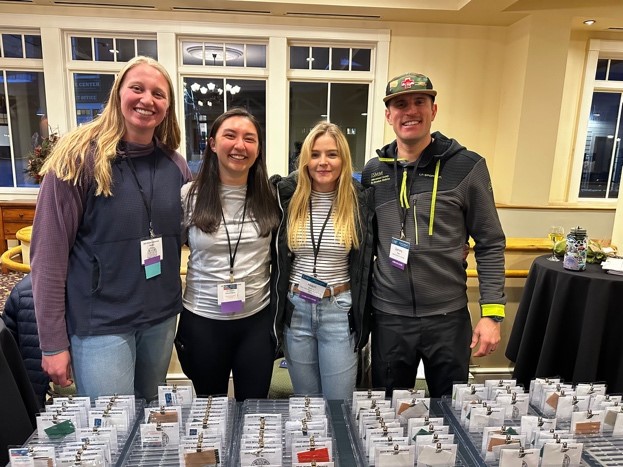
All four Resident Ambassadors reporting for duty at registration, awaiting the Conference Welcome Reception. (Abigail Davies)
After getting a few initial early downhill runs on world-class Rocky Mountain ski slopes, we started the first day at the Wilderness Life Support (WLS) course where we prepared to demonstrate practical skills in the form of wilderness scenarios in the frozen tundra of the Crested Butte back parking lot. Ambassadors lined up to play patients, bringing with them a variety of ailments and acting skills, while each group rotated through and provided top-notch simulated care. The first day gave way to evening and folks from around the world showed up to mingle, snack, and plan the next few days of lectures and outdoor activities. The conference was underway, and the energy levels were palpable, bruschetta and drinks in hand!
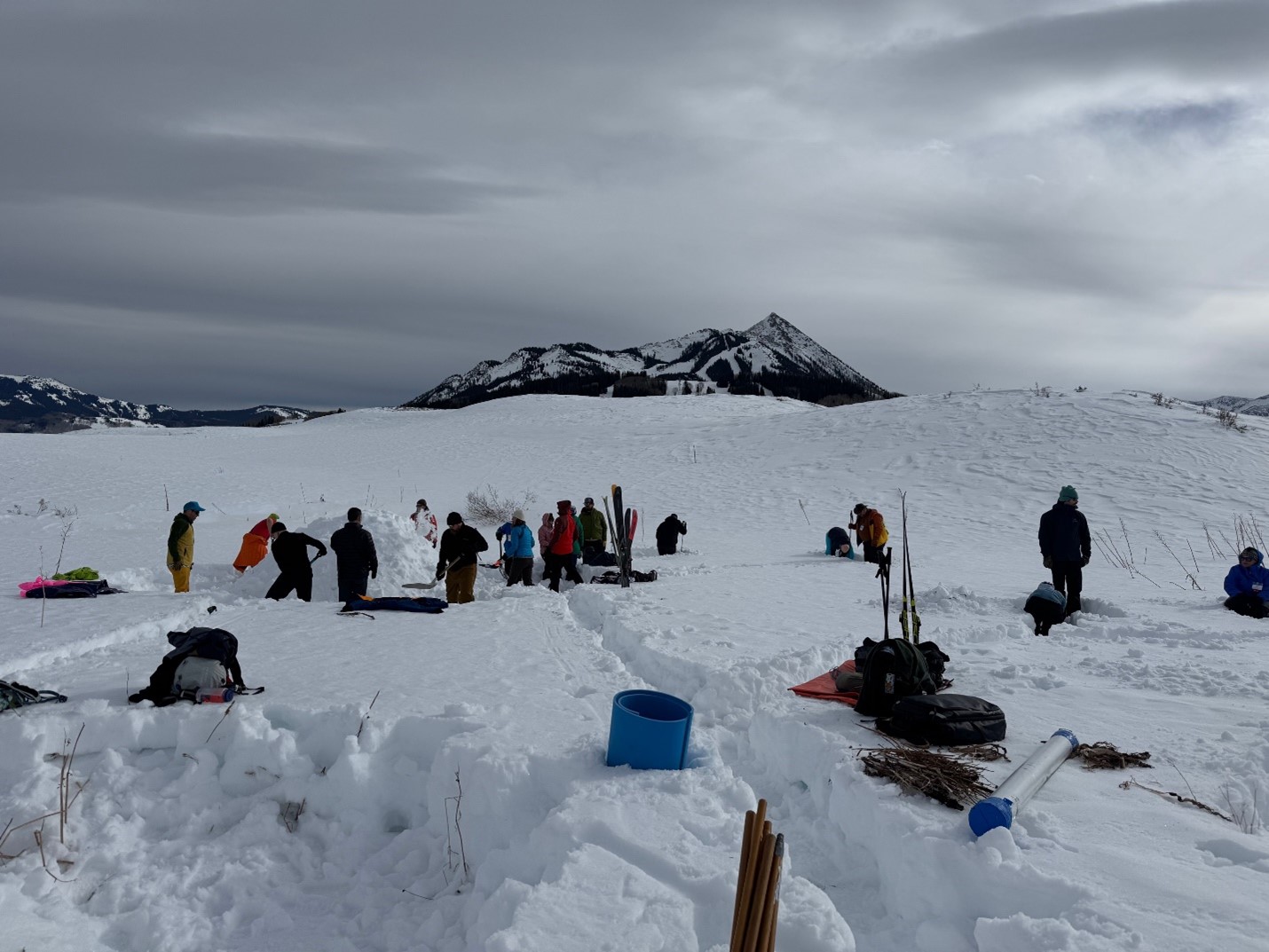
The Snow Shelter Workshop involved constructing quinzhees (pile of snow on the left) and snow trenches (holes under construction on the right). (Zachary Ryan)
Dr. Van Tilburg kicked things off with an amazing talk on the recently updated Avalanche Clinical Practice Guidelines, including a plethora of information from airbag safety to exciting research about transceiver interference from various items on skiers…even heated gloves! Additional intriguing talks continued throughout the day and some participants had opportunities to partake in workshops during the afternoon. Between lectures it was great to interact with the exhibitors and grab your free schwag including NasaClip and Zanfel samples, or to take a quick trip in the Gamow bag. Upon escaping the hyperbaric contraption and returning to atmospheric pressure at 9375’, you could catch a faint smell of the ocean as tropical Tuesday was on the horizon!
Day three of the conference was riddled with all things water and medicine (good and bad) and a very relevant lecture on how we can be better stewards of this world that we cherish so much. Later in the day, a stand-out was a session on constructing snow shelters for winter survival or recreation. Doctors Aaron Brillhart and Heikki Karinen led a trove of eager snow shovelers in the construction of quinzhees, snow trenches, and various other forms of snow shelters to ensure that the winter enthusiasts would be prepared for an unexpected winter campout, if necessary. This workshop not only built a couple of massive snow caves, but also new relationships and skills that would come in handy down the road, whether in an emergency or just for fun.
The conference wrapped up on Wednesday with more rewarding presentations and a lot of hugs, handshakes, and “goodbyes for now”. The great thing about this community is how work and recreation are so beautifully intertwined. Some folks stuck around to ski together while others caught flights or car rides back to their jobs or families to inevitably get outside with those they care about. This is one of the many things that makes the Wilderness Medical Society such a special and welcoming organization and one that I am excited and proud to be a part of.
-Zachary Ryan
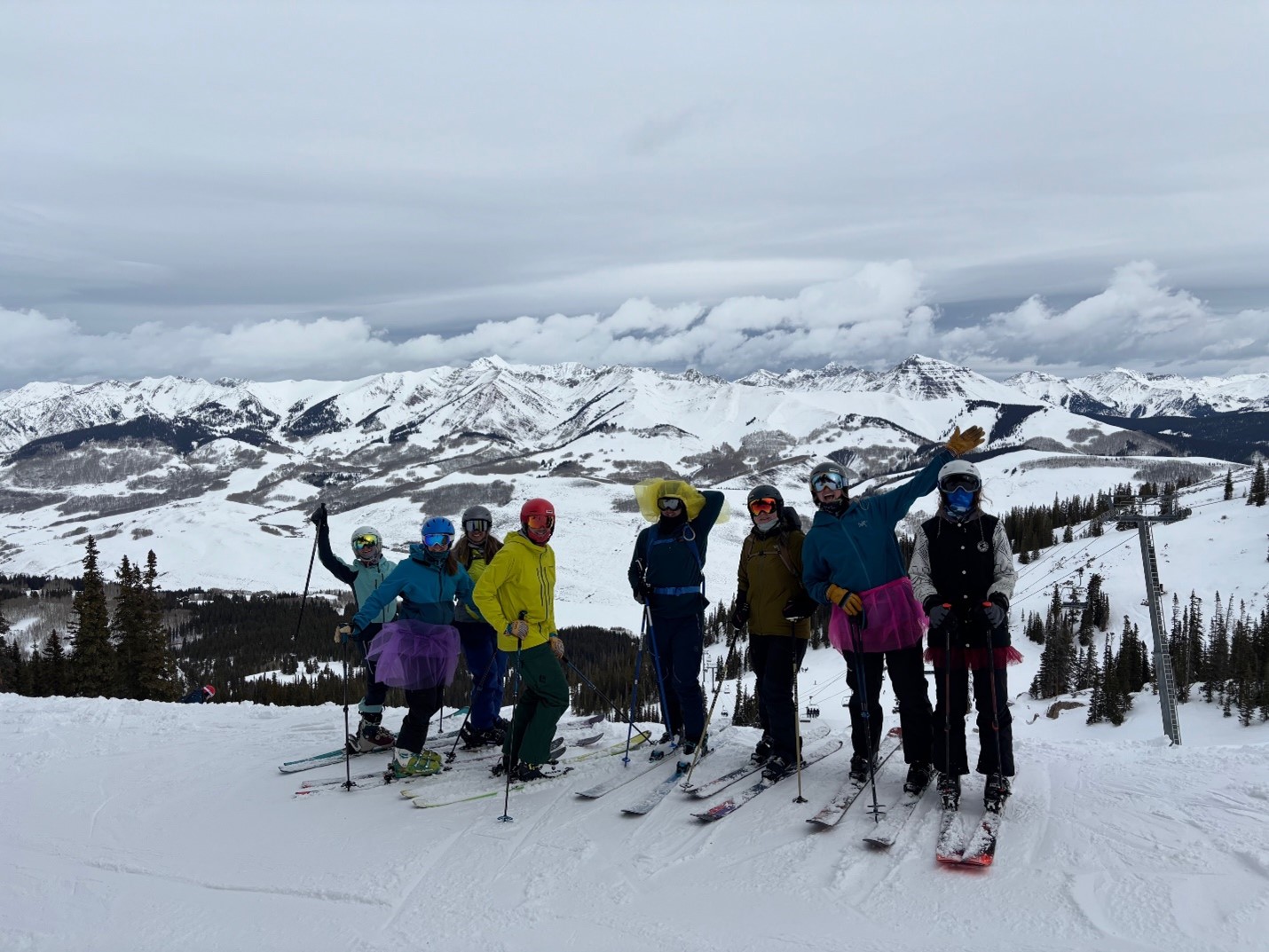
Conference attendees explore the mountain on “Too Too” Day, 2-2-25. (Zachary Ryan)
I’d never seen so much snow… Despite being on the tail end of a 48-hour journey from the tropical beaches of Mozambique via South Africa to the USA, I felt wide awake when we arrived in Crested Butte. Our last trip to Colorado had been to Snowmass in the summer and we would have been hard-pressed to believe that it could get any more beautiful. I felt filled with anticipation.
I was determined to get the full WMS experience and started the weekend with one of the pre-conference courses: Wilderness Life Support for Medical Practitioners. We have only just started offering this course in South Africa, so I was thrilled to be taught by Dr. Mike Caudell – it felt like I was learning straight from the source.
What really stood out was the diversity of people sharing the room: medical doctors of all disciplines ranging from emergency medicine to OBGYN and psychiatry, as well as nurses, paramedics and students. I love that we all see something valuable to be gained from wilderness medicine.
The WLS:MP days included a series of targeted lectures before breaking us up into small groups for some practical sessions. It was wonderfully interactive, and a great way to get to know new people in the field. After a full afternoon of role-play and simulations in the snow, I scooted up to join the other Student-Resident Ambassadors at registration. It was the first time we were all going to meet in person. Although only my second in-person meeting, I felt welcomed like an old friend by the WMS committee. Looking through the name badges of attendees, I was hardly able to hold back excitement at recognizing some wilderness medicine legends whose work I have admired from a distance but have never met in the flesh.
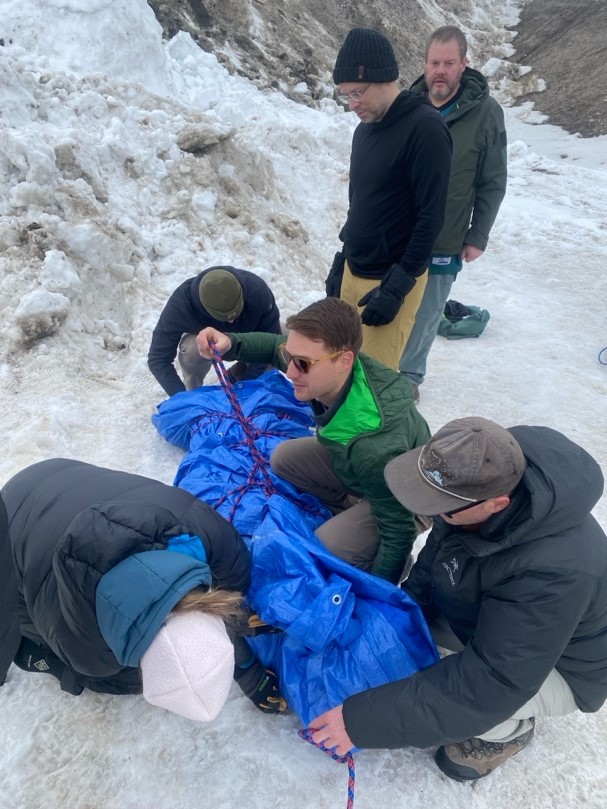
WLS participants demonstrating their new-found skills. Here they make a “daisy chain” to safely secure and carry out an injured patient. (Abigail Davies)
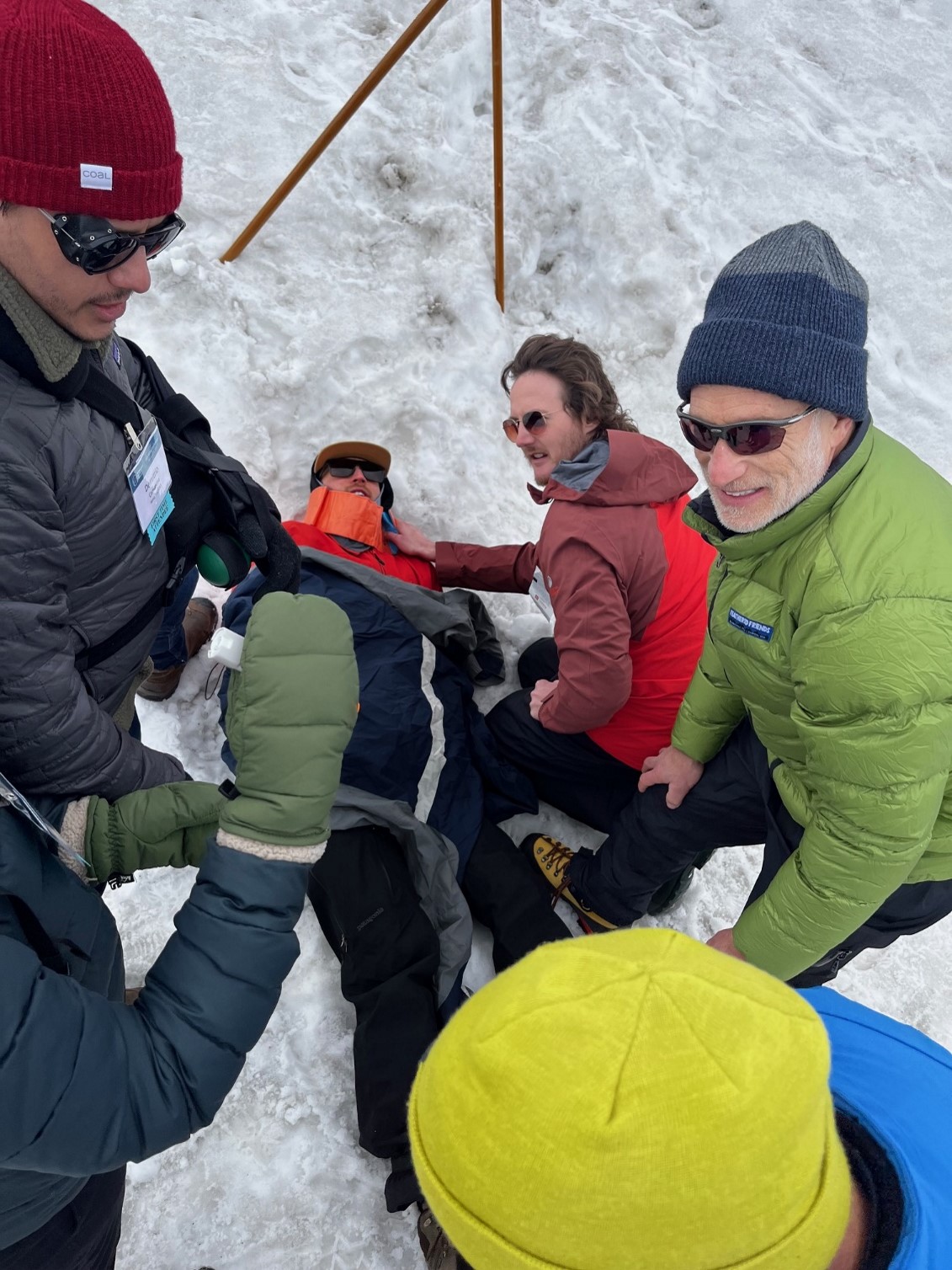
One of the groups in the Wilderness Life Support (WLS) course evaluates a simulated injured backcountry skier. (Zachary Ryan)
Our conference first lecture had us hit the ground running, with Dr. Chris van Tilburg presenting on the avalanche practice guidelines. This sort of content makes attending these conferences so worthwhile, particularly for those coming from regions who would otherwise never be exposed to this teaching and training.
What I really enjoyed about the morning lectures were the insights into the application of wilderness medicine into unique environments such as Antarctica and remote tropical islands, with special reference to the talks given by Dr. Craig Kutz and Dr. Brian Strickland respectively. Although I am comfortable with wilderness medicine principles, I think most of us would hesitate to lend ourselves to those environments. I valued the enlightenment into the specific considerations and challenges of working in remote locations. This year’s conference really felt centered around preparing the expedition leader for any environment, such as the small group session on wilderness medicine kits.
On Monday evening everyone regrouped for the GME mini-lectures. A big part of wilderness medicine is being able to creatively use the environment to work for you. This was exemplified by Dr. Sonja Eagle who encouraged us to go back to our roots (quite literally) with her talk on “Nature’s Medicine: Plants for wound care”. My other greatest take home message came from Dr. Michael DeCarolis and his talk on “It’s not always Lyme Disease”, I realized that if I was going to get bitten by a tick, it had better be in South Africa!
Tropical Tuesday more than lived up to expectations, with lectures leaving me grateful that stingrays envenomations aren’t common in our country. Perhaps our rays are friendlier, but from now on I will still only ever do the stingray shuffle when entering the surf.
The afternoon was dedicated to workshops. I was assigned to being the “patient” in the cold search and rescue scenario. Fortunately, being severely hypothermic isn’t theatrically demanding. Cold SAR was awesome because it taught us how to draw on our surroundings as resources. Whether using snow to build a shelter, or adding pine needles to create an insulating layer, you really feel like your environment can be transformed from a hindrance into a help.
Wednesday marked our final conference day and we were treated to three gripping talks. I was really taken aback by the international representation tackling the presentation on snakebites and would really like to see this continued in future events. As a woman working in wilderness medicine, the final talk by Dr. Kristin Hildebrandt really hit home. For those embarking on motherhood but also love the outdoors, pregnancy is no longer a barrier to travel. It felt good to know that both can be accomplished safely but that mitigating risk should always remain a priority.
And just like that, another successful Winter conference came to an end. (Fortunately, the skiing continued!)
-Abigail Davies
