It is July and that means Discovery Channel’s Shark Week!
Every year, millions of viewers tune in to shark television for images of great whites, tiger sharks, hammerheads, and other apex predators. They see the excitement, science, and occasional danger, but rarely the expedition physician and team just outside the camera frame, prepared for marine envenomations, traumatic injuries, tropical infections, dehydration, and complex medical evacuations from some of the world’s most remote environments.
For Dr. Benjamin Abo, emergency physician, paramedic, toxinologist, and wilderness medicine expert, that responsibility is not theoretical. It is his job to go out on that boat into remote waters. Sometimes on filming expeditions for weeks at a time.
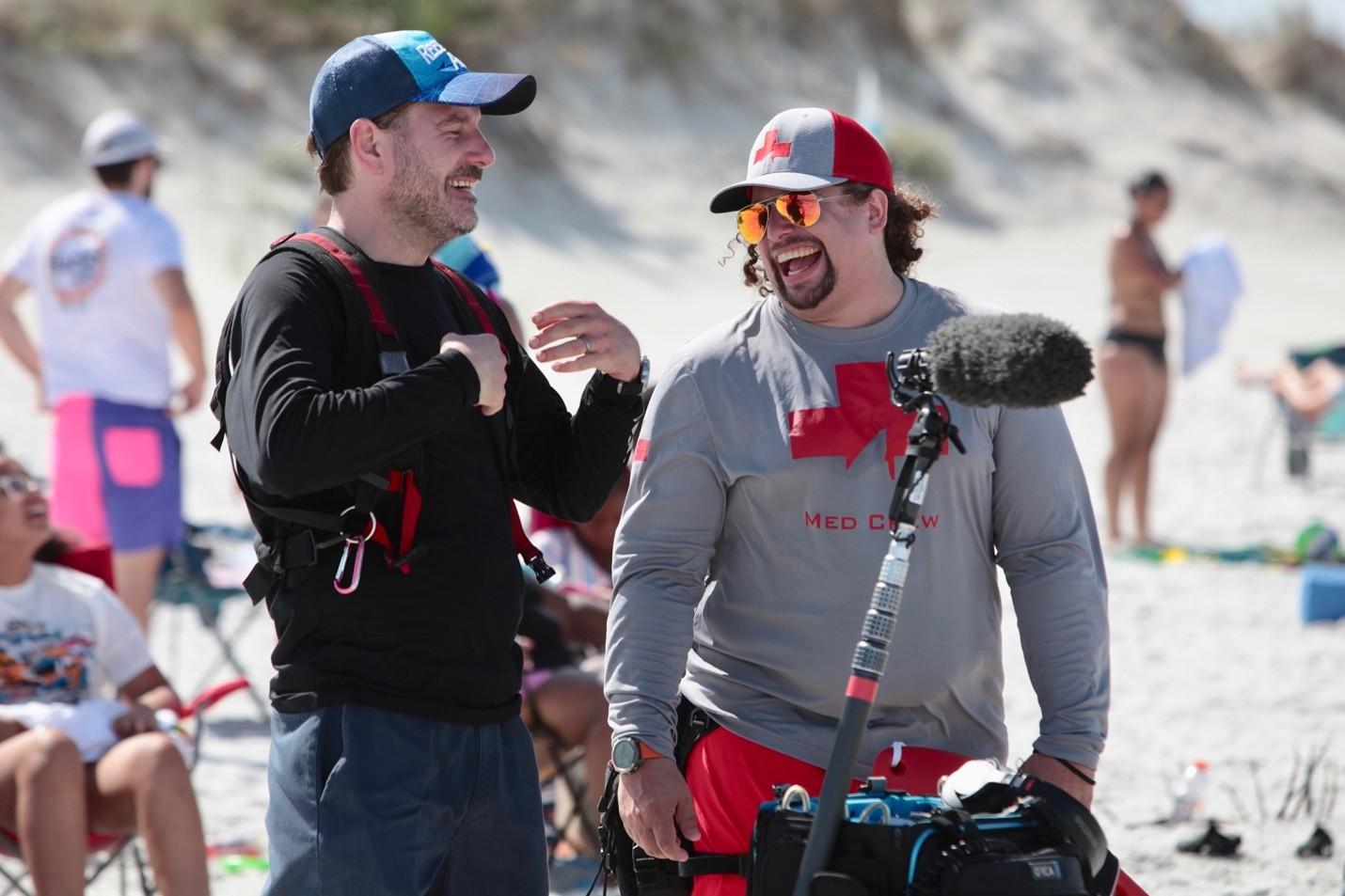
Dr. Ben Abo (right) working on set. (Photo courtesy of Dr. Ben Abo)
Dr. Abo serves as a medical consultant and physician for television and film productions including Discovery Channel’s Shark Week, National Geographic shark programming, Netflix, History Channel’s Kings of Pain, and other expedition-based projects around the globe. His role extends beyond emergency response to include risk assessment, mitigation, prevention, rescue planning, and medical support for crews in austere, isolated settings.
The work sits at the intersection of emergency and expedition medicine, marine rescue, operational leadership, and storytelling.
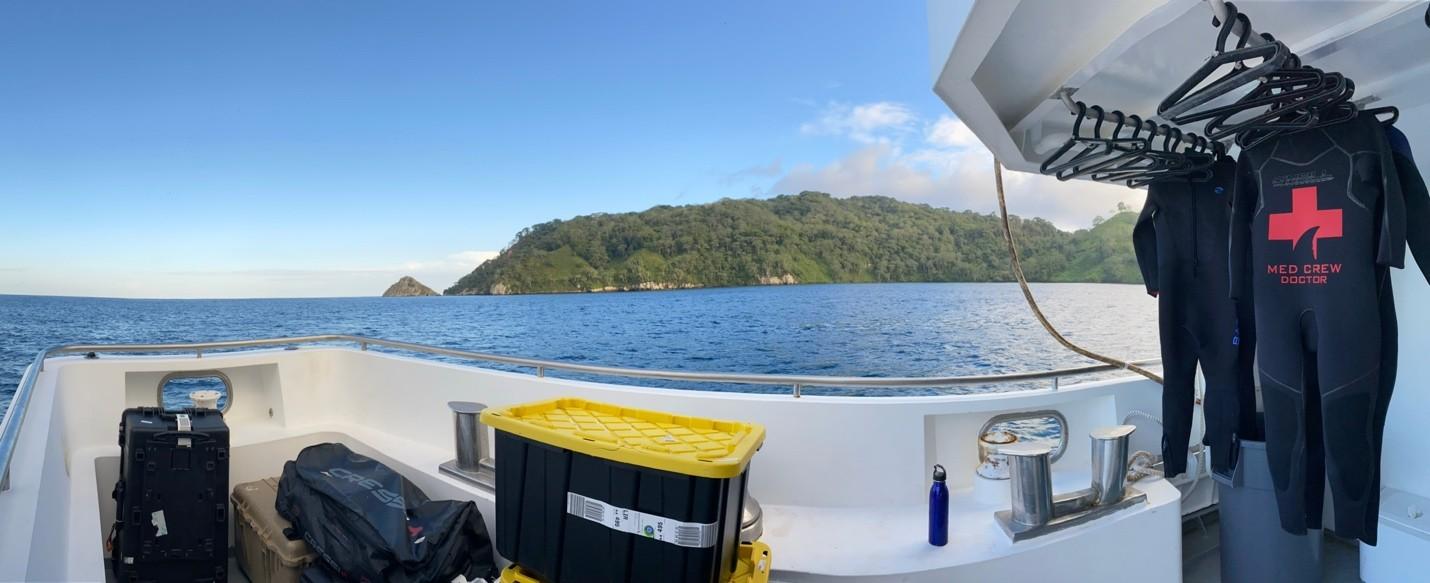
Rough working conditions. (Photo courtesy of Dr. Ben Abo)
From Paramedic to Shark Week Physician
Dr. Abo’s background spans decades in EMS, emergency medicine, rescue operations, wilderness medicine, toxinology, disaster response, and aquatic rescue. Those experiences align closely with the hazards faced by expedition film crews in marine environments. Today, his production medicine team supports projects ranging from Discovery Channel’s Shark Week to National Geographic’s Sharkfest and other adventure-focused productions.
How does an incredible career like this happen?
Dr. Abo first became involved in Discovery Channel’s Shark Week via his work in EMS.
"They needed rescue swimmers, safety divers and set medics so they reached out to some of the guys on the Miami Dade Fire Rescue Boat and, initially, it was those paramedics who pulled me in."
Abo had a concierge practice, including high profile musical artists, so he was already accustomed to travel, in person, as well as remote telemedicine in unique international environments.
How much time do you spend on these productions?
“Depending on the risks and timing - the needs of the production – what they want to accomplish - and what they need to accomplish – that is what dictates our team. I am one of the only physicians I know of who does true concierge-style on set medicine. For example, All The Sharks for Netflix was 45 days straight on set work. Nat Geo Wild Sharkfest was two weeks liveaboard off the coast of Costa Rica. The timing of the projects varies.”
Many clinicians dream of combining medicine with adventure, exploration, or television production, but few support shark researchers and film crews around the world. Abo notes that these are often 24/7 positions, requiring him to respond whenever needed.
“We were in the Maldives filming All The Sharks and someone thought he broke his foot, but I diagnosed gout in the pool!”
And the work at home does not stop.
“One of my most memorable moments was while near Cocos Island filming Nat Geo Wild’s Sharkfest, I was fielding snake envenomation consults back in Florida from my Garmin inReach while out on the boat.”
What Does a Shark Week Physician Actually Do?
Most viewers assume the greatest threat during a shark-focused expedition is a shark bite.
The reality is far more complex.
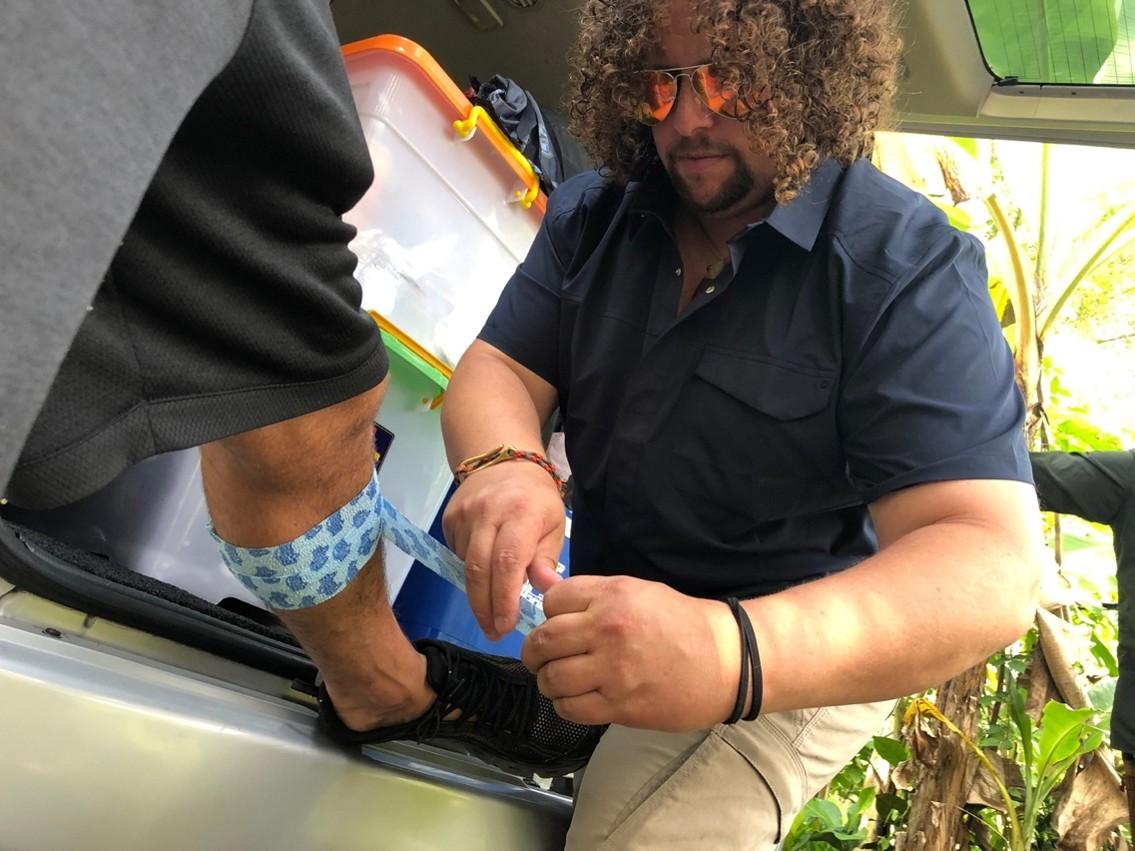
Working on set requires flexibility, including treating from the back of a car! (Photo courtesy of Dr. Ben Abo)
Remote expedition medicine requires preparation for medical problems far beyond shark bites, especially when crew members may be days from definitive care. Diving injuries, marine envenomations, dehydration, gastrointestinal illness, orthopedic injuries, lacerations, environmental exposures, and routine care often pose greater operational concerns than the sharks themselves. Much of the work is on-site primary care.
"People are used to the concept of medical personnel on site in case something big happens. Our team cares for many little things to ensure they do not become big things. My role is further expanded because I have special licenses and certifications for risk assessment and repatriation. Everyone on my team is multidisciplinary, for example, rescue swimmers and paramedics AND trained in wilderness, extreme medicine, or repatriation."
Recent projects have required planning for operations in locations where definitive medical care is many days away. In one production, Dr. Abo traveled across multiple continents while overseeing risk management and medical preparedness for teams working in remote marine environments.
Expedition Medicine Lessons
Expedition medicine rewards prevention over heroics: the most successful missions are often the ones in which risks are identified and mitigated before they become emergencies.
That philosophy is evident throughout Dr. Abo's work.
His operational approach reflects a principle familiar to extreme medicine providers everywhere: The best rescue is the one that never becomes necessary. Due to the safety measures in place, there have only been two shark-related injuries in decades of production.
When operating in remote environments, clinicians must think beyond traditional emergency department workflows. Expedition physicians become logisticians, safety officers, educators, communicators, and risk managers.
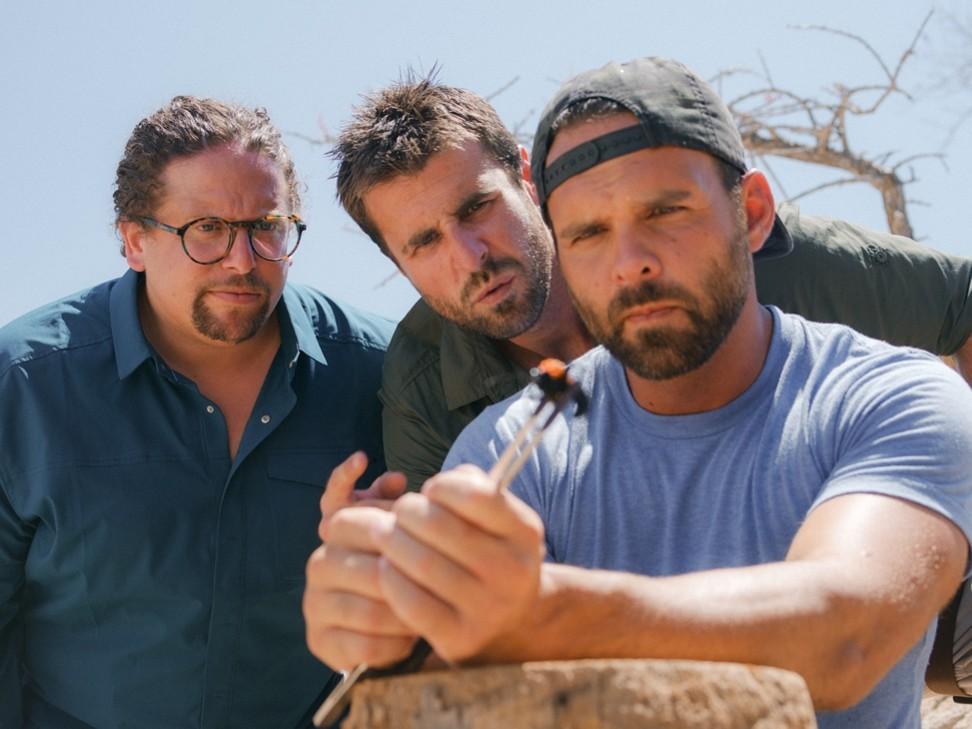
Dr. Ben Abo, Adam Thorn, a wildlife biologist, and Rob “Caveman” Alleva, an animal handler, from the History Channel series Kings of Pain. (Photo courtesy of Dr. Ben Abo)
Many students, residents, and early-career clinicians are drawn to wilderness and extreme medicine because it challenges creativity, endurance, and clinical judgment beyond traditional environments. Those lessons also carry back into the hospital.
"Even in the emergency department, we see a lot of environmental injuries. I feel I have learned to provide better care using less time and less resources. That’s what wilderness medicine is. But this is also wilderness EMS with an organized system being resourceful in a little to no resource area. It is a little bit public health, risk assessment, logistics…a little bull shark and a little oh shark!"
For those interested in expedition, media, disaster, rescue, or austere medicine, Dr. Abo’s career shows how expertise is built through layered experiences. EMS, paramedicine, emergency medicine, rescue operations, wilderness medicine, diving, toxicology, disaster response, humanitarian medicine, education, and leadership each helped create opportunities that did not exist when he first entered healthcare.
Beyond Television
Although television introduces many people to Dr. Abo’s work, the larger story is service. As of this writing, he is deployed with his USAR team assisting earthquake rescue operations in Venezuela.
Whether supporting disaster responses after hurricanes and earthquakes, EMS systems, wilderness operations, marine rescue, or expedition productions, the underlying mission remains the same: helping people safely accomplish extraordinary things.
For expedition medicine providers, that perspective feels remarkably familiar.
Shows like Shark Week, Sharkfest, All the Sharks, and Kings of Pain are case studies in modern expedition medicine. Beneath the dramatic footage is a framework of planning, medical readiness, operational safety, and science.
And somewhere, just beyond the camera frame, there is often a wilderness-trained provider quietly ensuring that everyone returns home safely.
There is also time for unusual field science.
“My guys on Kings of Pain decided to get shocked by an electric eel – I still need to publish that case report – I had them on a monitor while they were getting shocked by the eel - so I have what their hearts did before, during, and after.”
Looking forward to that case report.
Practicing within international constraints
“Someone slipped and fell onto his chest. I ruled out a pneumothorax and diagnosed rib fractures. I was in a country where they needed to be able to continue to work and it was extremely hard to bring in controlled medicines - so I did some subcostal nerve blocks for the pain.”
Conclusion
The most beautiful places Abo has worked are a tie between the Maldives and Cocos Island. The one item he never travels without is not a high-tech gadget, but a commercial tourniquet. When asked to name the single most valuable wilderness medicine skill, his answer was simple: “adaptability”.
Abo’s advice is "Calm down, slow down, stay humble, and become superior in your craft in any situation. There are no shortcuts, there is no quick way into this industry, but find your niche, build your brand, gain experience, and you can get there."
And if he could offer one piece of wisdom to his younger self? "Learn sleep hygiene." It may sound deceptively simple, but for someone whose career has been built around high-performance medicine, exploration, and responding to emergencies in some of the world's most demanding environments, it's a reminder that recovery is just as important as resilience.
“Good sleep habits,” he says, “are a superpower.”
Dr. Abo's team’s on set responsibilities include:
- Pre-expedition risk assessments
- Medical contingency planning
- Evacuation strategy development
- Dive medicine considerations
- Toxicology
- Emergency response capabilities
- Medical equipment selection
- Crew health monitoring
- Coordination with local healthcare resources
- On-site concierge emergency and critical care
- Repatriation