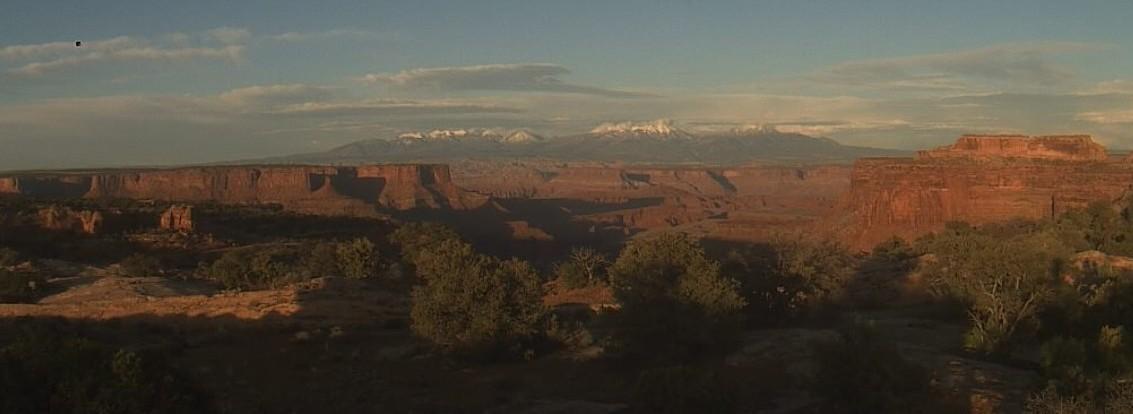
Canyonlands NP and the La Sal Mountain Range from Island in the Sky mesa. Remote terrain and long approach distances can complicate rescue response in canyon country. Source: U.S. Geological Survey
“Hey guys? I’m stuck on rope.”
The voice came from below the ledge, out of sight, where a friend had rappelled into open air in a remote slot canyon on the Colorado Plateau. For a moment, the canyon went quiet. I started running through rescue options: Should we convert the rappel to a lower? Build a quick haul system? Block the retrieval side of the rope and send someone down to assist? Before I reached for gear, the voice came back. “Never mind, I’m free.”
At the bottom of the rappel, we learned the culprit was not a jammed device, a stuck rope, or a rigging error. It was hair caught in the rappel device. One impromptu, self-administered haircut while free-hanging fifty feet above the canyon floor, and the problem was solved.
As the group laughed, I said, “I’m glad you weren’t hanging long enough to risk suspension syndrome.”
I was met with blank looks. Finally, someone asked, “What is suspension syndrome?”
I have heard that question too often from people who regularly use ropes for recreation or occupation. At most, I see the term surface on online forums after accident reports, a speculative ghost in the background of the climbing accident differential. For a condition that can turn a stuck rappeller, climber, caver, worker, or rescuer into a time-sensitive critical patient, that obscurity is a problem.
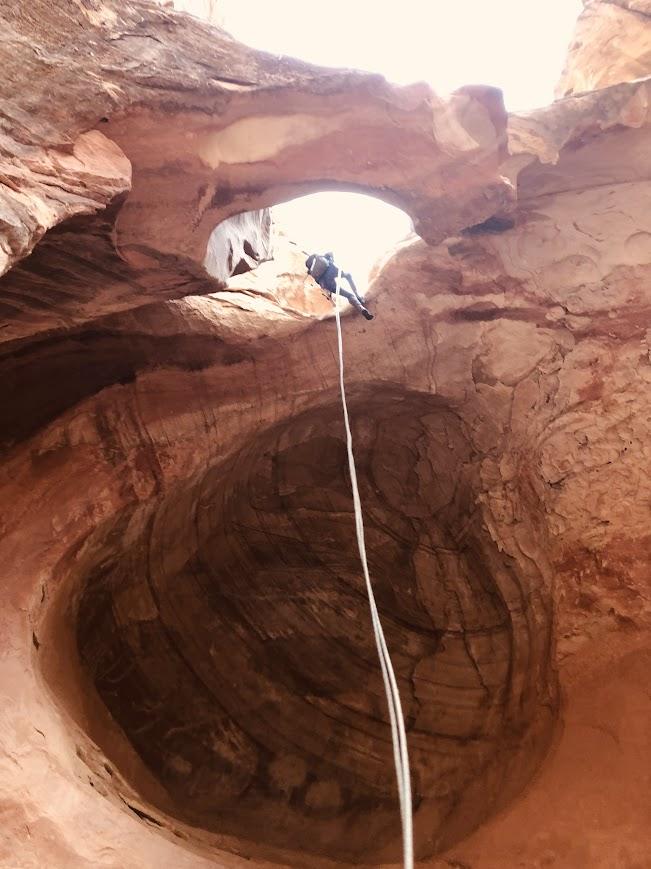
Free hanging rappel through sandstone arch. Vertical terrain can quickly become consequential when a rappeller is unable to descend or self-rescue. Source Credit: Matthew McKinnon
Suspension syndrome, also called suspension trauma, harness hang syndrome, or orthostatic shock while suspended, describes the potentially fatal circulatory collapse that can occur when a person is left hanging motionless in a vertical or near-vertical position. It was first formally recognized at the 1972 International Conference of Mountain Rescue Doctors, where a case series described 23 climbers who had been suspended in their harness systems after falls. Ten of the 23 died after prolonged suspension despite the absence of life-threatening traumatic injuries. Later wilderness medicine reviews brought the issue into broader clinical discussion and emphasized that the risk is serious enough to justify prevention, awareness, and rapid rescue planning.
For years, the standard explanation was straightforward: blood pools in the legs, venous return falls, cardiac output drops, and the patient develops shock. That model is partly true, but incomplete. In Rauch et al.’s 2019 experimental crossover trial, 20 healthy volunteers completed 40 sit-harness suspension tests. Ultrasound confirmed venous distension and stasis during passive suspension, yet most participants showed little change in blood pressure or heart rate. Notably, thirty percent of tests ended early because of pre-syncopal symptoms, with onset ranging unpredictably between about 13 to 60 minutes. Immediately before presyncope, participants developed an abrupt fall in both heart rate and blood pressure, suggesting that the final collapse is driven less by gradual volume depletion alone and more by a neurocardiogenic reflex. Interestingly, they did not find evidence of altered baroreflex sensitivity or reduced left ventricular filling, both of which are commonly implicated in other forms of neurocardiogenic syncope.
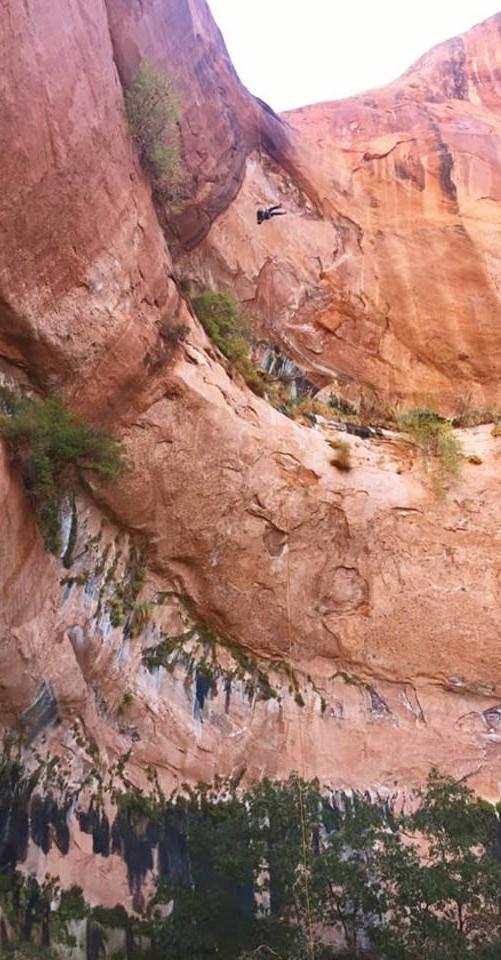
Free hanging rappel of approximately 60 meters past beautiful hanging gardens. Long rappels increase the importance of communication, contingency rigging, and practiced rescue skills. Source Credit: Matthew McKinnon
For anyone managing a suspended patient, the operational takeaway is simple: deterioration can be sudden and unpredictable. Pre-syncopal symptoms can provide early warning signs including lightheadedness, dizziness, nausea, pallor, cold sweating, warmth or flushing, blurred vision, ringing in the ears, confusion, or bradycardia. Do not wait for symptoms to worsen before initiating rescue.
If you are the person stuck on rope and you can move safely, move. Push against the wall. Bicycle your legs. Shift your weight. Step into foot loops. Raise your legs if you can. A 2024 study in Wilderness & Environmental Medicine found that leg raising delayed symptom onset in suspended subjects. Movement activates the leg muscle pump and may buy time, but the goal remains rapid, safe removal from passive suspension.
Preparation is essential and self-rescue is the best form of rescue. A well-fitting sit harness should be tested under body weight before it is used in the field. Chest-only harnesses deserve particular caution because they can restrict chest and diaphragm motion and have been associated with worse cardiorespiratory tolerance. Any group using ropes should have a plan to mitigate suspension before anyone leaves the ground. Rope rescue techniques should be practiced regularly so they can be done safely, efficiently, and in less-than-ideal conditions. That may mean converting a rappel to a lower, ascending a fixed rope, escaping a loaded system, passing a knot, freeing a jammed device, using a contingency anchor, or performing a pickoff. These skills are not theoretical and could be used to reduce the time a patient is suspended.
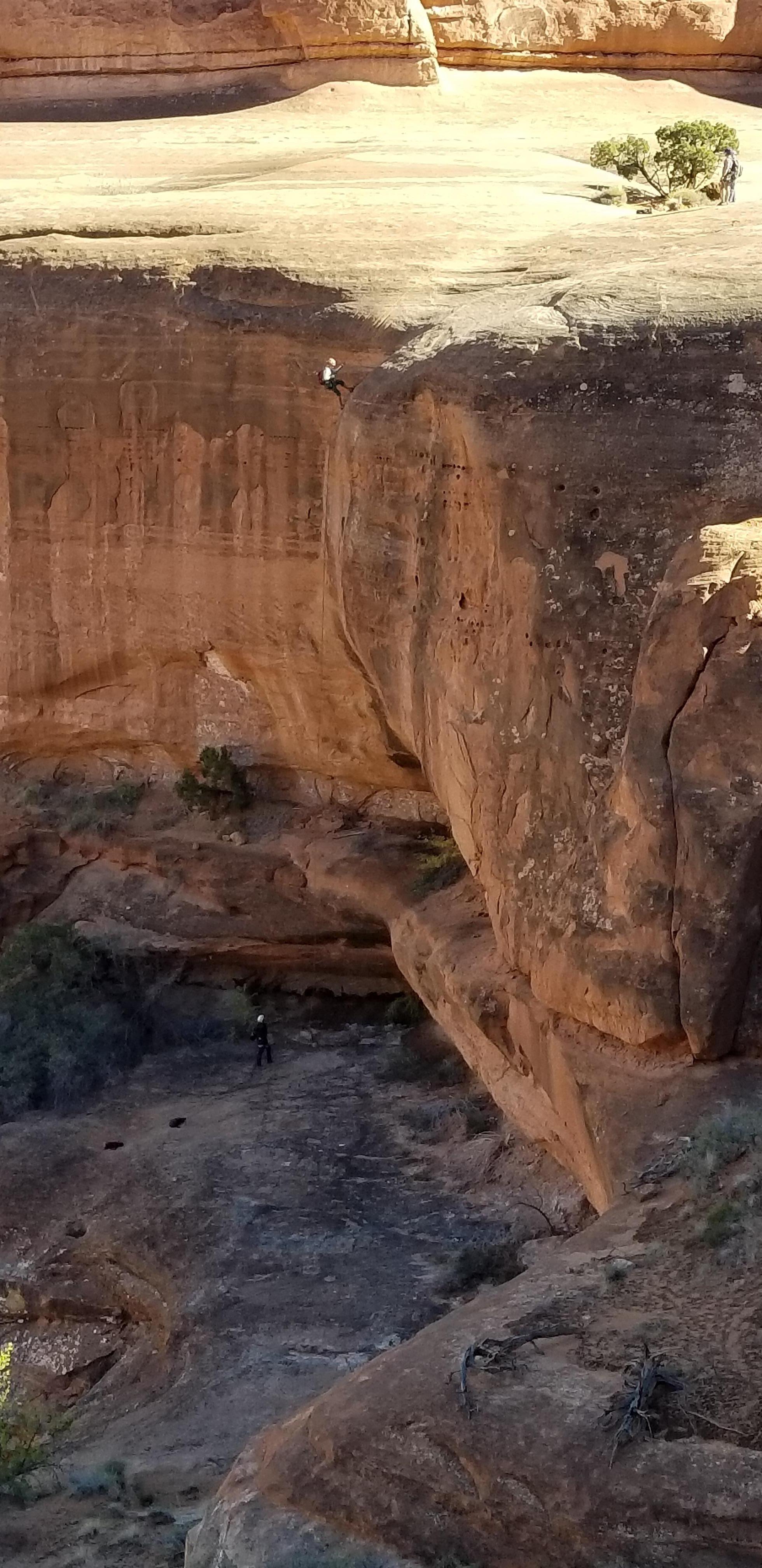
A rappeller descends from a tree anchor while a partner provides a fireman’s belay below. Simple backup systems can add safety, but groups should still be prepared for a stuck or incapacitated rappeller. Source Credit: Matthew McKinnon
Once the patient is on the ground, lay them supine and treat what you find. Manage the patient as you would any other person with syncope, shock, trauma, hypothermia, altered mental status, or cardiac arrest. One persistent myth held that patients rescued after suspension should be kept upright to prevent so-called “rescue death.” That advice has been repeatedly challenged and is no longer supported. Thomassen et al. found no evidence that placing a rescued patient horizontally increases the risk of rescue death. Current ICAR recommendations are consistent: position the casualty supine, follow standard resuscitation principles, and consider reversible causes such as hypoxia, hypothermia, hyperkalemia, and pulmonary embolism.
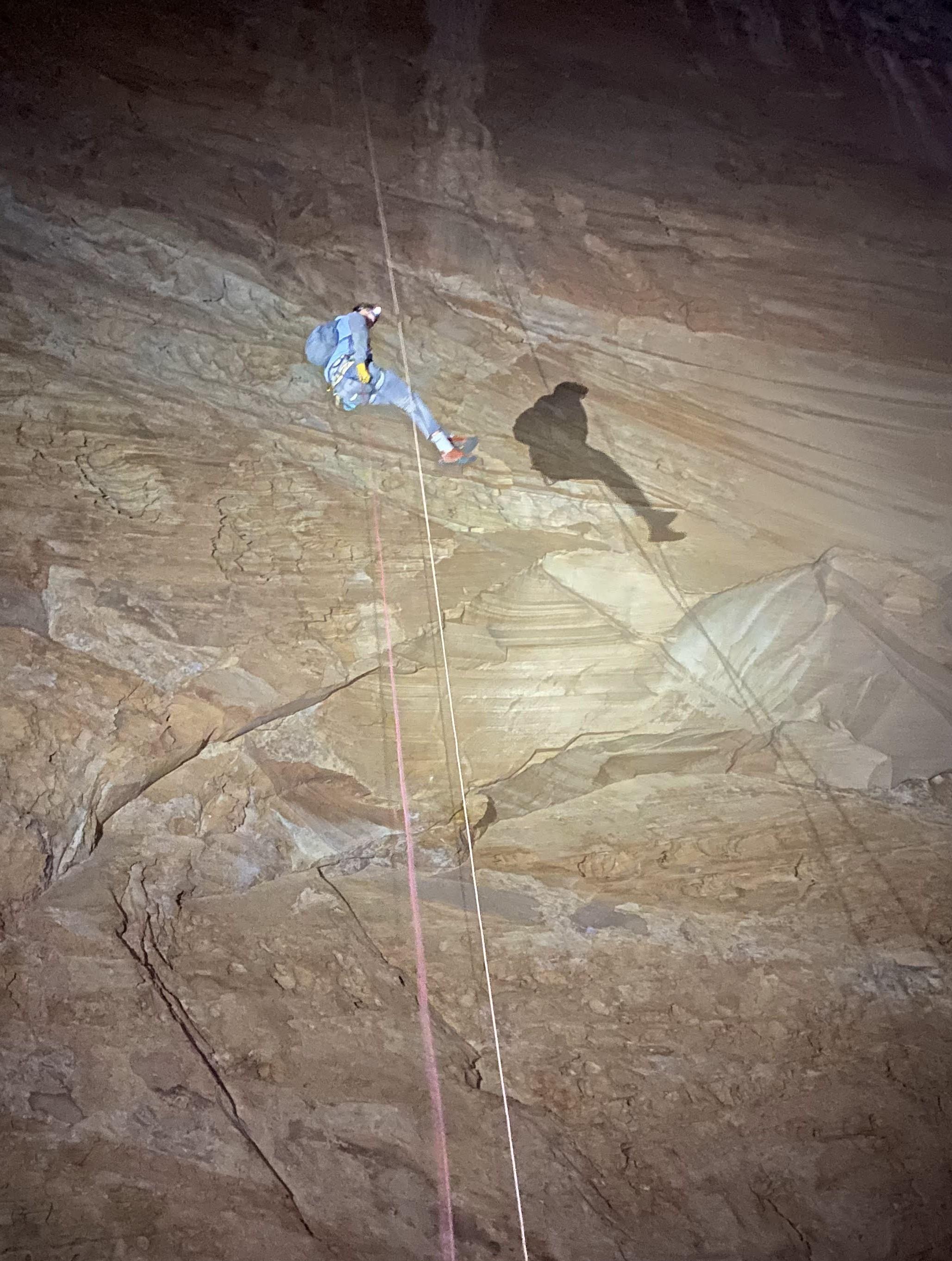
Free hanging rappel at night, where darkness and limited visibility can delay rescue. Source Credit: Matthew McKinnon
Prolonged suspension adds another layer of concern. Patients suspended for extended periods may be at risk for rhabdomyolysis, hyperkalemia, acute kidney injury, neurologic injury, hypothermia, and other complications. The duration of suspension, symptoms while suspended, mental status, vital signs, trauma findings, and treatment course should be communicated clearly to EMS or search and rescue on handoff. In cases of prolonged suspension or concerning clinical findings, transport to a facility capable of laboratory monitoring and emergent dialysis may be appropriate.
Suspension syndrome is a rare but potentially catastrophic disease process. The rope world has a long memory for dramatic falls, rockfall, drowning, hypothermia, and rigging failures. Yet a quiet, motionless patient hanging below a ledge can be just as urgent. In rural and remote environments, where emergency response may be delayed by terrain, weather, distance, or darkness, the burden of the rescue often falls on the group already there.
The day my friend cut her hair free fifty feet above the canyon floor, nothing bad happened. She was down in minutes. The rappel continued. The group laughed. We moved on down canyon. But the blank looks that followed my offhand comment stayed with me. Awareness alone is not enough, but it is the first step. Know the condition. Practice your rescue skills. Have a rescue plan before the rope is weighted. By the time someone calls, “I’m stuck on rope!” the plan should already be in motion.