In recent years, our coastal region has seen an increase in drowning incidents. Driven by increased beach attendance and a decline in water
survival skills, this trend has placed considerable strain on the lifeguard service and emergency medical services.
Yearly, the governor organizes a large-scale interagency training exercise, rotating locations each year. To further increase
preparedness, the lifeguard service of De Haan-Wenduine also conducts a yearly, local exercise. In previous years, emphasis was placed on
communication and cooperation.
Last summer, we decided to enhance this event by
incorporating high-fidelity medical simulation. With the help of instructors
experienced in medical simulation, a half-day exercise along the coast of
Wenduine (Belgium) was organized. Adult and pediatric manikins were used. Resident
physicians and nurses from two hospitals (AZ Oostende and Ghent
University Hospital), emergency medical technicians from the local
ambulance service, and 30
lifeguards participated.
The exercise began with a mountain biker who had
crashed on a dune, about 25m high. Lifeguards responded first, securing the
patient's cervical
spine, clearing the airway and controlling bleeding from
the head. A call for medical help was made.
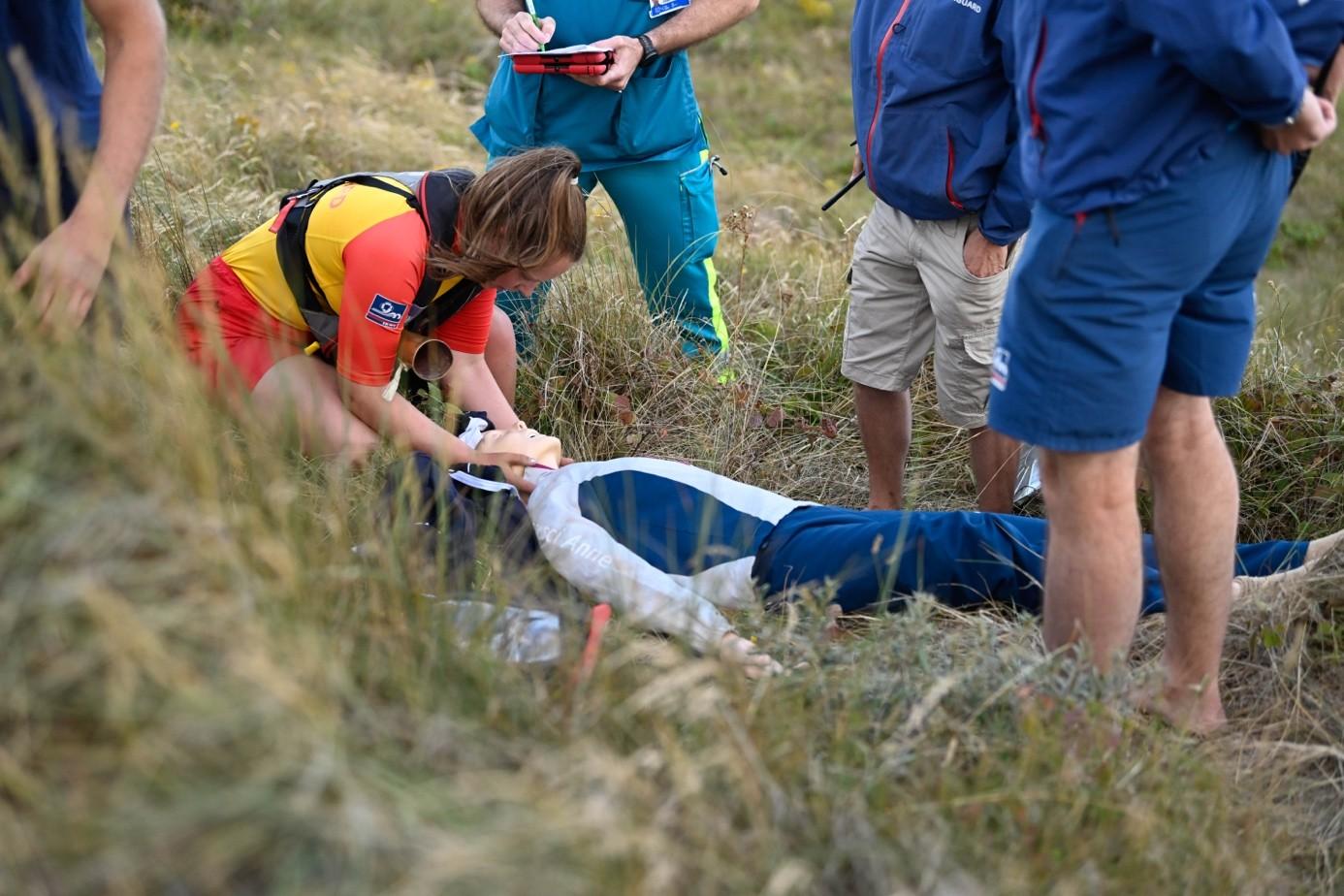
First scenario – lifeguard securing cervical spine (photo by Jos Tomassen)
Unfamiliar with the terrain, emergency medical services (one ambulance consisting of two emergency medical technicians and one emergency medical response team consisting of an emergency physician and nurse) required assistance to locate the patient and to access the scene. Upon reaching the patient, who was showing signs of neurogenic shock (heart rate 60/min, blood pressure 90/50mmHg), IV fluids and vasopressors (continuous infusion of norepinephrine) were started. Confronted with an unsecure airway, the decision was made to intubate the patients the rough terrain, it was deemed unsafe to perform this procedure on the side of the dune. At first, an attempt was made to carry down the patient on a spine board. Eventually, the emergency physician and lifeguard supervisor decided to move the patient uphill first, allowing them to descend via a stairway to a location where the off-road-capable lifeguard vehicle could reach them.
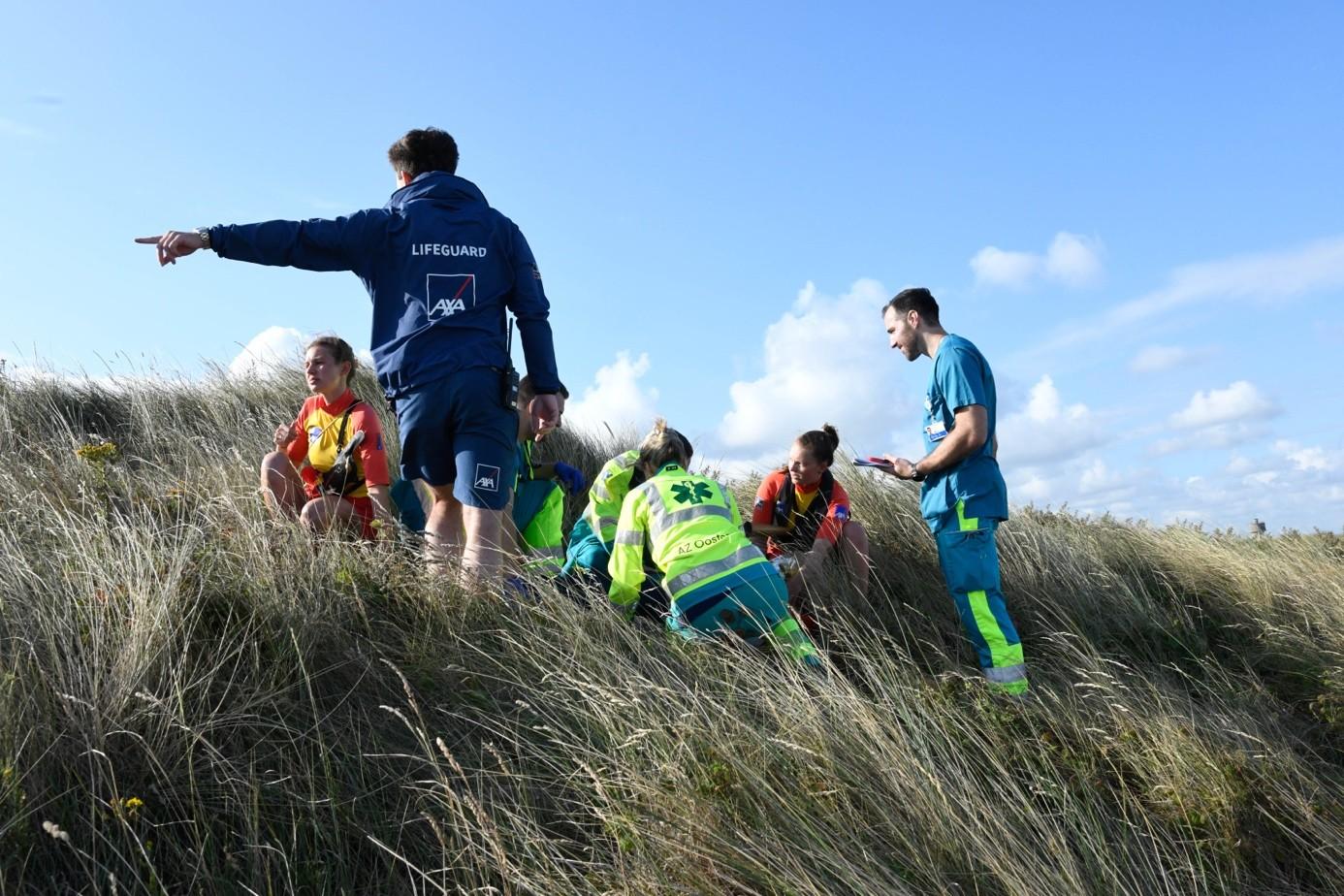
First scenario – preparing to move the patient (photo by Jos Tomassen)
Immediately following successful intubation (rapid sequence induction using ketamine and rocuronium and intubation was performed by the emergency physician using direct laryngoscopy), a pediatric drowning was reported at the beach starting the second scenario. Cardiopulmonary resuscitation (CPR) had been initiated by the patient's mother; circulation was restored after two additional rounds of CPR performed by the lifeguards. However, the patient remained unconscious with shallow breathing, requiring further support.
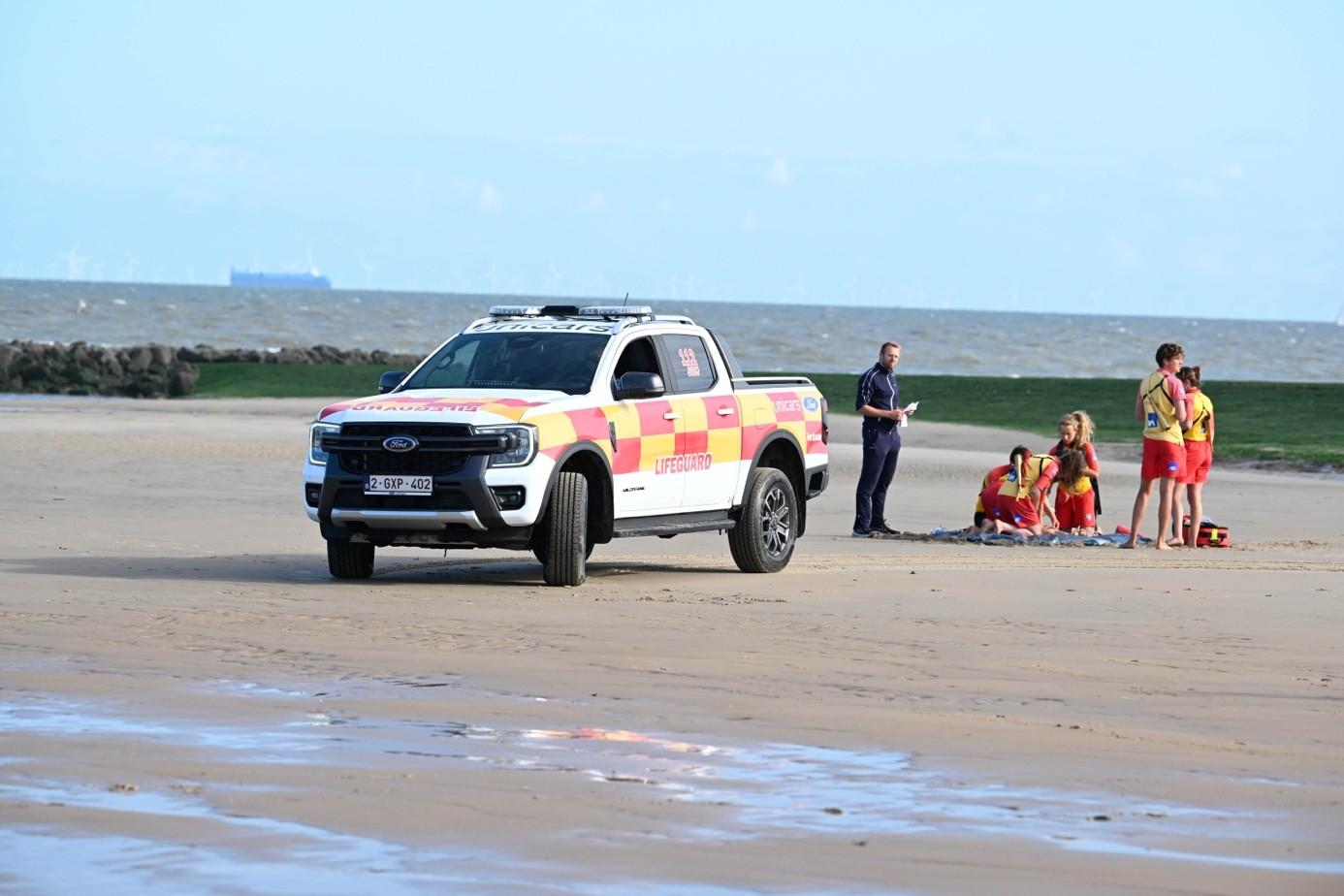
Second scenario – lifeguards performing CPR (photo by Jos Tomassen)
Whilst the emergency medical response team (emergency physician and nurse) and a second ambulance rushed to the scene, the final scenario was started. A group of eight swimmers swam 500m out into the sea, waiting for the current to pick them up. Each swimmer received a card listing their vitals. The first rescued swimmer was asked to stop breathing upon being lifted from the water, simulating a cardiac arrest. For safety reasons, we provided the swimmers with a radio which allowed them to contact the instructors in case of distress.
After a 30-minute delay, an emergency call was placed to the lifeguard service reporting that eight swimmers were lost at sea. Several Rigid Inflatable Boats (RIBs) were dispatched. The first two swimmers were quickly rescued. CPR was started on the first swimmer, who was then transported to the beach.
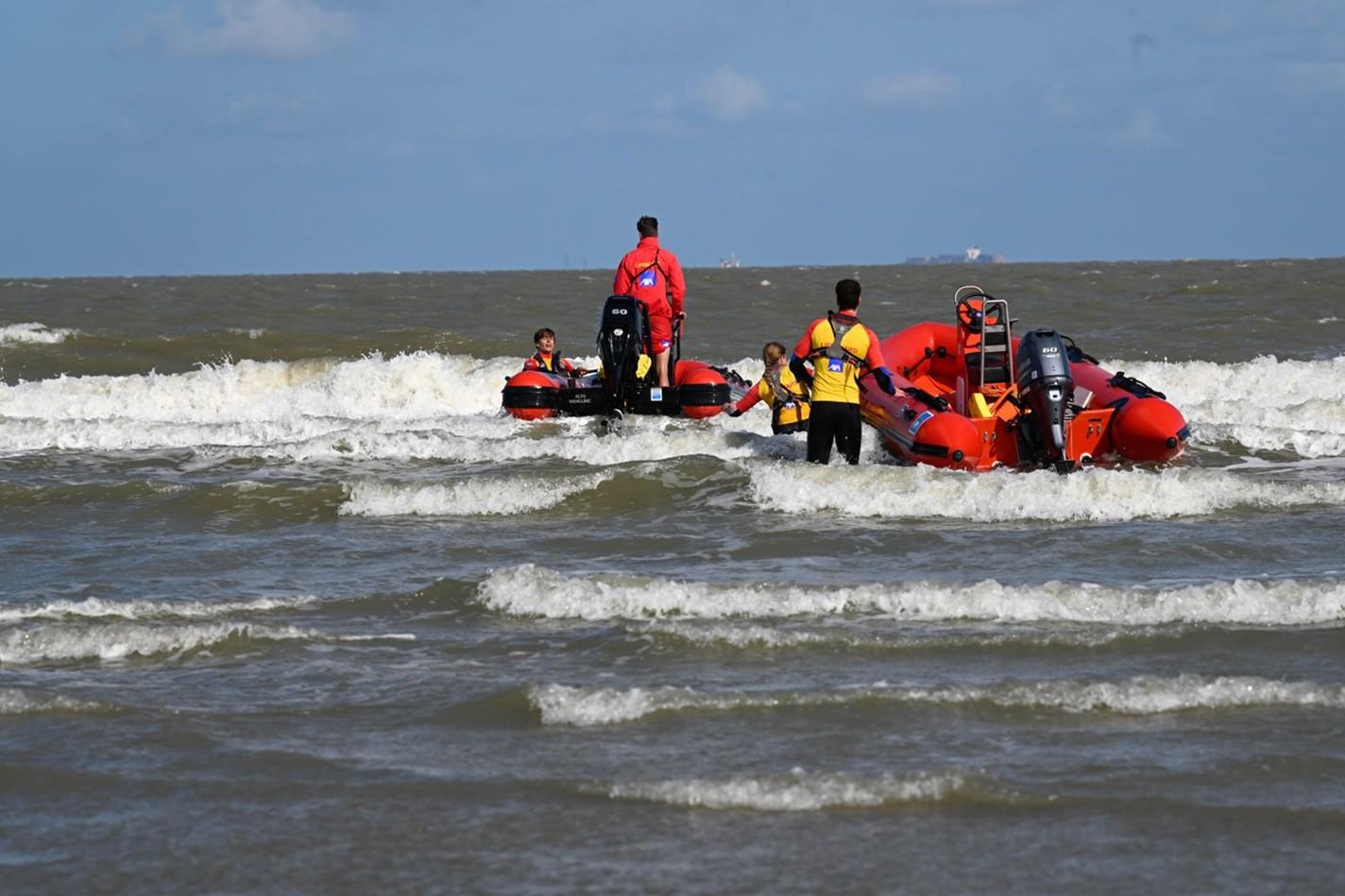
Final scenario – RIBs responding to emergency call (photo by Jos Tomassen)
On the beach, one of the instructors placed a high-fidelity manikin where the first boat reached the shore. CPR was continued and a call for medical assistance was made.
A medical team and ambulance were dispatched. Upon arrival, additional patients were being found and transported to the beach. After assessing the number of patients, the medical team recognized the need to activate the mass casualty action plan and additional medical resources were dispatched.
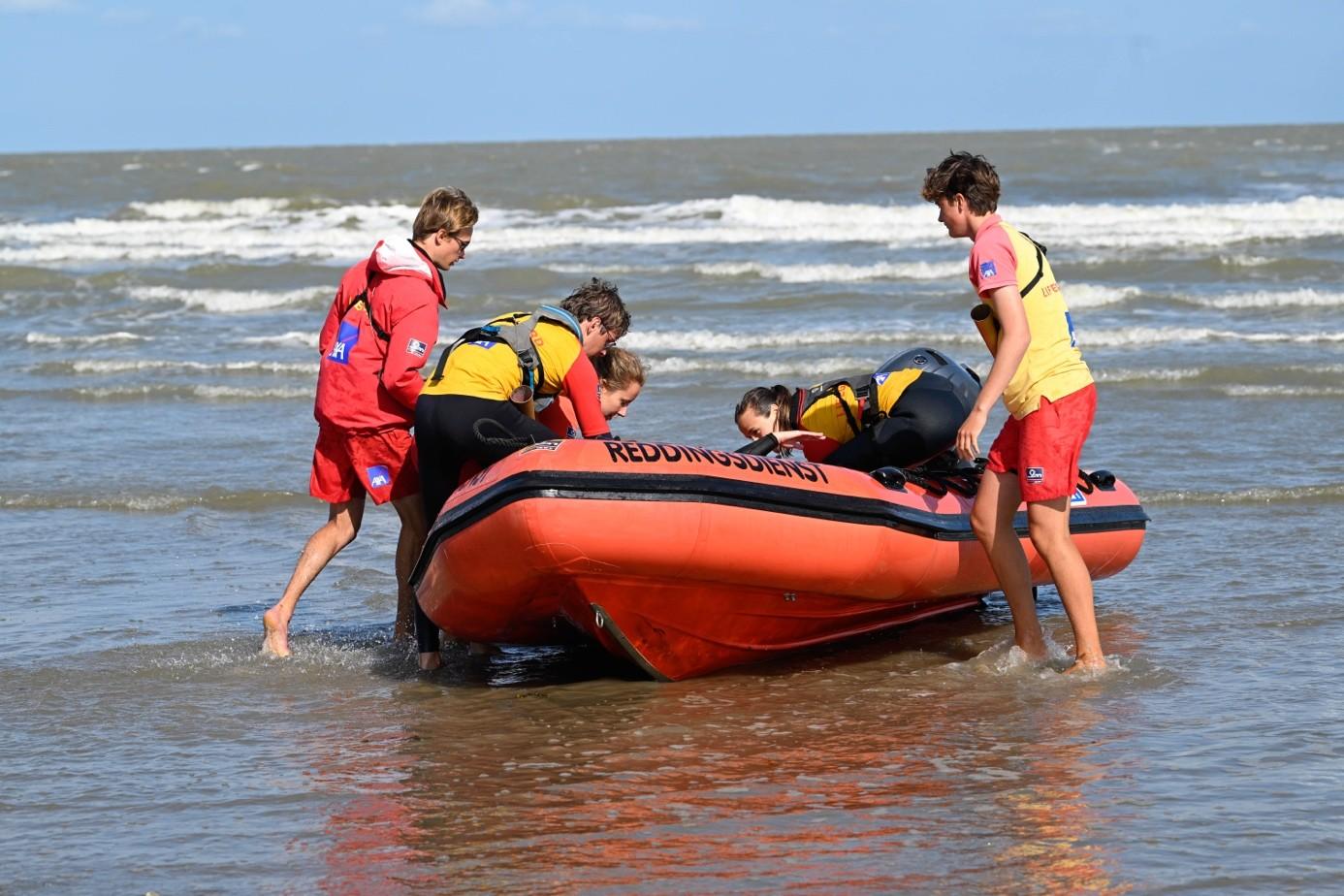
Final scenario – patient is being lifted from RIB (photo by Jos Tomassen)
Shifting focus, the first medical team determined a fixed point on the beach for incoming RIBs, initiated triage, and began coordinating closely with the supervising lifeguard. Resuscitation of the first patient was assigned to the crew of the first arriving ambulance. The patient remained in asystole and resuscitation was terminated after 15 minutes.
Most patients were retrieved quickly and had sustained only minor injuries. Patients were treated at the beach first aid post and were prepared for transport to the hospital. However, two persons remained missing for over an hour and were ultimately found 2 km further down the coastline, following an extensive search further west.
After completing this exercise, all participants agreed that incorporating medical simulation had enhanced learning for all parties involved. Exposure to realistic scenarios, requiring rapid decision-making and coordination between emergency services, allowed participants to gain insights into each other's roles, challenges and perspectives.
In the first scenario, the need to optimize the environment and evacuate the patient to allow safe intubation necessitated close collaboration between participants from different services. In the last scenario, difficulties encountered in retrieving all lost swimmers complicated the lifeguards' rescue operation, limiting their ability to assist with providing medical aid.
During the mass casualty incident, the need to perform CPR on the first patient complicated resource allocation, forcing participants to balance efforts for one single patient against conserving resources and providing care for a greater number of patients. This confronted them with a classic dilemma in mass casualty management.
In organising this exercise, we found that every agency we contacted was eager to help and participate. Taking the first step, getting to know each other, was the only challenging part.
During the exercise, it proved helpful to have a dedicated instructor per scenario to prepare and coordinate each individual case. Two separate instructors oversaw the exercise and decided together when to start the following scenario. Special care should be taken to ensure the safety of all participants, especially swimmers; equipping them with inflatable life jackets and a radio. In future exercises, we would also recommend the use of trackers to continuously monitor their location. Encouraged by the positive feedback received, we are motivated to further incorporate medical simulation into future multi-agency exercises, aiming to enhance the preparedness of our emergency medical services and other rescue personnel.
Acknowledgments
We wish to thank Geoffrey Maes and Sara Deweert (Lifeguard Service De Haan-Wenduine), Vera Jonckheere (Crisis Management De Haan) Tim Piens (AZ Oostende), Jeroen Deconinck and Erik Christiaens-Leysen (Ghent University Hospital), Jos Tomassen (photography) for their support with organizing this exercise.