A routine research excursion turned into the single worst diving accident in the history of the Maldives when five Italian divers tragically lost their lives on Thursday. The victims, researchers from the University of Genoa, including a prominent professor and his adult daughter, were exploring an underwater cave at a depth of roughly 160 to 200 feet (50 to 60 meters) in the Vavu Atoll. Officials confirmed that the deep-cave exploration was not a planned part of their primary scientific endeavors and that it was done “unofficially”.
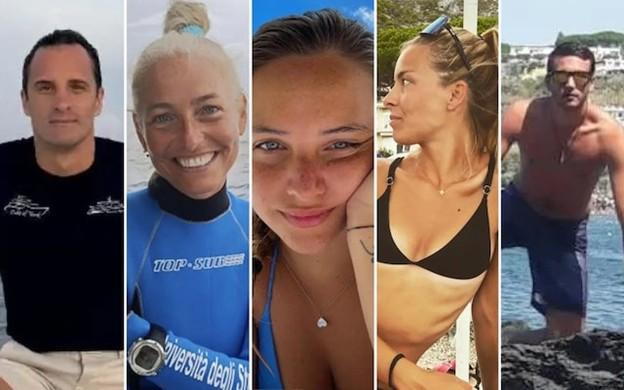
Victims of the Maldives diving tragedy. Source: Telegraph UK
The excursion took place during a period of highly unpredictable volatile weather, marked by regional maritime warnings and powerful currents. While one body has been recovered by local authorities, search efforts for the remaining four researchers have been severely affected by treacherous conditions. The tragedy deepened when Mohamed Mahudhee, a rescue diver with the Maldivian National Defense Force, died from severe underwater decompression sickness after attempting a high-risk recovery mission in the deep cave network.
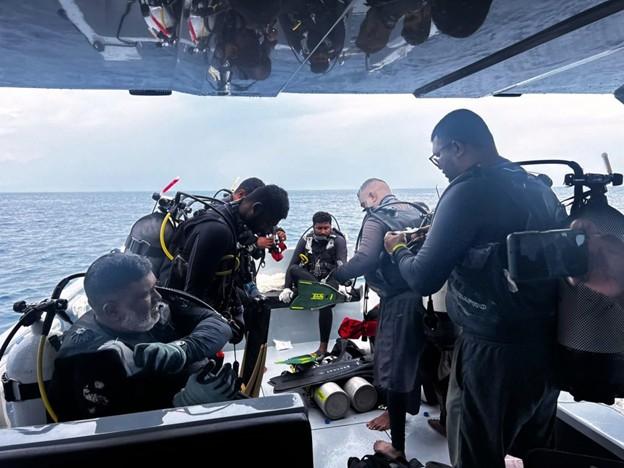
Rescue divers prepare to search for victims, including Mohamed Mahudhee, who perished after suffering from severe decompression illness. Source: AP
The exact cause of this tragedy is still being investigated. While the rough weather and disorientation within the cave are major factors, hyperbaric medicine experts suspect that human error or a critical equipment malfunction led to acute Central Nervous System (CNS) oxygen toxicity. Investigators are currently prioritizing the recovery of the victims' dive computers and breathing tanks to analyze the exact composition of the gas mixtures utilized.
While recreational scuba diving is strictly capped at a maximum depth of 131 feet (40 meters) to maintain safety margins, technical dives exceeding these limits have drastic effects on human physiology. According to Dalton’s Law, the total pressure of a gas mixture increases proportionally with depth, which subsequently elevates the partial pressure of oxygen (PO2) inhaled by a diver. At sea level, the PO2 of ambient air is a safe 0.21 atmospheres (atm). However, as a diver descends, the ambient pressure increases by 1 atm for every 33 feet of salt water. At a depth of 165 feet (60 meters), a diver experiences 6 atm of total pressure, raising the PO2 of standard compressed air to 1.26 atm. If the Italian researchers were utilizing a Nitrox blend (an oxygen-enriched gas mixture often favored by divers to reduce nitrogen absorption), the PO2 would have skyrocketed past critical safety thresholds at much shallower depths. The universally accepted maximum working threshold for a diver is a PO2 of 1.4 atm, with a contingency absolute contingency limit of 1.6 atm. Exceeding these limits exposes a diver to acute oxygen toxicity, historically referred to as Paul Bert syndrome.
If the divers were using Nitrox blend then they would have theoretically reached a PO2 of 1.92 atm which would have reached critical limits, likely causing seizures and alteration in mental status. When a diver breathes oxygen at a high partial pressure, the sudden influx of reactive oxygen species overwhelms the body's natural antioxidant defenses. This induces severe cellular damage and biochemical imbalances in the brain. The clinical onset of CNS oxygen toxicity is often sudden and catastrophic, presenting with the following progression:
- Visual disturbances (tunnel vision, blurring)
- Auditory abnormalities (ringing in the ears)
- Marked confusion, anxiety, and spatial disorientation
- Muscle twitching (particularly around the face, lips, and hands)
- Sudden, violent grand mal seizures
In an underwater setting, an oxygen-induced seizure can cause the diver to lose their regulator, leading to subsequent water aspiration, and rapid drowning. If a diver experiences dizziness, altered consciousness, or a seizure within a tight, overhead environment like a cave, self-rescue or buddy-assisted rescue becomes virtually impossible. It is important to have meticulous pre-dive planning and technical precision as the primary defense against hyperoxia. Prevention relies heavily on the proper calculation of a gas mixture's Maximum Operating Depth (MOD). Technical divers must meticulously analyze their cylinder contents prior to submerging to ensure the PO2 won’t breach 1.4 atm during the working phase of the dive.
Most recently, a team of Finnish cave divers has been dispatched by DAN Europe to support the recovery process. The team consists of highly technical divers who use a rebreather setup typical of prolonged cave dives.
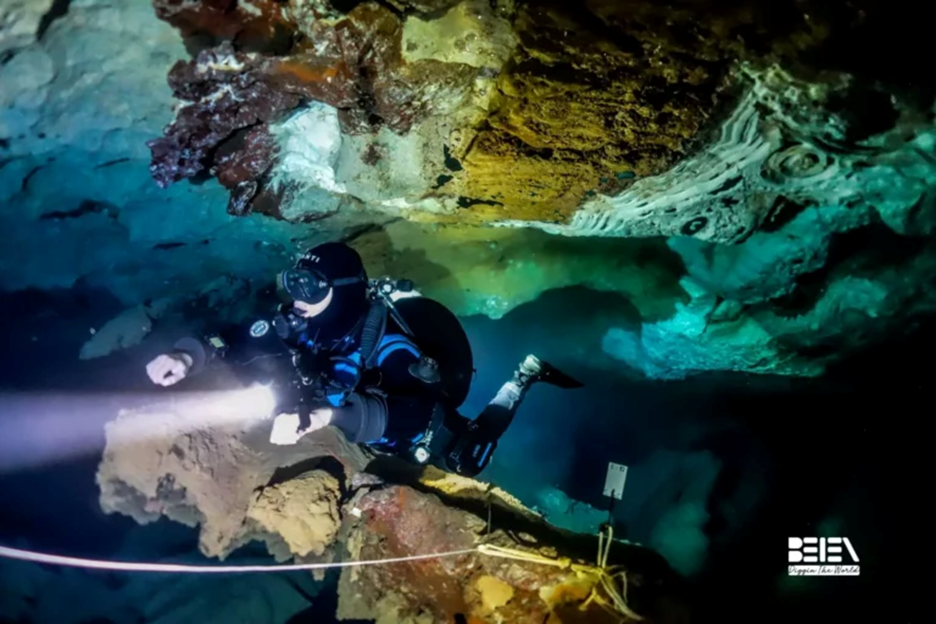
Cave diving rebreather setup. Source: DiverNet via Dan Europe
If symptoms of oxygen toxicity are recognized early at depth (such as localized muscle twitching or sudden nausea), the diver must immediately ascend to a shallower depth to decrease the ambient pressure and lower the PO2. The risk of pulmonary barotrauma and decompression illness is outweighed by the extremely high risk of fatal drowning from neurologic damage from oxygen toxicity. If an underwater seizure occurs, the dive buddy’s primary objective is to keep the regulator in the victim's mouth and support them until the convulsion subsides before attempting a controlled ascent to the surface. Once topside, emergency management dictates the immediate administration of 100% surface-pressure oxygen, stabilization of the airway, and rapid transfer to a hyperbaric facility to address any concurrent decompression illness or barotrauma.