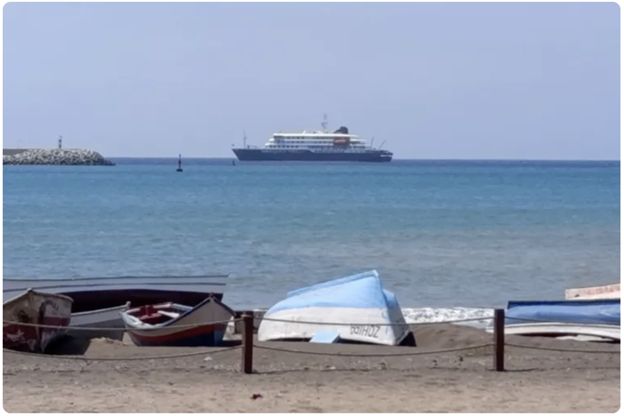
Cruise ship MV Hondius docked off Porto da Praia, Cape Verde while health authorities investigate suspected cases of hantavirus onboard the vessel. Source: Reuters
Three passengers have died of a confirmed hantavirus outbreak aboard a cruise ship currently anchored off the Canary Islands. The Dutch-flagged MV Hondius departed from Ushuaia, Argentina on April 1, 2026, carrying 150 passengers and crew. The route stopped at several islands in the south Atlantic before heading north towards Cape Verde.
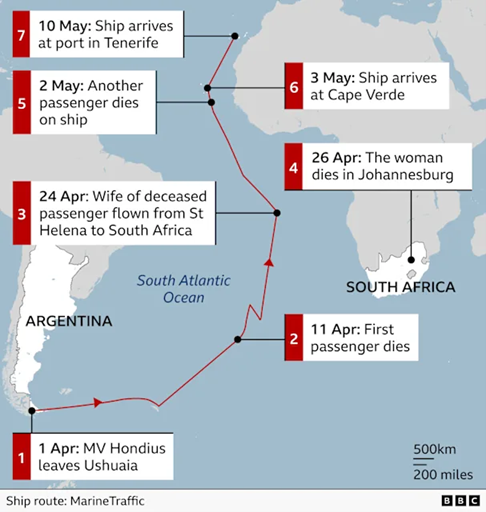
Timeline of suspected hantavirus cases onboard the MV Hondius. Source: BBC News
Case 1: On April 6th, a 70-year old male passenger developed fever, headache and mild diarrhea. Five days later, on April 11, he developed severe respiratory distress and died onboard the ship.
Case 2: On April 24th, the passenger's 69-year old wife was taken ashore with the body. That day she developed gastrointestinal symptoms and was flown to Johannesburg for treatment, but died shortly after arrival to the ICU. Hantavirus was confirmed through laboratory testing as the cause of her death.
Case 3: On April 24th an adult male passenger developed fevers, cough and shortness of breath. He was evacuated 2 days later to South Africa and is currently being treated in the ICU. Lab testing confirmed an Andes hantavirus variant.
Case 4: On May 3, a 65-year old female passenger onboard the ship died four days after presenting with pneumonia-like symptoms.
Cases 5, 6, 7: On May 6, three additional passengers, including the ship’s doctor, were evacuated to the Netherlands after developing high fevers and gastrointestinal symptoms. They are currently undergoing treatment. After the ship’s doctor became ill, a retired Oncologist from Bend, Oregon stepped in to help manage the suspected outbreak.
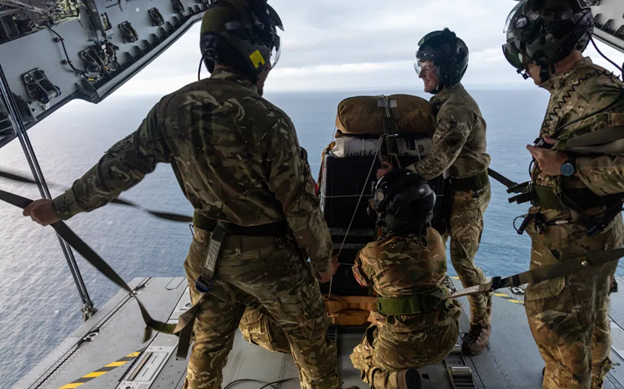
Members of the Royal Air Force prepare to drop cargo during operation over Tristan da Cunha. Source: rnz.co.nz
May 9, 2026: A team of 6 British Army paratroopers along with an intensive care physician and intensive care nurse, parachuted onto a remote island in the south Atlantic to help a British national with suspected hantavirus. The patient had been aboard the MV Hondius, but had disembarked in Tristan de Cunha, where he resides, when the ship passed through, prior to identification of the outbreak. Three tons (3300kg) of medical supplies were also dropped on the island, including a large additional supply of oxygen in anticipation of treatment needs for the current patient and any others on the island who develop symptoms.
Medical care on the remote island is provided by two physicians with extensive backgrounds in general practice, with additional training in obstetrics, anesthesia, dental procedures and managing common surgical complaints like ectopic pregnancies, appendicitis, bowel obstructions and some surgical orthopedic complaints. The island does not have an airstrip and is too remote for access by rotor wing, so any patients with care needs exceeding what is available on the island are transferred by boat to Cape Town for further treatment which takes several days.
May 11, 2026: The MV Hondius docked off the coast of Tenerife in the Canary Islands and 125 remaining passengers and crew were evacuated either to their home countries or to the Netherlands for further monitoring and treatment. The WHO has confirmed 9 total cases to date, with 2 others suspected, and continues to manage contact tracing for individuals in several countries who may have been exposed to the virus, either through time on the MV Hondius, or through contact with individuals who disembarked and flew home prior to identification of the outbreak. The ship is en route to final docking in the Netherlands with the remaining 25 crewmembers on board.
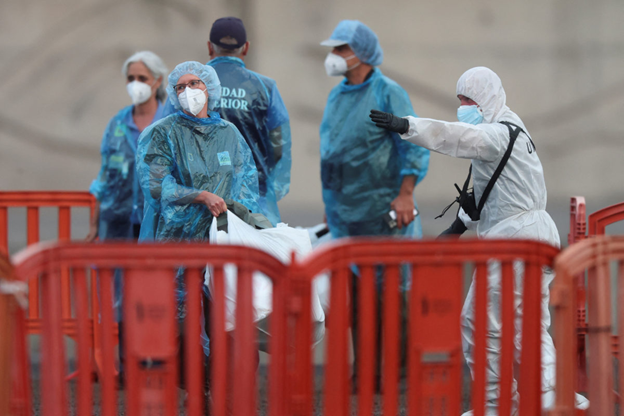
Healthcare officials in Tenerife, Canary Islands prepare for the arrival of the quarantined MV Hondius passengers. Source: pbs.org
Hantavirus is a family of zoonotic viruses (transmitted to humans from animals), typically spread through contact with rodent excrement and saliva. While there are many variants of hantavirus, there are two primary types that can be transmitted to humans. North and South American variants cause cardiopulmonary symptoms (HCPS). After an incubation period of 1-8 weeks, they present with a prodrome of flu-like symptoms, including fevers, body aches, headache and gastrointestinal symptoms. Over a few days this can progress suddenly to a severe cough, shortness of breath, pulmonary edema and hypotension. There is no curative treatment and little available for temporizing support in resource-limited environments. Patients who have contracted the disease are best managed in the ICU as they often require vasopressors and ventilatory support, and sometimes require extracorporeal membrane oxygenation (ECMO). HCPS has a fatality rate of 20-50%.
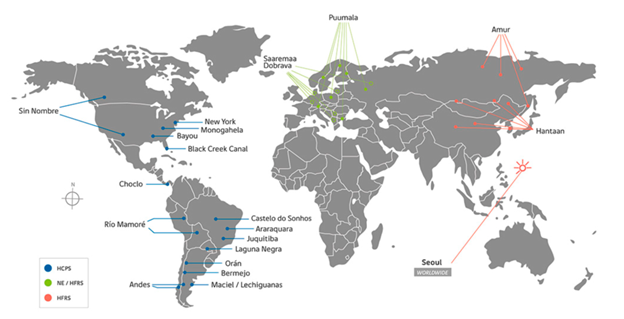
Documented strains of hantavirus worldwide. The Andes strain is implicated in the outbreak on MV Hondius. HCPS = hantavirus cardiopulmonary syndrome, HFRS = hantavirus hemorrhagic fever with renal syndrome NE = neuropathica endemica (a less severe version of HFRS) Source: Swiss Medical Weekly
The European and Asian variants cause hemorrhagic fever and renal failure (HFRS) after a similar incubation period, initially presenting with headaches, fever, blurry vision, back and abdominal pain and a rash before progressing rapidly to kidney failure. Again, treatment is supportive care with fluid and electrolyte management, and hemodialysis in severe cases. Fatality ranges from 1-15% in this variant.
In resource-limited settings like a cruise ship or a remote island, identification is quite challenging as initial presentation for both variants mimics common viral illness and confirmatory testing is not feasible outside of a hospital setting. Prehospital treatment includes supportive care with supplemental oxygen, but there are no immunizations or antiviral medications used to prevent or treat this illness. If you are treating a patient in a remote setting with suspected hantavirus, the primary consideration is for rapid evacuation to a higher level of care, even if the patient has an overall reassuring initial presentation as they can rapidly deteriorate.
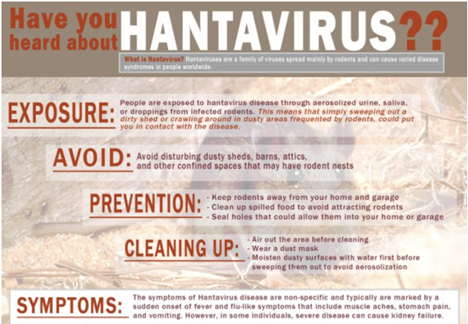
Hantavirus infographic from the US Army European Public Health Command (2019). Source: U.S. Army
In the case of the MV Hondius, the cause of the outbreak is still unconfirmed. The two passengers who initially contracted symptoms had been traveling in South America prior to embarking on the cruise and could have contracted the illness prior to departure. Some sources report that the Dutch couple may have contracted the disease while birdwatching at a landfill in Ushuiaia, although this theory is contested. The Andes variant, which is implicated in this outbreak, has previously been known to transmit from person-to-person, but only with prolonged contact in close quarters or from healthcare providers treating affected patients without proper PPE. So far, the WHO epidemiological examination has not identified a clear cause of the outbreak. According to Dr. Maria van Kerkhove, the WHOs Head of Epidemic and Pandemic Preparedness and Prevention, “the risk to the general public is low”.
Check back for updates as this story continues to develop.