With approximately 1 in every 212 flights involved in medical emergencies, in-flight medical events may be less anecdotal than we realize. For Paramedics Tina Fritz and Kaarin Powel, a fictional situation quickly became reality as not one, but two medical emergencies occurred aboard flight DL478 from Atlanta to Portland on April 24th. Fritz and Powel were returning home from vacation in the Dominican Republic when medical assistance was requested overhead. Fritz, Powel, a nurse, and an individual with EMT Training answered the overhead call – ready to assist. While they addressed this passenger’s medical needs, flight attendants notified the group that, at the same time, a different passenger, was in labor.
Paramedics Fritz and Powel, having received training in handling these situations, sprung to action. After learning that the aircraft was not equipped with an in-flight “OB Kit”, they improvised and used a pink shoelace as a tourniquet to start an IV, a fuzzy lap blanket as a swaddle, and even contemplated the use of a butter knife to cut the umbilical cord until a pair of scissors was acquired. Despite resource limitations, Fritz and Powel adapted quickly and effectively to deliver 5lb 8oz baby girl, Brielle Blair.
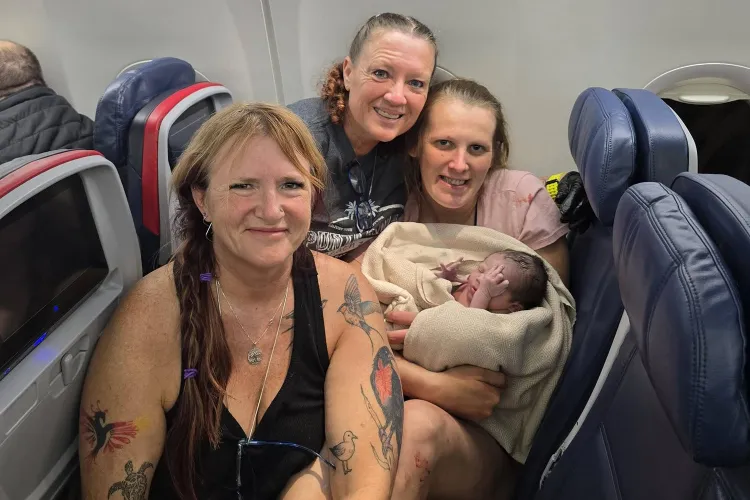
EMTs Powell & Fritz, Mother Ashley Blair and newborn baby Brielle on DL478. Source: People Magazine
It is unclear whether supplies in the standard FAA medical kit were not located, used on the other passenger patient, or just weren’t utilized. This heroic situation highlights the inevitability yet unpredictability of in-flight medicine. The U.S. FAA mandates an AED and Emergency Medical Kit in all flights with at least one flight attendant and 30 or more passengers. The contents of the basic medical kit are designed to supplement treatment of conditions like cardiac arrest, anaphylaxis, respiratory issues, gastrointestinal distress, and severe pain. In recent years, many airlines have opted to include non-mandated Expanded Medical Kits. These kits go beyond the minimum requirements specified by the FAA, often including epinephrine auto-injectors, pediatric medication doses, anti-seizure drugs, naloxone, and enhanced diagnostic tools (i.e., pulse ox, thermometer, etc.). In flight Emergency Obstetrical (O.B.) Kits are specialized packs designed for unplanned, pre-hospital childbirth. These kits contain tools like gloves, a scalpel, a bulb syringe, umbilical clamps and receiving blankets. Despite the existence of these kits, and the option for airlines to carry them aboard, obstetric-specific emergency kits are rarely available.
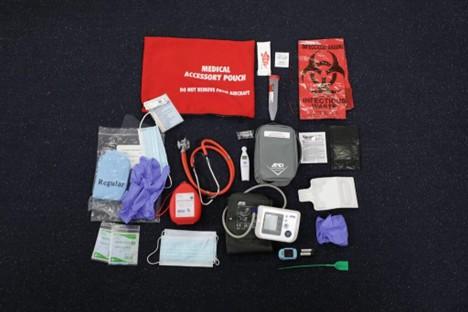
Delta medical kit. Source: Delta
Although crewmembers receive training for basic in-flight emergencies, they may still request assistance from a volunteer medical professional. It is important that any potential volunteer consider suitability for the situation – including whether they’re under the influence of alcohol, sleep aids, or are just fatigued from a long travel journey. Due to the austere nature of these situations, the Aviation Medical Assistance Act of 1998 ensures that protections are in place to ensure the medical volunteers are released from liability unless there is evidence of gross negligence or willful misconduct.
By following a calm and communicative approach, being well-versed in the most common medical in-flight medical emergencies and understanding the equipment available via the in-flight medical kit, most providers should be well equipped to manage a broad spectrum of in-flight scenarios. Despite the relatively high occurrence of in-flight emergencies, flight diversions due to medical emergencies only occur in ~1-10% of cases. There are no concrete FAA criteria for flight diversion. While the captain may consult with ground-based medical advisory services, cabin crew and on-board medical volunteers are responsible for stabilizing and treating the patient, regardless of the flightpath.
In this case, the baby was born just as the plane was preparing to land. When Portland Airport Fire and Rescue came on board, they “found the mother and baby healthy” and transported them to a local hospital without incident.