Introduction
For decades, the practice of tactical and operational medicine has centered on the point of injury. The focus has been clear: control hemorrhage, manage the airway, address immediate life threats, and move the casualty toward higher levels of care. Evacuation has traditionally been viewed as a solution—an endpoint to the most dangerous phase of care.
However, recent updates from the Joint Trauma System (JTS), specifically through the Committee on En Route Combat Casualty Care (CoERCCC), challenge this assumption. The Joint En Route Care (ERC) Guidelines redefine transport not as a passive transition, but as a distinct and high-risk phase of care that demands deliberate preparation, continuous reassessment, and operational awareness.
While these guidelines are rooted in military medicine, their implications extend directly into wilderness medicine and Prolonged Field Care (PFC). In austere and remote environments, evacuation is often delayed, improvised, or contested. As a result, the majority of patient management occurs not at the point of injury—but during movement. In this context, en route care becomes the operational space where prolonged care is delivered.
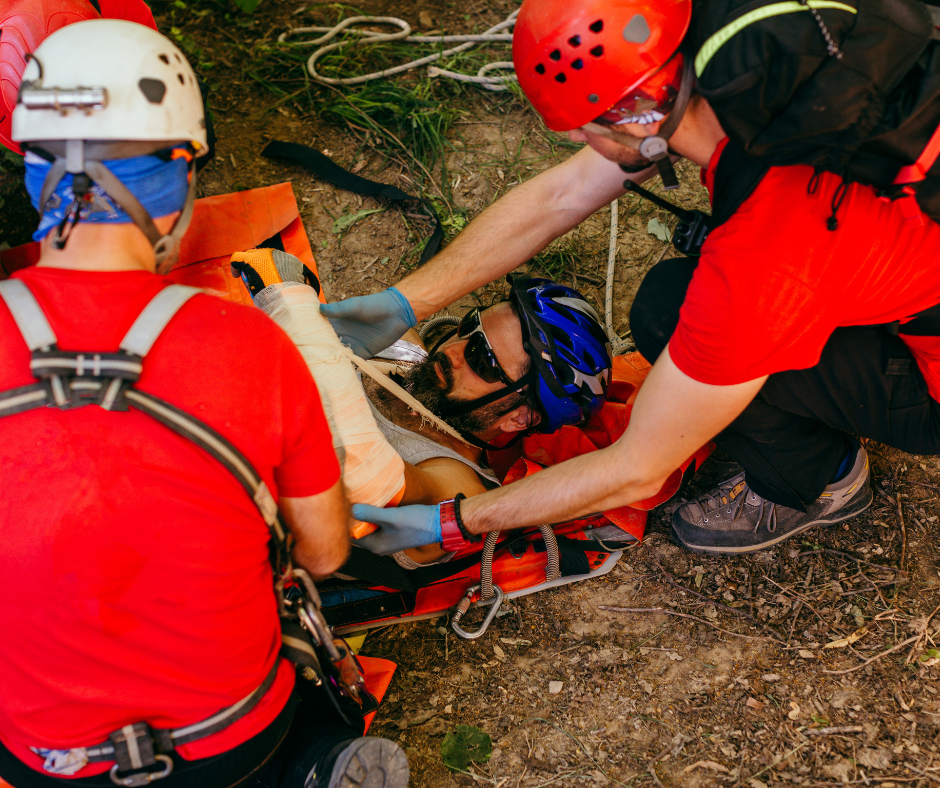
Image source: Canva.com
Two Realities of Evacuation
In operational environments, evacuation is often assumed to be inherently beneficial—but that assumption deserves scrutiny. Two distinct realities exist. In one, evacuation platforms bring additional personnel, equipment, and capability, effectively elevating the level of care beyond what was available at the point of injury. In the other, transport occurs under constrained conditions where care is merely sustained—not enhanced—while awaiting definitive treatment.
The distinction is not trivial. Hemodynamically labile patients, in particular, may deteriorate rapidly during movement due to environmental stressors, limited access, and interruptions in monitoring or intervention. Movement introduces noise, vibration, temperature shifts, and logistical constraints that degrade both physiology and provider performance.
For this reason, transport should not be viewed as a passive transition, but as a dynamic and potentially destabilizing phase of care—one that demands deliberate anticipation, preparation, and reassessment.
The Vulnerability of Movement
The ERC guidelines explicitly identify en route care as one of the most vulnerable phases in casualty management. This insight becomes even more relevant when viewed through the lens of wilderness medicine and PFC.
In remote environments, transport is rarely smooth or controlled. Patients may be carried over uneven terrain, exposed to environmental extremes, or moved across long distances without reliable monitoring. These conditions increase the likelihood of deterioration, particularly in patients who are already physiologically unstable.
Prolonged movement amplifies:
- Hypothermia risk
- Re-bleeding
- Airway compromise
- Fatigue (both patient and provider)
- Equipment failure
In this setting, deterioration is not unexpected—it is predictable. The challenge is not simply to respond to it, but to anticipate it.
Before transport begins, stabilization must be reframed. It is not a checklist to complete—it is a deliberate effort to ensure that every intervention will tolerate movement, time, and environmental stress. Even something as seemingly straightforward as splinting illustrates this: orthopedic injuries must be stabilized not just for alignment, but for durability, with padding and securement that will withstand vibration, terrain, and prolonged transport.
From Intervention to Sustained Care
One of the most important concepts emphasized in the ERC guidelines is pre-movement optimization. In PFC and wilderness medicine, this principle extends beyond initial stabilization into sustained care planning.
Before movement begins, providers must consider:
- How long transport will take
- What resources will be available—or lost—during movement
- What complications are likely to occur over time
This requires a shift from short-term intervention to longitudinal thinking. A patient who is stable at rest may not remain stable after hours of movement. Pain control may wear off, bleeding may recur, and environmental exposure may worsen physiology.
A casualty with a groin wound that appears controlled, for example, cannot simply be left as-is. Dressings must be removed and re-packed to confirm hemostasis, reinforced for durability, and, when appropriate, backed up with a loosely placed proximal tourniquet to rapidly address re-bleeding during a bumpy evacuation.
Similarly, an intubated patient is not simply “secured.” Tube depth must be confirmed, EtCO₂ verified, cuff pressures considered—especially with altitude—and suction immediately available. The airway must be secured in a way that withstands vibration and limited access, with a bag-valve-mask and PEEP ready, because ventilator failure or disconnection must be assumed possible.
Packaging as Prolonged Care
The ERC guidelines elevate patient packaging to a clinical priority. In wilderness medicine and PFC, packaging becomes a cornerstone of ongoing care.
Effective packaging must account for:
- Environmental protection (cold, heat, moisture)
- Pressure injury prevention
- Equipment accessibility
- Stability during movement
Hypothermia prevention is particularly critical, as it contributes directly to coagulopathy and worsened outcomes. Insulation, vapor barriers, and fluid warming strategies must be implemented early and maintained throughout transport.
A burn patient, for example, illustrates how multiple priorities converge. Early airway control may be required before edema progresses, fluid resuscitation must be initiated based on estimated TBSA and titrated to maintain a urine output of 0.5-1 mL/kg/hr, temperature must be aggressively managed, and wounds must be covered with dressings that will remain intact throughout movement.
In prolonged scenarios, packaging is not static—it must be reassessed and adjusted as conditions evolve.
Continuous Reassessment as a Care Loop
The ERC framework reinforces the use of MARCH-PAWS as a continuous reassessment cycle. In PFC, this becomes a structured “battle rhythm” of care.
Providers must repeatedly reassess:
- Hemorrhage control
- Airway stability
- Respiratory function
- Circulatory status
- Environmental impact
A patient with chest trauma, for example, may initially respond to decompression but later deteriorate during transport. Devices must be secured, insertion depth marked, and positioning optimized so the injured side remains accessible—recognizing that respiratory compromise is often progressive rather than abrupt.
In prolonged or wilderness scenarios, time-dependent threats must also be addressed early. Antibiotics should be administered before evacuation delays extend into hours, and a crush injury patient should receive fluids prior to extrication to mitigate downstream metabolic collapse.
The challenge is compounded during movement, where access is limited and reassessment may be delayed. This increases reliance on anticipation and trend recognition rather than single-point evaluations.
Communication and Decision-Making Over Time
Communication challenges described in the ERC guidelines are amplified in wilderness and PFC environments. Limited connectivity, delayed evacuation, and lack of real-time medical direction place greater responsibility on the provider.
Communication serves multiple roles:
- Coordinating team actions during movement
- Relaying patient status to external resources
- Documenting care for delayed handoff
Equally important is internal decision-making. Providers must continuously reassess priorities, allocate limited resources, and adapt to changing conditions. This cognitive load increases over time, particularly in prolonged scenarios.
At handoff, continuity becomes critical. The receiving team must understand not only the injuries, but the interventions already performed—tourniquet times, airway details, fluids and medications administered, response to care, and any deterioration during movement. Without this, effective care can be lost at the transition.
The Training Gap
Both operational and wilderness medicine share a critical training gap: the underrepresentation of prolonged care during movement.
Training often focuses on:
- Initial assessment
- Immediate interventions
- Short-duration scenarios
Less emphasis is placed on:
- Sustained care over hours
- Movement under load
- Reassessment in degraded environments
- Decision-making under fatigue
As a result, providers may be well-prepared for the first minutes of care, but underprepared for the prolonged phases that follow.
Conclusion
The evolution of en route care reflects a broader shift that unifies operational medicine, wilderness medicine, and prolonged field care. Survival is not determined solely at the point of injury, but across the continuum of care—particularly during movement.
In austere environments, en route care is not a transitional phase—it may be the dominant phase of care delivery. It may be where prolonged field care is practiced, where wilderness medicine principles are applied, and where patient outcomes are ultimately shaped.
Recognizing transport as a dynamic, high-risk, and prolonged care environment allows providers to better anticipate complications, prepare for deterioration, and sustain life under challenging conditions. As these disciplines continue to converge, the ability to manage patients during movement will define the next evolution of care in austere medicine.
Transport is not a transition—it is the phase where every intervention is tested.
Reference
Joint Trauma System, Committee on En Route Combat Casualty Care (CoERCCC). (2026). Joint En Route Care (ERC) guidelines. U.S. Department of Defense. Retrieved from https://deployedmedicine.com
https://books.allogy.com/web/tenant/8/books/28bffeda-6596-4111-800e-8be4fd737352/