If you have been involved in the wilderness medicine community or WMS sometime in the
past 30 years, there is a good chance that you will know Shana Tarter. As a former WMS
President and FAWM Committee Chair, she is the definition of a wilderness medicine legend.
So, let’s start at the beginning of Shana’s illustrious career. Her love of the outdoors began with
rock climbing and camping as an undergrad at Cornell University in the late 80s. She ended up
getting hired as the associate director of Cornell Outdoor Education, where she helped run the
program. She would also spend her summers in the Wind River Range in Wyoming, leading
expeditions for NOLS. She realized early on that her first aid skills were insufficient for leading
extended remote expeditions. As a result, she took a Wilderness EMT course in 1990. It was the
Wilderness Medicine Institute’s first course where she met Melissa Gray and Buck Tilton, co-
founders of WMI. Like many WMI students, the experience was transformative for her. “It was
the lightbulb moment when I realized education could look like something other than what I had
known in my life. Once you experience learning in that form, it’s hard to accept anything else.
That course changed the trajectory of my professional career.”
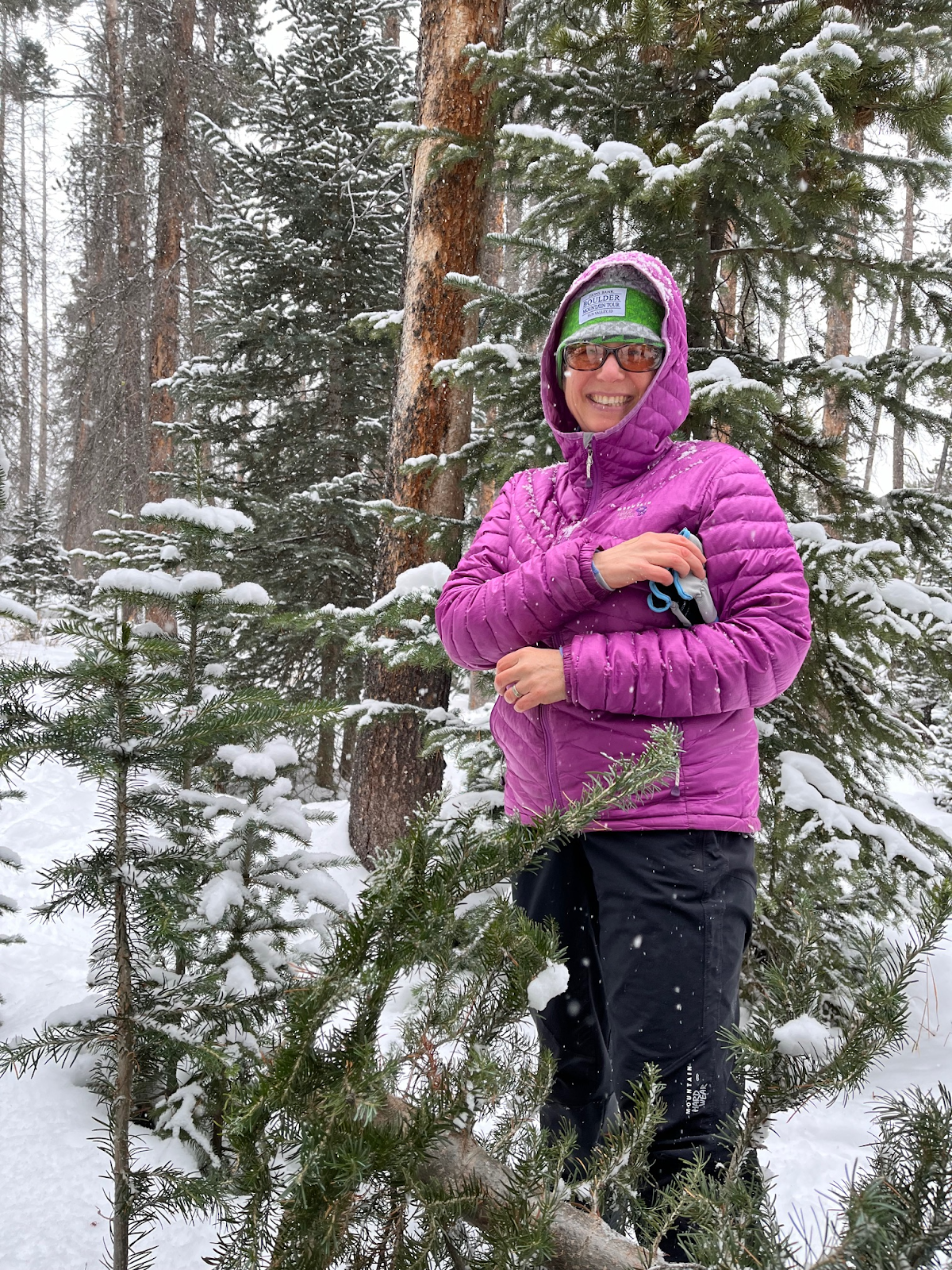
Shana Tarter at home in Wyoming
It was a few months after returning to Ithaca that the local volunteer fire chief heard she was an EMT. He came knocking on her door and asked her to join the rescue squad. For the next few years, she and her soon-to-be husband dove into the world of EMS and fire with the Varna Fire Department. She expanded her EMT and medical knowledge through an EMT Intermediate course and then an EMT3 or critical care technician course. She loved the world of EMS so much that the topper to her wedding cake had a Lego firefighter and a Lego paramedic rappelling from the top of the cake.
Shana had kept in touch with Melissa Gray from WMI. In 1995, she and her husband moved everything into storage locker #11 in Gunnison, CO to start teaching for the WMI. They traveled the western United States teaching wilderness medicine courses, climbing, paddling, and leading NOLS expeditions. When her husband went to PA school in 1996, she shifted towards a more administrative role for WMI. At that time, organized wilderness medicine education was still in its infancy. Shana said it was an exciting time to get involved. “We were defining standards, setting norms, and building an industry.” When she first got involved with WMI in 1990, WMI ran 3 courses with 83 total students. In the last full year just prior to COVID, WMI ran nearly 1200 courses for more than 24,000 students.
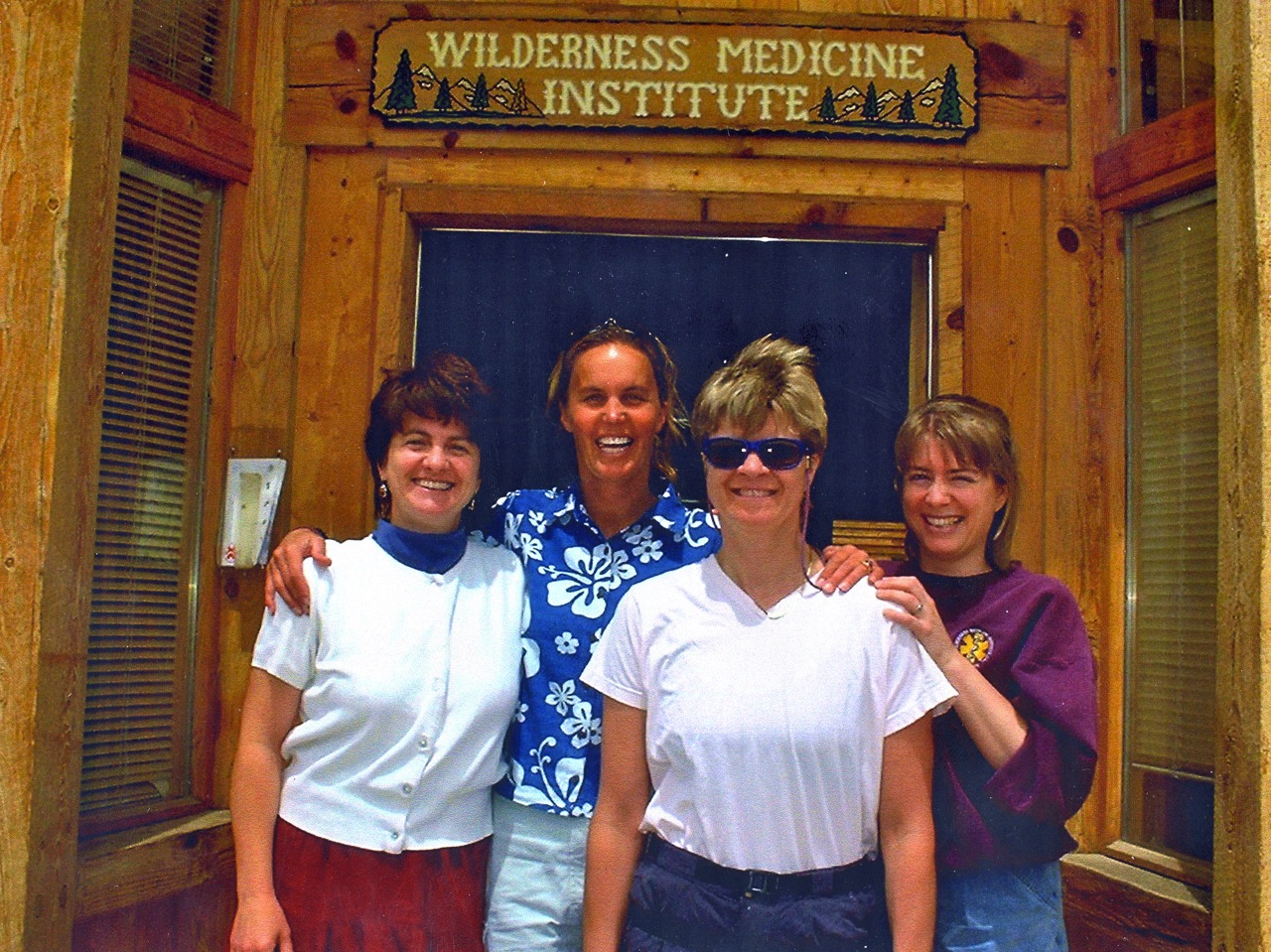
Judy Crawford, Fiona Stringer, Melissa Gray, Shana Tarter - WMI Office in Pitkin, circa 1998
In the early days of WMI, they were based in Pitkin, CO, with only a population of 100. “Our days were spent figuring out how to scale our systems, how to build our instructor base, and how to enter the digital age.” When she first started working in Pitkin, there was a party phone line and they all shared one dial-up modem. A small handful lived in Pitkin and did everything from cleaning bathrooms, pasting mailing labels on flyers, to packing gear and teaching courses. She would design the WMI Instructor Training Course in 1997, which is still in use today to train faculty. “We reinforce that their job is not to be a wilderness medicine expert, but rather to be a wilderness medicine education expert.”
In 1999, NOLS purchased the WMI and in 2002 the business was moved to Lander, WY. “We moved four families, two bachelors, and a handful of pets, effectively reducing Pitkin’s population by 10%.” Her role with NOLS was to align systems and build relationships between the businesses. After the move to Lander, there was no permanent home for the Wilderness EMT program. After securing a generous philanthropic gift, NOLS was able to purchase of 243 acres, 13 miles outside of Lander. The location they chose was stunning, with a river and red rock cliffs, plenty of rattlesnakes, and one mountain lion. She led the project to design and build the Wyss Wilderness Medicine Campus, where they house, feed, and educate WEMT students. The campus opened in 2012 and has been in continuous use since. It is a certified LEED Platinum facility that can house 60 students and has space for two simultaneous 30-person courses.
Her nearly 30-year career between WMI and NOLS was filled with so many highlights that I didn’t have enough of a word count to list them all here. However, one theme emerged during this illustrious career: education. “I really loved training new instructors and helping them transition from instinctual educators to intentional educators.” She co-authored the Wilderness Medicine Education chapter for Auerbach’s Wilderness Medicine. She still teaches wilderness medicine courses, though fewer than in the early days. “It never ceases to amaze me how much learning and confidence building can happen, even during a 16-hour Wilderness First Aid course.”
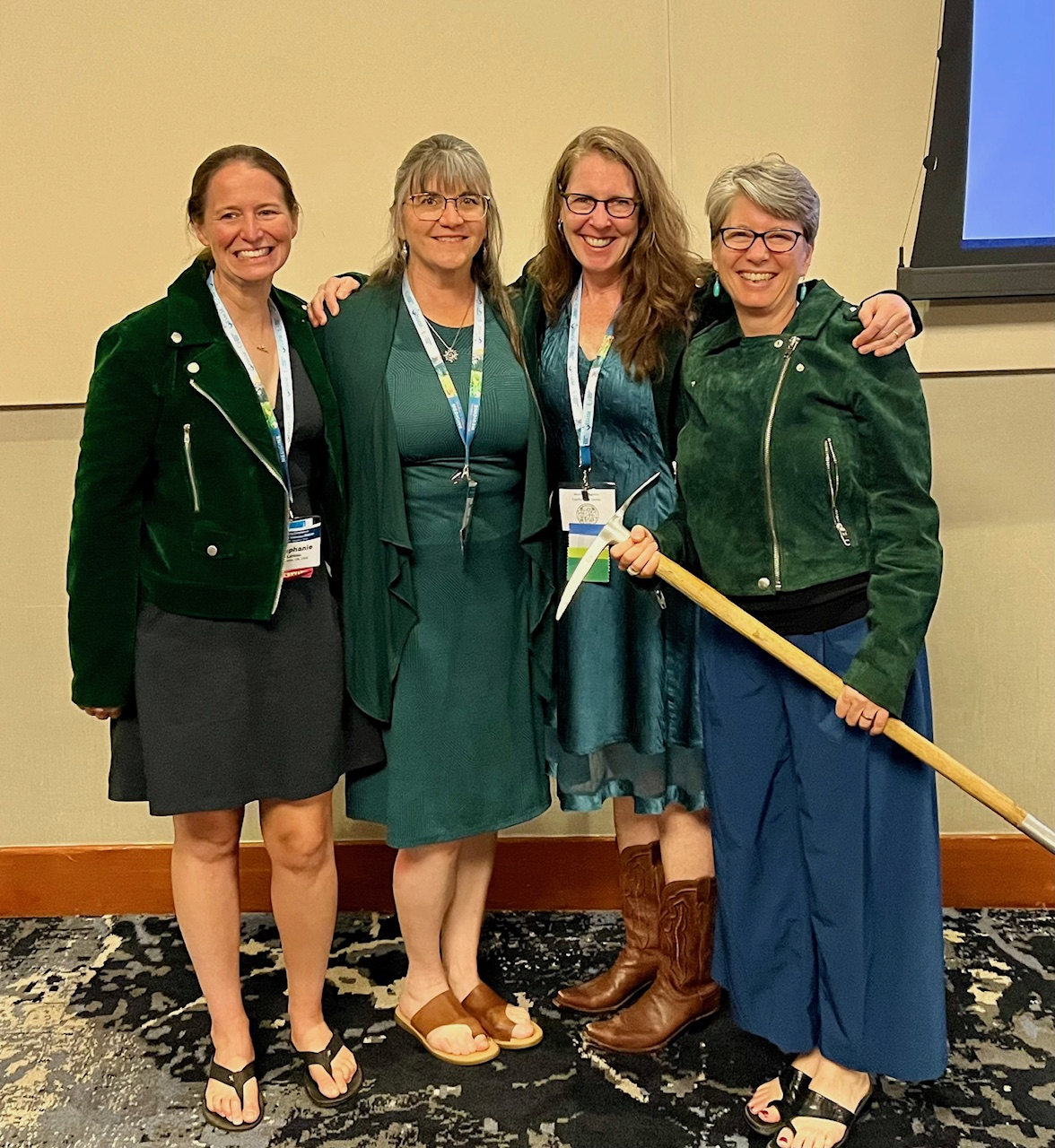
WMS Presidents Stephanie Lareau, Jenn Dow, Linda Keyes, Shana Tarter
Shana pivoted to a new chapter in her life after leaving NOLS, which involved tackling a crisis we are all facing: climate change. A few years ago, she found a copy of David Wallace- Wells’ The Uninhabitable Earth in her mailbox with a note from a NOLS acquaintance who lived in Lander. The note said that he was worried about climate change and its impacts on our community and families, and he thought she might be someone who shared that concern. The hope was that she would read the book and consider attending a meeting in Lander to discuss how they could make a difference. “Reading that book made me feel like I had been blissfully ignorant of what was clearly happening all around me.” That meeting in Lander turned into a small non-profit called the Lander Climate Action Network.
While figuring out how to get started in the climate space, she reached out to a long-time wilderness medicine colleague and former WMS president, Dr. Jay Lemery, who holds an endowed chair position in climate and health at the CU Anschutz School of Medicine. Her timing couldn’t have been better. Jay was looking for someone to help manage the newly launched Diploma in Climate Medicine. Just a few months later, she was on a team with Drs. Bhargavi Chekuri and Terry O’Connor completing the development of the program. “Once you start really looking at how deeply tied climate change is to human health, it’s hard to imagine working on any other issue.” She has been working with a group of longtime friends and colleagues from the Wilderness Risk Management Community to raise awareness about the impacts of climate change on the outdoor industry.
Her work at CU has allowed her to pair two passions, education and climate change. “ It feels like a full circle experience. I started my career helping non-medical professionals gain the skills and confidence to care for people and make tough decisions in remote environments. Now I spend my time helping people develop the confidence to advocate for a future that supports human and planetary health. If we don’t, we won’t have any wilderness to enjoy.” I asked Shana what was the biggest lesson she has learned from being in the wilderness and if she has any advice for anyone interested in becoming involved in wilderness medicine. “Regardless of which professional role I had, my core identity is as an educator. I believe that no matter what skills and talents you have, learning to share those with others is critically important.”
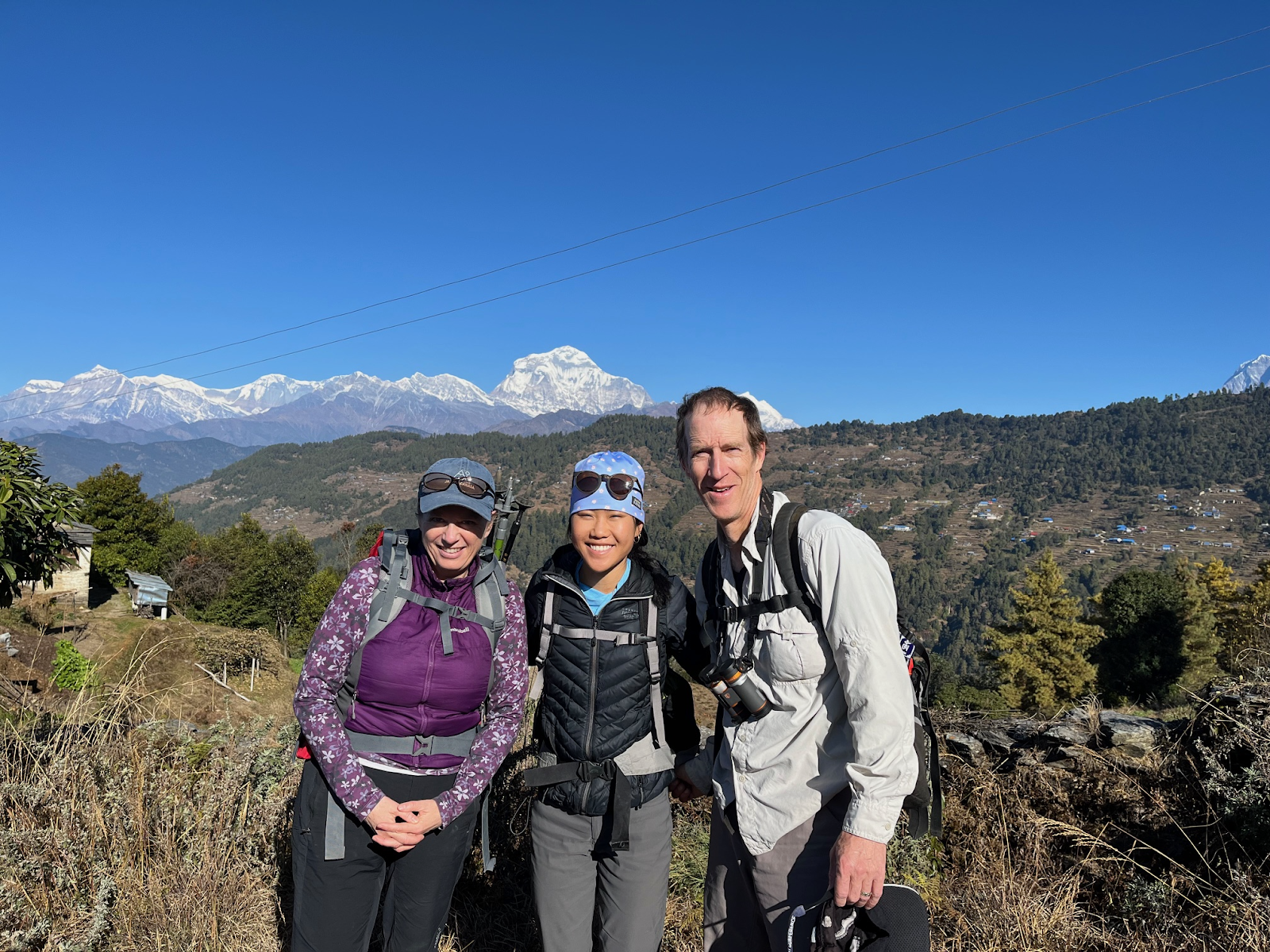
Shana Tarter and family, Nepal 2024