Overview
Regardless of politics, history, religion, or culture, if you and your team decide to practice under austere conditions in the Gaza conflict zone, there are a number of thoughts that one might consider before, during, and after a deployment.
Gaza is about 25 miles (40km) in length and 3 to 6 miles (5km - 10km) in width and has a population of about 2 million people.
The majority of the population is in the Red Zone (see map), which is secured by the Hamas political party and their military wing and encompasses most of the major cities. The Green Zone is secured by the IDF (Israeli Defense Forces). The yellow line, marked by large concrete posts, is considered to be a demarcation line between the two areas of control in Gaza.
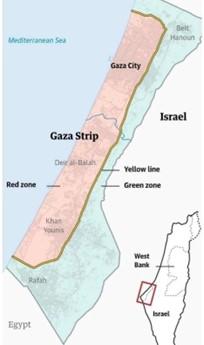
Gaza Red and Green Zones (Source: IDF)
Current State of Medical Infrastructure
The current conflict has had a significant impact on the Gazan healthcare system. Depending on the reporting mechanism, the healthcare system is operating at about 50% of capacity, while serving a population of about 2 million. It has been reported that medical specialist positions (surgery, oncology, etc.) are filled at 30%. Reports contend that there are about 350,000 people in Gaza with untreated chronic illness such as hypertension and diabetes. As of late 2025, only 19 of Gaza's original 36 hospitals are considered partially functional, with many having suspended services or have limited operational capability. Gaza’s healthcare system is overwhelmed, with severe shortages of medical supplies and staff. Some foreign countries, UN agencies, and NGOs have established more than 20 Emergency Field Hospitals (EFH) and clinics in Gaza to treat the internally displaced population.
Medical Interventions
Be prepared to treat common upper respiratory issues associated with living in close quarters, diarrhea, skin issues such as eczema and acute conflict injuries.
Team Augmentation
Hiring a local clinician from Gaza will be invaluable. Some clinicians no longer have a desire to work at the remaining Gaza hospitals because of prior political relationships and they may choose to become a part of an international NGO. Clinicians from Gaza may also help understand the cultural and language barriers.
Patient Populations
Who are the vulnerable? In Gaza it is the mothers and children. They may be located in camps, in urban areas in the Hamas-controlled Red Zone, or out in the rural areas in the IDF-controlled Green Zone.
Climate Considerations
There are frequent weather changes in the region despite being on the Mediterranean Coast. Be prepared for cooler temperatures and rain. In many cases when it rains, it pours. If your location does not have adequate drainage, it may flood and you will be working in muddy conditions which can complicate tasks, daily care, and staff morale.
During the hotter summer months, some medicines and test strips may be affected by the higher temperatures if not maintained in cool spaces. Be aware of cold chain processes during shipments and high temps at crossing sites.
Sanitation and Water
In conflict zones, poor sanitation may also increase the risk of infectious diseases such cholera, however to date, there have not been any reports of outbreaks in Gaza.
Clean water at clinic sites may not be readily available. Much of the region relies on wells and pump stations. When electricity is lost, your team may need to consider a back-up plan to obtain clean water and ensure a clean and/or sterile environment. Water filter systems for clinics are varied. Staff may use individual products such as Lifestraw, MSR, or Sawyer water filters. However, at the clinic level, larger systems that are gravity fed or in line from a water source should be considered. Routine back flushing and system cleaning is a requirement.
Vaccination Programs
Vaccinations against polio and supplemented by Vitamin A, may be some of the best programs in Gaza with a long-term positive effect. More than 16,000 children have been vaccinated during the Phase I implementation. Two additional phases of vaccinations are planned.
Higher Level of Care
All NGOs should establish a process to move patients to a higher level of care whether in or out of the area. Since October 2025, more than 300 patients and their support groups have been evacuated from Gaza and transported to a higher level of care with help from the Italian and Jordanian governments. Others are evacuated to the major hospitals and EFHs in Gaza.
Emergency Patient Food
If there is reliable reporting concerning reduced daily caloric intake, RUSF (Ready-to-Use Supplementary Food) and RUTF (Ready-to-Use Therapeutic Food) might be considered for your patients. Both products are currently being distributed in Gaza and are nutrient-dense, paste-like, easy to digest and designed to add significant support to daily nutrition requirements. Their caloric value is approximately 500 calories per serving. Both are easy to eat and are distributed in packets and often provided at clinical sites.
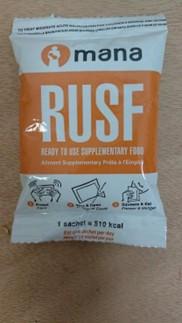
Ready-to-Use Supplementary Food (RUSF) (Photo: Mark Lopshire)
Logistics and Supply Chain
Flying supplies into Tel Aviv Ben Gurion Airport or bringing shipping containers into the Ashdod Port and subsequently Gaza is a challenge. Medical supplies brought into Israel are inspected in detail, screened, and scanned and cannot have “dual use” (i.e., peace and war) purposes if they are going to be shipped into Gaza. After inspection, supplies will be trucked to the border crossings, offloaded, and prepared for pick-up in Gaza by a vetted partner organization. If a partner inside Gaza is not registered and the drivers are not cleared, supplies may be turned away. A professional supply chain manager partner is recommended. Be aware that at some point in the process, your team may experience lost or looted supplies. Be prepared with a supply chain back-up plan.
Physical Therapy
Anecdotal evidence reports that there is a significant need for physical therapy in the Internally Displaced People (IDP) camps. Physical therapy should be integrated into best practices at emergency field hospitals and clinics. In many cases there are broken limbs and injuries that may eventually become permanent deformities and disabilities without proper rehabilitation.
Mental and Emotional Trauma Therapy
Throughout the region, even more so since Oct 7, 2023, children have endured conflict across Gaza and Israel. Children have experienced the loss of family, conflict along the border with Lebanon and Israel, and long-range rockets and drones originating from Iran and Yemen. There is an ongoing significant need for long term, child and family, trauma-focused therapy throughout the region.
Mission Creep
There is a need for short- and long-term medical support in Gaza. Each team should define the objectives in advance and focus strictly on that mission. Teams will see heartfelt needs in a conflict environment, however to expand into other areas may quickly drain key resources while putting a strain on the supply chain and funding channels. Do not let “mission creep” prevent you or your team from completing the tasks ahead. Despite overwhelming needs, your team cannot do it all.
Team Health
Whether you and the team are working in an austere challenging environment for a week or month or year, take time to relax and recharge. Take a hike in a safe area and explore the wilderness if possible. Recharge your emotional and physical batteries. It is easy to be overwhelmed. Discuss techniques and tools you have to help prevent short-term burnout such as medication, stretching/exercise, music, journaling, etc. Without a break, you or your team might be at risk to become tired, overwhelmed by patient needs, short-tempered and jaded in your perspectives. Take time off when you can and look for opportunities to explore the wilderness - no matter how small.
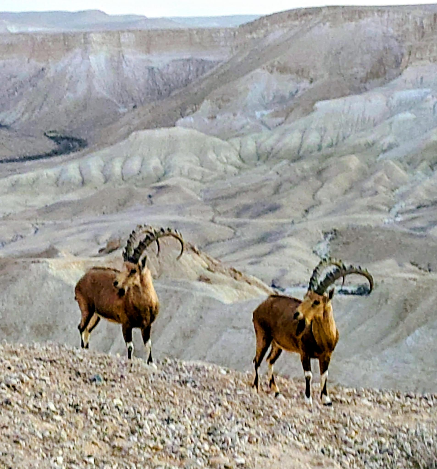
Nubian Ibex – Negev Desert (Photo: Mark Lopshire)
The bottom line is that restoring the healthcare system in Gaza and the region is going to be a long-term effort and operating in a conflict environment under austere conditions will be a challenge. You and your team should be flexible, focused, and able to work in a challenging and austere environment. Bring your wilderness medicine skills and mindset to the austere conflict challenge. And finally, a smile and greeting in a patient’s native language will open many doors and build long-lasting relationships with patients and others.