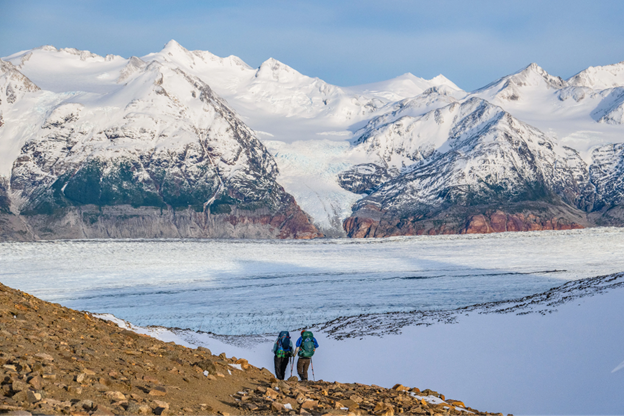
John Gardner Pass in Reassuring Conditions, Torres Del Paine National Park Source: LasTorres.com
Five tourists recently died due to exposure at Torres del Paine National Park during a sudden change in weather conditions on November 17, 2025. Two died after being found by search and rescue personnel, but before they could be evacuated. Torres del Paine National Park is an international backpacking destination, notable for rocky peaks, subpolar forests, Grey Glacier, and picturesque alpine lakes. The “O-Trek” is an 80-mile hiking trek over 7-8 days that traverses around the Paine Massif. There are multiple CONAF “Refugios” access points for nightly camping, but the trek is in Remote Maggellanes Patagonia where the nearest hospital is 1.5hrs by car.
Reports highlight that multiple hiker groups were near the Los Perros Campsite, a many-hour trek from the nearest access point and a 3-day trek from the park base area at Torres Central. Los Perros is the final campsite before the exposed and demanding climb up John Gardner Pass (1,241m), which itself takes many hours followed by a prolonged descent to the next ranger station and Grey Campsite. While a ranger is typically present at the Los Perros campsite and the Paso Shelter after the mountain pass descent, no ranger was present due to reduced staffing for mandatory voting on election day.
The weather forecast was initially reassuring for light rain and 100 km/hr (60mph) winds, which is considered normal conditions for the pass. However, these conditions deteriorated into white-out conditions with winds up to 120 mph, which is equivalent to a category 3 hurricane. A group of 30 were hiking together up the John Gardner pass when the storm struck. In whiteout conditions with no way to communicate, many turned back, hoping to make it back to Los Perros Camp. That’s when the group became separated, as many were blown down the mountain, only realizing later at camp that there were people missing. They then attempted a search party, finding one member who they attempted to evacuate in a makeshift litter, but who suffered died of exposure. Her husband was found dead and another member died despite rewarming efforts.
The Regional National Disaster Prevention and Response Service (Senapred) was activated, with 24 search and rescue personnel deployed, but helicopters were grounded due to poor weather conditions. Rescue teams on ground found the remaining 2 bodies deceased the next day. When weather improved the following day, the 4 who survived the storm at the top of the mountain pass but returned to Los Perros were airlifted to Punta Arenas (290km,180 miles).
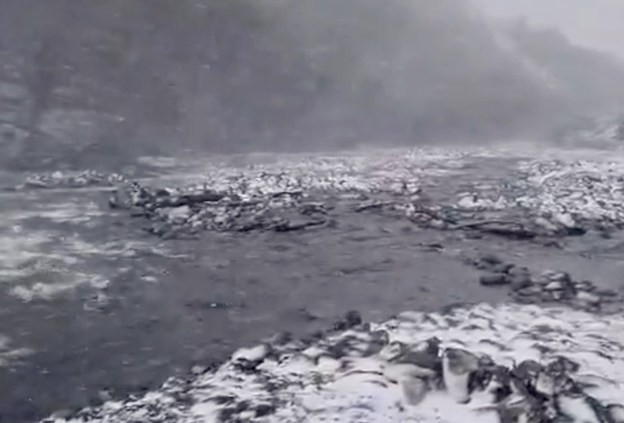
Frame Video of Storm from Chilean Press (Source: explorersweb.com)
These hikers’ experiences are not isolated to Patagonia. Recently, 20 hikers were also rescued from Mount Washington in whiteout conditions. On the Karma Valley trail to Everest basecamp in Nepal, a freak blizzard killed 1 hiker and stranded 200 others. In each case, a combination of a rapid change in weather with cold temperatures, high winds, and poor visibility created grave risks for the hikers. Weather conditions can rapidly change in the mountains, and those trekking in late fall are still at risk of winter weather and blizzards.
In an effort to prevent further need for search and rescues, preventative search and rescue (PSAR) techniques for hikers are becoming more popular in many national parks. PSAR emphasizes proper preparation and education of avoidable situations to help prevent additional need for search and rescue. Key takeaways from PSAR include:
- Sticking to the hike that you plan
- Tell someone your plan (where and when you are going)
- Tell someone when you should be back
- Get basic training in first aid and navigation skills
- Wear and carry the essential equipment for your adventures.
If you find yourself caught in a rapidly cooling environment without definitive shelter or gear, one of the most important steps is sheltering yourself from the elements. Building a winter survival shelter might be the difference between life and death. There are a variety of different ways to create a shelter, including, snow caves, quinzhee’s, tree well’s, lean-to’s, and make-shift bivy:
- Snow caves can be made by tunneling into the side of a snowbank; these tend to work best for deep snow that both deep and hard-packed.
- A quinzhee is formed by piling snow on top of your supplies, packing it down and then pulling your supplies out and further scraping out the inside to make a roof - similar to an igloo but much easier to form.
- For a quick shelter, digging a tree well can help shelter you from strong winds and branches can be used for additional warmth.
- A lean-to can provide protection from wind but only from one side and often requires a tarp or similar material as well as string or sticks to help hold it up.
- An emergency bivy is a tarp-like covering designed to retained heat, but requires pre planning with gear. In the case you find yourself without enough snow or trees to build a shelter, you can also keep yourself warm by wrapping a tarp or tent around your body, then squatting or sitting on your pack to put a layer between your body and the ground.
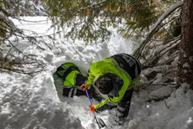
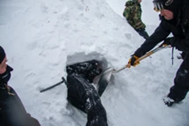
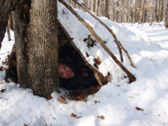
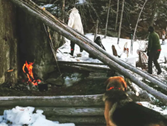
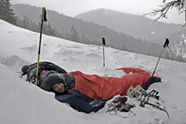
Snow Cave (image source: Etisurvival.com), Quinzee Hut (image source: Etisurvival.com), Tree Well (image source: popsci.com), leanto (image source: popsci.com), emergency bivy (image source: sectionhiker.com)
When hiking with a group during whiteout conditions, it is critical to remain close, verbally communicate to the extent possible, and frequently check to ensure all members of your group are still present. This most recent blizzard at Torres del Paine National Park highlights the importance of preparation before each trip. Severe changes in weather cannot always be predicted. Packing the proper equipment and knowing how to use it can help you survive even in extreme conditions.