The idea of summiting a mountain began shortly after moving to Washington, as it was hard to ignore the pull of giants like Mount Rainier looming over the landscape, their snow-capped peaks promising adventure. After researching a few guide services, I stumbled upon a niche company focusing on women in mountaineering. I didn’t think much of it at first but soon realized this was the experience I wanted, a space for camaraderie and connection, free of competitiveness. It was a chance to test my physical and mental limits while fostering a deeper bond with a team.
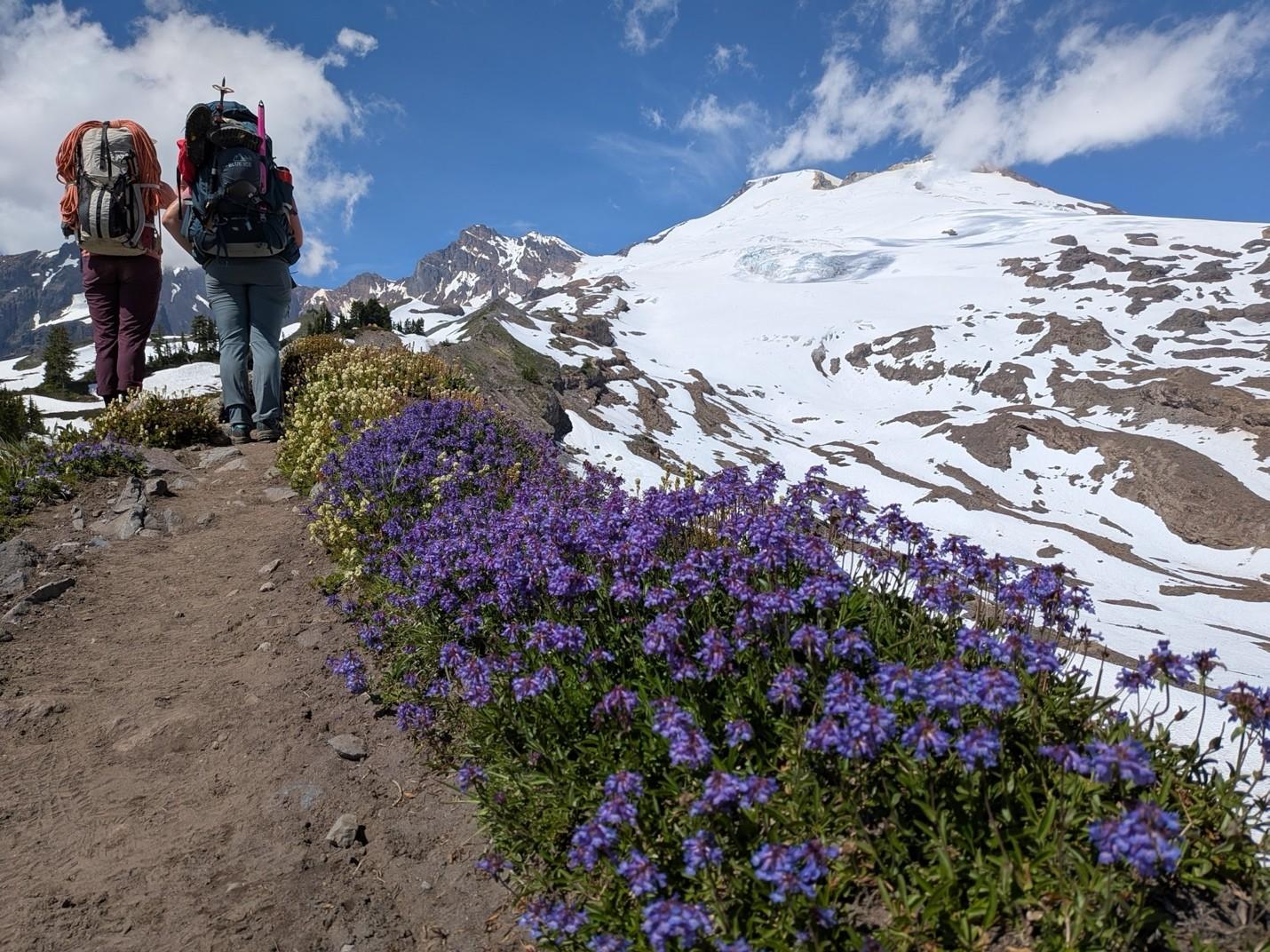
Looking up to Mt. Baker while walking along the Railroad Grade Trail. Photo credit: Danielle Chmelewski
I convinced a close friend, a fellow physician assistant, to join me on an expedition to traverse glaciers and summit Mount Baker. This would be a new experience for both of us, a shared challenge in an unfamiliar world. As we ascended, our lungs adjusting to the thinning air and our crampons crunching on the ice, one of our guides noticed our profession. She commented that several of her previous clients were in medicine and drawn to pushing themselves physically and mentally in the mountains. This resonated deeply; it was a perfect parallel to the demanding, high-stakes environments we navigated daily.
Our conversation shifted as my friend revealed she was undergoing fertility treatments. Then, our journey was layered with an entirely new question: How does one undergo fertility treatments and remain active in wilderness environments like mountaineering? The question hung in the air. We were both medical professionals, and yet we had no answers. The personal and the professional had merged on the side of a volcano, pushing us to seek a deeper understanding.
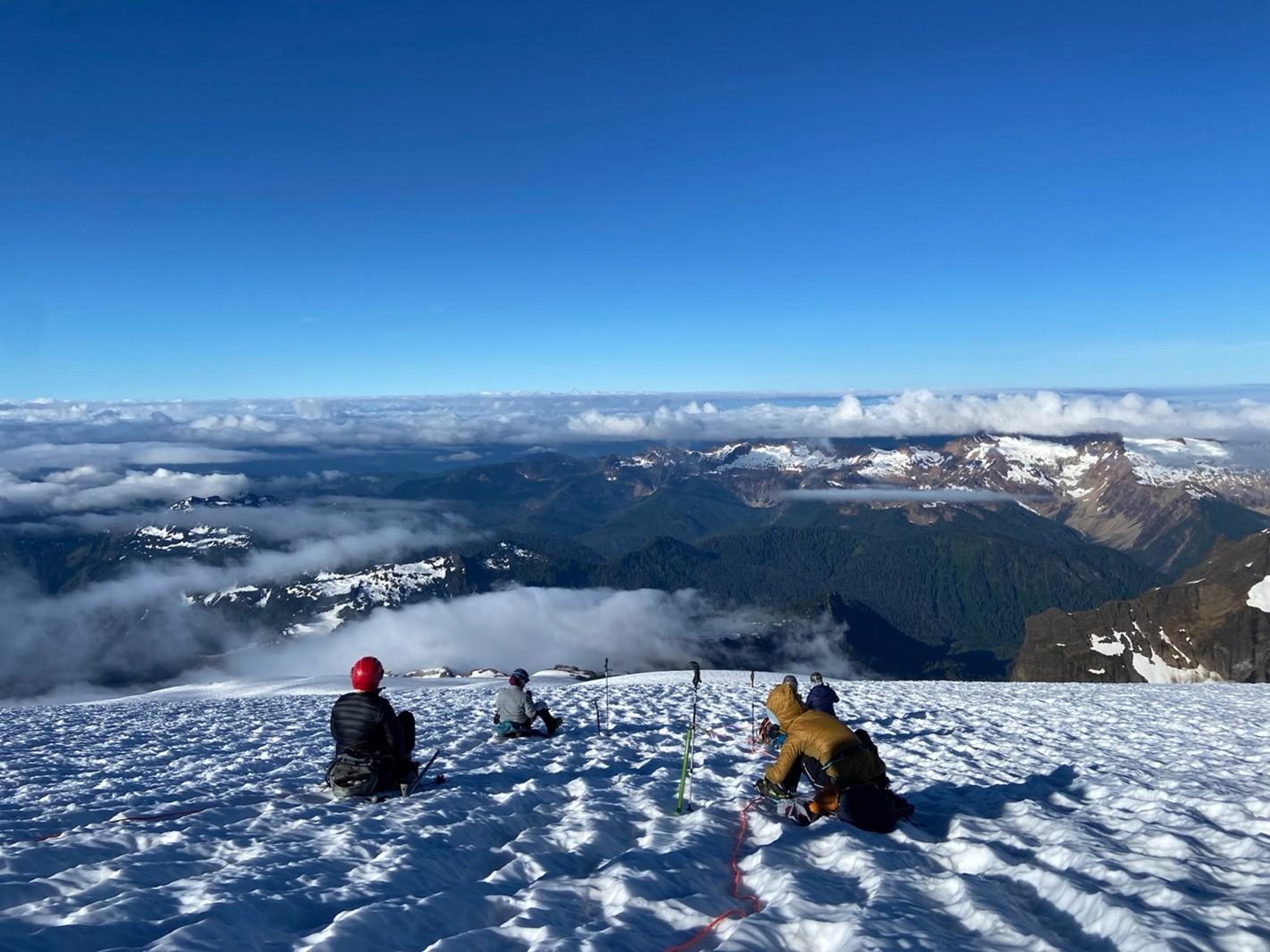
Resting during the ascent taking in the views. Photo credit: Isabel Masi
The Uncharted Territory: Fertility Treatments in the Wilderness
The medical literature is rich with research on female athletes and elite sportswomen, examining topics such as reproductive health and the impact of vigorous physical activity. However, these studies do not address the unique intersection of assisted reproductive technology (ART) and wilderness or mountaineering activity. Our medical curiosity, piqued by my friend's situation, led me to a review of the existing evidence.
Existing research demonstrates that vigorous physical activity can affect menstrual function and, in some cases, fertility, particularly at very high levels of intensity and frequency. Studies of women participating in extreme wilderness expeditions (e.g., an Antarctic traverse) have shown that the reproductive axis can maintain its function despite significant energy deficits, but these women were not undergoing fertility treatments. Literature on physical activity and in vitro fertilization (IVF) outcomes suggests that moderate-to-vigorous activity is not detrimental and may even be beneficial, but again, this research does not address the specific stressors of wilderness or mountaineering settings.
Finally, research on pregnancy and physical activity in wilderness environments, including mountaineering, is limited and does not include women actively undergoing fertility treatments. Therefore, while there is evidence on physical activity, reproductive health, and wilderness participation in women, no studies directly address the safety, outcomes, or physiological effects of wilderness activity in women undergoing fertility treatments. This remains a significant gap in our current knowledge.
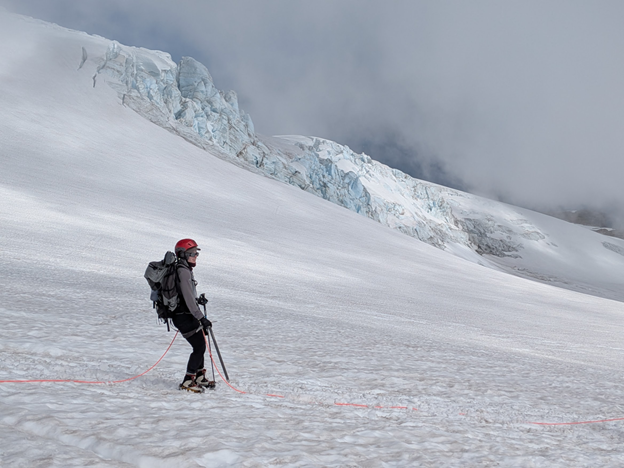
Navigating the descent. Photo credit: Danielle Chmelewski
Medications and the Mountains: Notable Side Effects
Navigating fertility treatments requires a careful balancing act, and doing so in a remote, high-altitude environment introduces a new set of risks. The medications used in ovulation induction and assisted reproduction carry notable side effects that can be particularly relevant for women engaged in high-altitude activity.
Common side effects of fertility drugs, such as hot flashes, headaches, and mood changes, can be exacerbated by altitude, physical exertion, and limited access to hydration. For example, hot flashes caused by clomiphene citrate or GnRH agonists can increase the risk of dehydration, while headaches and dizziness from letrozole or injectable gonadotropins may be difficult to distinguish from symptoms of altitude sickness.
Of greater concern are the side effects related to ovarian enlargement. Ovarian stimulation, common with clomiphene and gonadotropins, can cause the ovaries to swell. This poses a risk of ovarian torsion, a medical emergency where the ovary twists on its pedicle, cutting off its blood supply. Physical exertion and trauma during a climb could precipitate this event, which would be catastrophic in a remote setting. Similarly, ovarian hyperstimulation syndrome (OHSS), a potentially severe complication of injectable gonadotropins, can lead to dangerous fluid shifts, increased risk of blood clots, and dehydration, all conditions that are significantly more dangerous in a remote or high-altitude environment.
It is also important to consider the pharmacokinetics of these drugs. The high-altitude environment can alter how the body processes medications, potentially decreasing drug metabolism, increasing half-life, and affecting absorption and excretion. For women undergoing treatments, this could mean an increased risk of medication toxicity or, conversely, reduced efficacy, necessitating careful monitoring and potential dose adjustments.
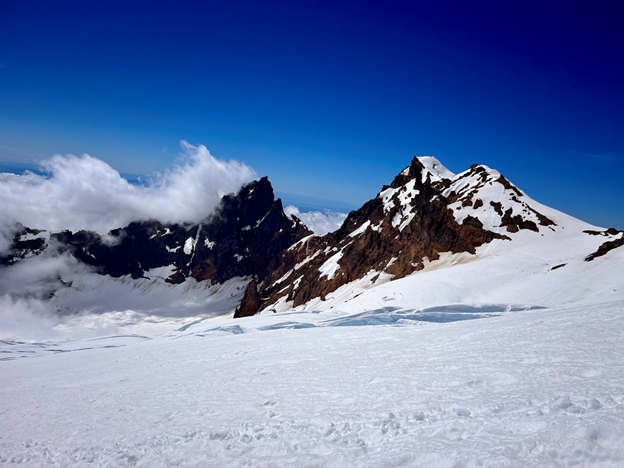
Views near the Mt. Baker crater. Photo credit: Jen Cerullo
Navigating the Unknown: Recommendations for Care
In the absence of formal guidelines, women undergoing fertility treatments who participate in wilderness activities require careful, individualized monitoring and planning. While no studies specifically address this population, we can adapt recommendations from existing literature on special populations and high-altitude travel.
A pre-participation evaluation is essential. This should include a discussion of the specific medication regimen, potential side effects, and risk factors for both altitude illness and medication complications. The patient and her medical team must collaborate on a contingency plan for rapid evacuation and access to medical care in case complications such as ovarian torsion or severe OHSS arise.
On-expedition monitoring is also critical. Participants should be advised to regularly assess for symptoms of both altitude illness and medication side effects, particularly headache, nausea, and mood changes. Meticulous hydration and management of exertion are vital to mitigate risk. As mountaineers, we learn to "go slow to go fast," a mantra that applies to physical activity during fertility treatment as well. The goal is to avoid activities that increase the risk of abdominal trauma or those that push the body to its absolute limits.
This approach aligns with the principles outlined in general wilderness medical literature, such as the approach to common medical conditions in travelers planning high-altitude ascent. It highlights the importance of pre-travel evaluation, symptom monitoring, and mitigation strategies.
The journey up Mount Baker was a powerful metaphor for our lives. It was filled with personal challenges, unexpected discoveries, and the unwavering support of an incredible team. It also left us with a deeper appreciation for the gaps in our medical knowledge. My friend and I summited together, proving that physical and emotional strength can endure even when navigating the unknown. Our climb highlighted the need for more research and a more nuanced understanding of how we can support those who wish to pursue a life of adventure, even when they are on a different, equally challenging path.
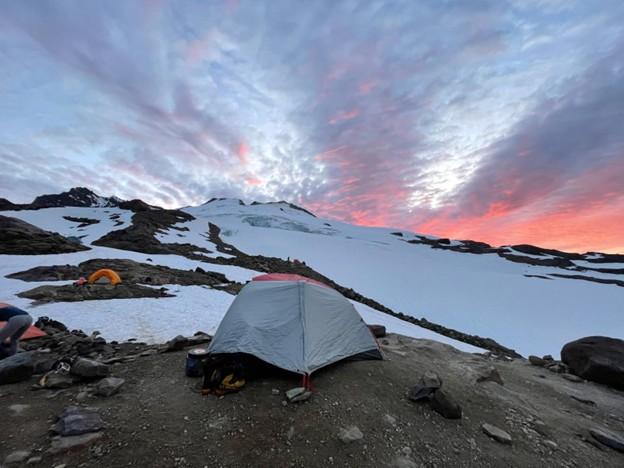
Sunrise at the Sandy Camp area before returning home. Photo credit: Kabita Bista