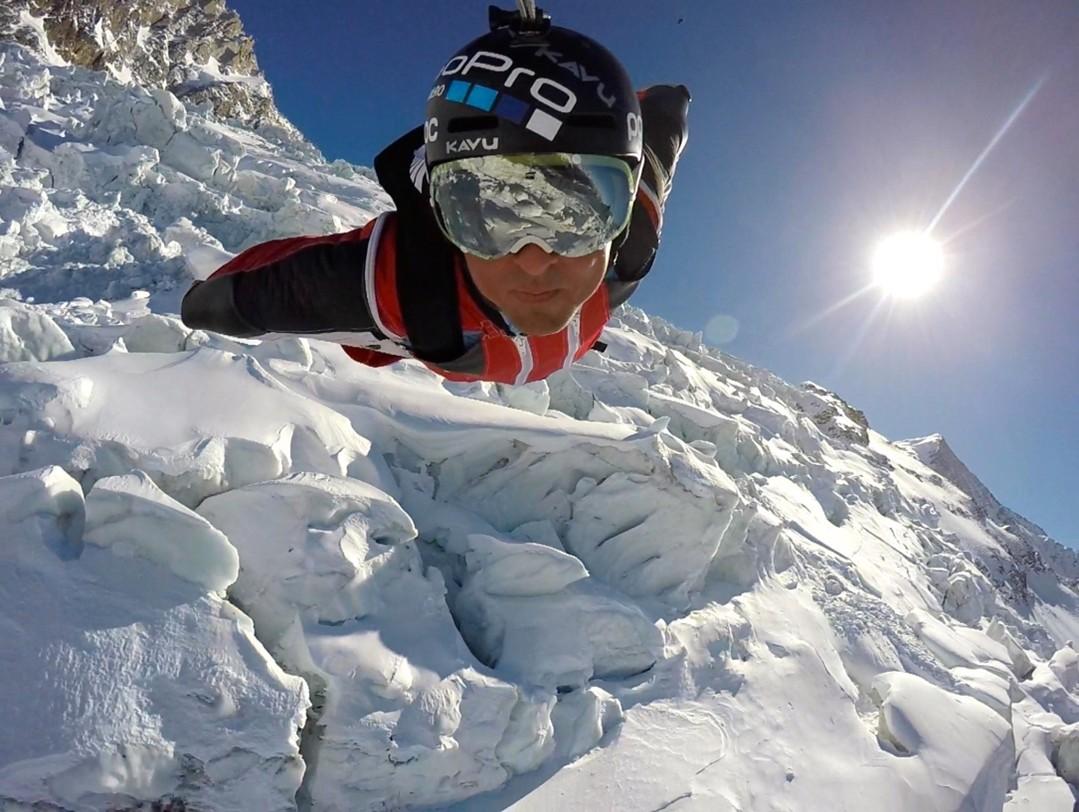
Photo courtesy of Marshall Miller taken with a GoPro.
In the United States, BASE jumping exists in a legal gray zone. It is neither universally banned nor broadly accepted. While the sport is prohibited in all national parks under federal law and restricted in many state parks, it remains legal on certain public lands such as Bureau of Land Management (BLM) areas, national forests, and private property with the owner’s consent. The lone year-round legal public site in the states is Idaho’s Perrine Bridge, a mecca for jumpers seeking both legality and community. In contrast to countries in Europe and Southeast Asia, where BASE jumping is recognized and regulated, American jumpers often operate in secrecy or at remote locations, an irony that can make the sport less safe. Now, with the recent government shutdown resulting in limited ranger presence at national parks, a quiet but unmistakable surge in wingsuit and BASE activity has returned to Yosemite. Most recently, this had led to at least 3 convictions of jumpers caught and cited by the National Park Services.
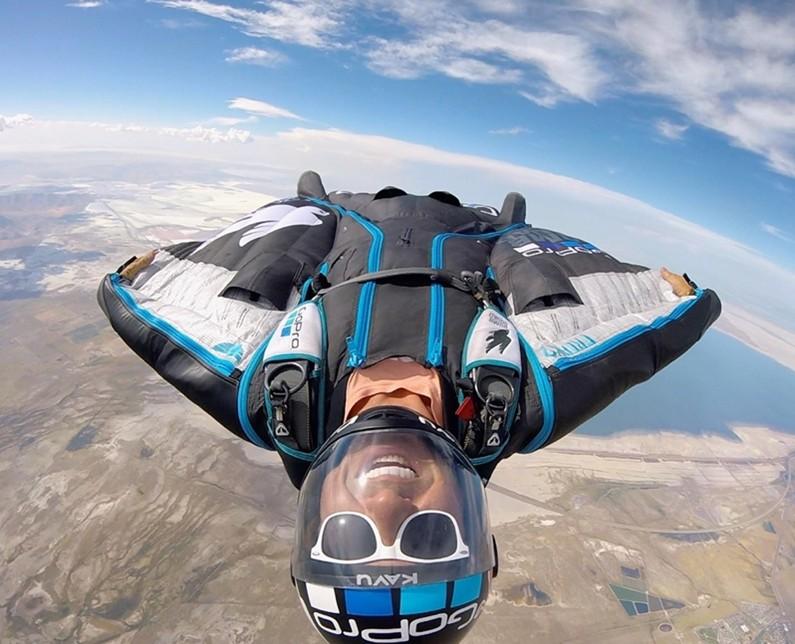
Photo courtesy of Marshall Miller taken on a GoPro.
I spoke with Marshall Miller, an accomplished wingsuit pilot, about what’s happening on the cliffs right now. “Here’s the beautiful thing: I would dare say wingsuit BASE jumping is happening ten times as much as when parks are open with rangers around,” Miller said. “I have a lot of friends in Zion and Yosemite saying it is the best time of their lives. They are hiking in perfect conditions, jumping off safe locations, landing in safe locations - rather than hiding from the rangers.”
Even as the activity remains technically illegal, Miller emphasizes that the community self-organizes for safety: “We communicate. We always have a plan if someone doesn’t call back. We all carry SOS Spot or Garmin devices to notify our people if we need assistance. We don’t usually need assistance from park rangers. It would be a bad look for us if we did something that required intervention from park employees. We work together to avoid that and stay safe.” Miller and others are even exploring a “rescue fund cooperative or bond” to formalize self-rescue capability and reduce reliance on park resources.
When asked whether criminalizing BASE jumping deters or encourages risky behavior, Miller didn’t hesitate: “Absolutely the prohibition just drives the sport underground which enhances risk. For example, in 2015, Dean Potter and Graham Hunt were killed in a jump accident that could possibly have been avoidable if the sun was out and air was lifting. But because they had to hide and jump closer to dark, the conditions became unsafe.” According to Miller, such policies force jumpers to operate at suboptimal times and conditions, increasing risk rather than reducing it. “We would appreciate a chance to show the national parks that we can coexist with climbers, hikers, and tourists in a safe manner.” That said – Miller sticks to Europe these days because he does not want to risk a ban from national parks.
So far, that dialogue has been one-sided. I asked if they were collaborating with the National Park Service (NPS) on the available safety data. “Collaborate is not the word. Not YET,” Miller admitted. “There are some horrible stories of people being chased and tased by rangers. But I also have a lot of friends who are park rangers. The older generation does not seem to want anything to do with it. However, the people between 20 and 50 see on social media that plenty of people make this a safe and lifelong hobby.”
As for the NPS, their official stance is “BASE jumping is illegal in all national parks, including Yosemite, due to the significant safety risks it poses to participants, the public, and first responders.” In the past, jumpers have survived the jump only to die trying to flee from authorities. Others have died jumping in protest of the ban.
Miller believes that legal reform could transform the sport in the U.S. “We’ve filed for special-use permits in almost every park,” he said. “Some have said no, most haven’t answered knowing that they must consider all special use permit requests. At least we’re trying to start a conversation. We’ve hired attorneys and lobbyists to try to make them talk to us. We’d rather find a happy medium where both parties can have a productive conversation.”
Miller sees BASE jumping today as parallel to climbing in the 1970s. Initially misunderstood, unregulated, and now on the cusp of mainstream acceptance. “The spirit of freedom and adventure will always be there,” he said. “Legalizing BASE jumping and wingsuit flying in national parks would make the sport safer because people could land in safe, designated areas instead of hiding. I have high hopes that we can enjoy this beautiful activity alongside hikers and climbers. BASE jumping is next in line to push boundaries in our national parks.”
The debate over BASE access in national parks reflects a broader question in wilderness medicine and recreation: how to balance freedom and safety in remote environments. Extreme sport enthusiasts recreating in austere environments understand that rescue services may not always be available. Amidst the shutdown with limited staff and strained emergency resources, jumpers are increasingly guided by community accountability. While no accidents have happened as of the completion of this article, Mark Rose of the National Parks Conservation Association warns, “This is a skeleton crew and…you can only keep up the facade for so long before major cracks start showing.”
Miller and the other flyers are waiting for the day when human flight from America’s most iconic cliffs will no longer require secrecy. While the government remains shut down, and parks open, the secrecy is on the back burner and BASE jumpers are having the time of their lives.