62-year-old Richard Woulfe almost lost his foot after being stung by a stingray. After wading in approximately 20ft at Black’s Beach in San Diego County, he experienced pain to the top of his left foot. A former San Diegan, he immediately recognized that he had been stung by a stingray. He called 911 and received hot-water and wound care from lifeguards. However, the next day, he went to an urgent care and was diagnosed with an infection in his foot. At 72 hours, he went to the operating room for surgical debridement of necrotizing fasciitis. Ultimately, his foot was preserved, narrowly avoiding amputation.
Although the venom from stingrays is not infectious, the puncture wound likely allowed bacteria to enter, which initiated this serious soft tissue infection. Stingrays are bottom dwellers often encountered in shallow coastal waters. Most stingray-related injuries occur on the lower legs when someone accidentally steps on them. Stingrays reflexively flick their tail up to protect themselves. Their tails are rigid and feature a sharp, pointed end with backward-facing serrations that may lead to the barb breaking off and getting lodged in the wound. Retained barbs can lead to secondary infections.
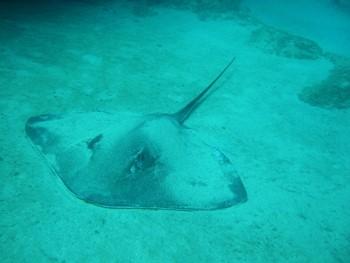
Stingray. Source: Florida Beach Lifestyle
Stingray injuries combine mechanical damage, exposure to venom, and possible contamination from the marine environment. Although most cases improve with hot water treatment and appropriate wound care, evidence indicates that some patients may experience severe secondary infections, including necrotizing soft tissue infections, as Woulfe experienced. In the United States, there are between 750 and 2,000 documented stingray injuries annually. Marine pathogens responsible for soft tissue infections include Vibrio vulnificus, Aeromonas hydrophilia, Shewanella species, and Photobacterium damselae, along with typical skin flora. In cases of suspected infection, empiric treatment with fluoroquinolones, tetracyclines, and sulfonamides are preferred for their coverage of marine pathogens in addition to typical skin flora.
Stepwise Management of Stingray Injuries:
- Toxin Deactivation: Submerge the wound in hot water (42–45°C for 30–90 minutes) to neutralize the venom and alleviate pain.
- Wound Care: Irrigate, remove retained barbs, and monitor for signs of infection
- Antibiotics: Controversial. Consider if retained foreign body, immunocompromise, or delayed presentation.
- Tetanus prophylaxis: Keep up to date:
- Prevention: Adopt the “stingray shuffle” while wading and stay alert.
- Imaging: Plain radiographs offer the highest sensitivity for retained barbs.