During graduate school, I (Liam) took a course on the psychological foundations of education, which emphasized pedagogy and designing engaging experiences for diverse student populations across a wide range of subjects. For my independent project, I focused on the theory of teaching outdoor education as inspired by A Pedagogy of Place by Brian Wattchow and Mike Brown. I was intrigued by the opportunity to connect my academic work to my growing interest in wilderness medicine and EMS education. The book explores how learning can be deeply enriched when rooted in the physical, cultural, and ecological context of a place — an approach that emphasizes experiential learning, community relevance, and personal agency. At the time, I saw the project as interesting but somewhat niche — valuable, but unlikely to shape my future career in a meaningful way.
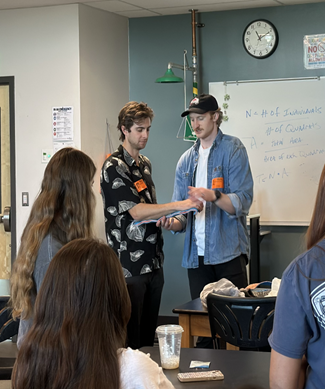
Medical students instruct high school students on how to splint an upper extremity. (Liam Canty)
Yet in recent years, the ideas I encountered in that book have taken on unexpected relevance. As public interest in exploring the outdoors has increased, wilderness medicine educators have returned to the question of how to create meaningful, yet affordable educational opportunities that empower students with both conceptual knowledge and practical life-saving skills.
As clinicians and educators committed to wilderness and environmental medicine, we often talk about adaptability, resourcefulness, and equipping people with the skills to act decisively in austere settings. This spring, we took those principles into a new environment: the high school classroom.
In collaboration with Denver Public Schools, we launched a pilot workshop introducing high school students to the basics of musculoskeletal injury recognition and improvised splinting techniques. Using only gear that students might carry on a hike or to school—such as hoodies, hiking poles, duct tape, and backpacks, along with SAM splints generously loaned by the Section of Wilderness and Environmental Medicine at CUSOM—students learned to assess circulation and sensation, stabilize fractures and sprains, and collaborate to solve problems in resource-limited settings.
Why High School Students?
Teenagers are at a formative crossroads, where emerging curiosity about potential careers meets a growing desire for autonomy and real-world competence. It’s a period in their lives where the right exposure can ignite lifelong passions. Many of the students we worked with expressed an early interest in health professions but lacked accessible opportunities for experiential learning. Others had never considered a future in medicine until they found themselves splinting a simulated fracture or improvising a shelter in a classroom-turned-wilderness.
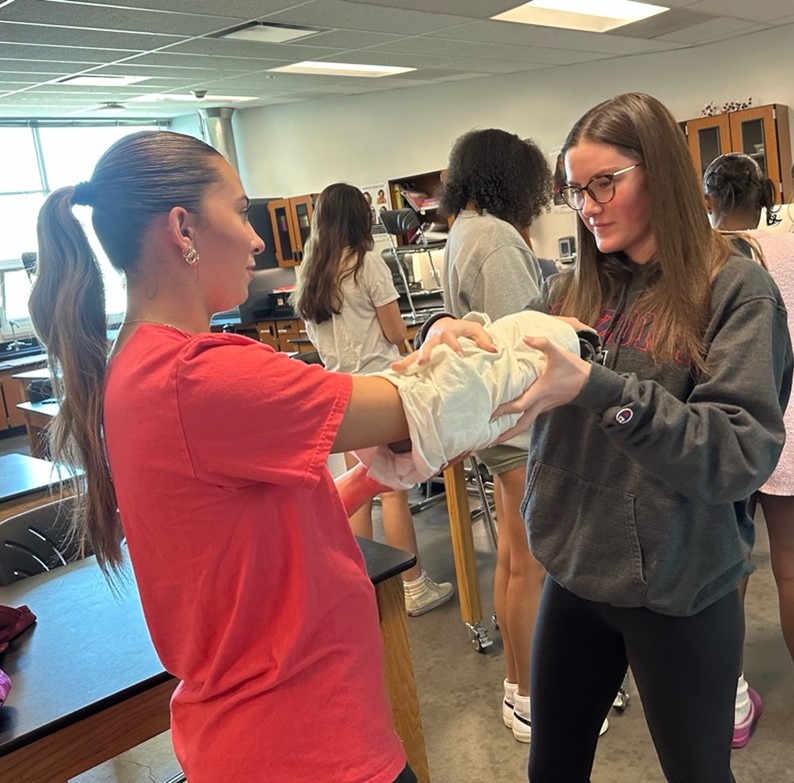
High school students using a t-shirt to provide padding for a forearm splint. (Liam Canty)
By introducing wilderness medicine in this context, we offered more than just practical first-aid training. We created an entry point into healthcare education that felt exciting, empowering, and relevant to students who may have felt a career in medicine was beyond their reach. Wilderness medicine’s inherently improvisational nature demands adaptability, calm under pressure, and creative problem-solving — traits that transcend clinical settings and help foster leadership and resilience. In teaching these skills, we weren’t just helping students manage injuries far from help; we were building confidence, sparking curiosity, and opening doors to futures they may not have realized were within their reach.
Making Wilderness Medicine Accessible
Wilderness medicine often requires a significant investment of time and resources, which can create barriers to participation for many individuals, regardless of background or profession. However, the field has so much to offer to a young diverse audience and can be done so at low cost to students. Within just a few hours, minimal equipment, and a student-centered approach, we showed that these skills are not only teachable, but deeply engaging for high school students from various backgrounds and outdoor experience levels. Thanks to the students’ creative engagement, the definition of wilderness medicine expanded to include austere and low-resource environments such as the high school classroom, sports fields, urban open spaces, and homes. Our “Basics to Splinting” workshop emerged as a favorite, and students left with the knowledge that they could be the calm in the chaos when someone gets hurt outdoors.
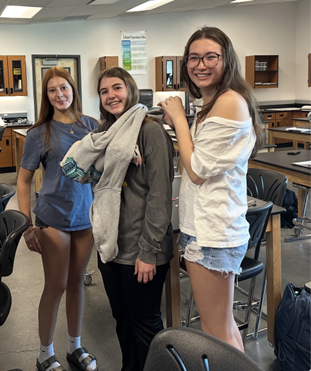
High schoolers proudly display their use of a hoodie as a sling during the workshop. (Liam Canty)
Bridging the Gap
We invite other wilderness medicine educators, residency programs, and student groups to consider how they might bring accessible, skills-based training into schools and youth programs in their communities. Whether it’s splinting, wound care, environmental emergencies, or improvisational problem-solving, the lessons we teach in the backcountry are just as powerful — and perhaps even more needed — in the classroom.
These skills don’t just prepare students for emergencies; they cultivate adaptability, leadership, and confidence in young people who may not have previously envisioned themselves in healthcare roles. Offering these opportunities early in their education can help demystify medicine, break down barriers to entry, and nurture a sense of belonging in a field that has historically felt out of reach for many.
Let’s continue growing the next generation of wilderness medicine leaders — starting with those who are curious, capable, and ready to learn.
If you're interested in sharing resources, co-developing curriculum, or hosting a high school skills day, email Liam Canty at [email protected] or Jamie Smith at [email protected]–we’d love to connect!