Early this month three boating accidents occurred around the globe. On May 3, near Monument Island in Miami Beach, Florida, a luxury yacht carrying social media influencers sank after taking on water due to being overloaded with passengers, triggering a major emergency response. Thankfully, none were hurt. The following day, in southwestern China, violent, unexpected storms capsized four tourist boats, resulting in at least 10 deaths and over 70 people hospitalized. Another day later, a panga-style vessel overturned off the coast of San Diego, California, leaving three confirmed dead, four injured, and a 10-year-old girl missing, presumed dead. Despite differences in the types of vessels, conditions, and safety equipment involved, all three incidents underscore failure to prepare for and mitigate capsizing.
In China, the combination of thick fog and high winds gave crew little time to respond before the boats overturned. In the California case, early reports suggest the boat was crewed by migrants with unknown boating experience. The Florida yacht, which was built to carry 16 people, was overloaded with approximately 32 passengers. Alcohol consumption was also reported, which is known to impair decision-making.
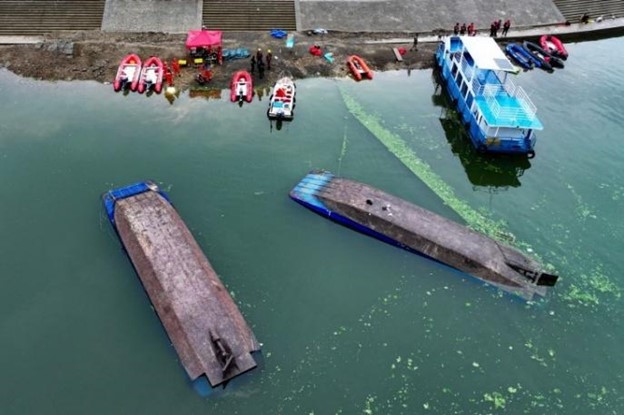
Overturned boats in China Source: The Sun UK
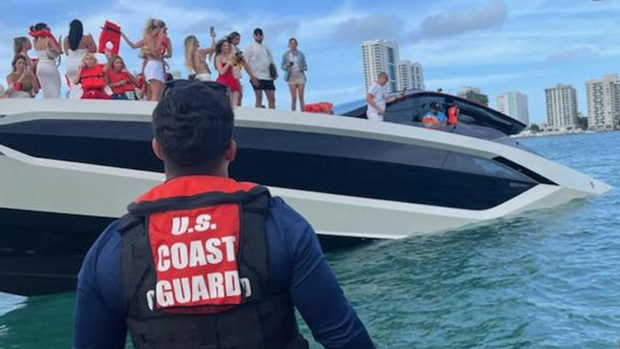
A $4.5M yacht sinks in Miami Beach. Source: Sky News
These tragedies serve as a reminder that boating safety is not determined by the vessel’s size or destination. It requires consistent maintenance, monitoring weather conditions, equipping vessels with functional communication tools, and ensuring all passengers and crew are trained in emergency protocols. When boating, pre-departure safety briefings can equip passengers with crucial survival knowledge, such as the location of personal flotation devices (PFDs), also commonly known as “life jackets” or “life vests”, and how to wear them properly. Every crew member and passenger should wear or have access to a PFD that fits properly, is suited for the activity, and is in good condition.
There are five classes of PFDs:
Type I: Offshore Life Jackets
- Best for: Open, rough, or remote waters where rescue may be delayed.
- Buoyancy: Highest among PFDs; designed to turn most unconscious wearers face-up.
- Design: Bulky but provides maximum flotation and visibility.
Type II: Near-Shore Buoyant Vests
- Best for: Calm, inland waters where quick rescue is likely.
- Buoyancy: Moderate; may turn some unconscious wearers face-up.
- Design: Less bulky than Type I; suitable for general boating.
Type III: Flotation Aids
- Best for: Calm waters with high likelihood of prompt rescue.
- Buoyancy: Similar to Type II; not designed to turn unconscious wearers face-up.
- Design: Comfortable and suitable for continuous wear during activities like kayaking, canoeing, and water skiing.
Type IV: Throwable Devices
- Best for: Situations where a person has fallen overboard and needs assistance.
- Buoyancy: Designed to be thrown to a person in the water; not intended for unconscious individuals.
- Design: Includes ring buoys and buoyant cushions; not wearable.
Type V: Special-Use Devices
- Best for: Specific activities such as windsurfing, kayaking, or commercial operations.
- Buoyancy: Varies; must be used according to the conditions specified on the label.
- Design: Includes hybrid inflatables and deck suits; often more comfortable but activity-specific.
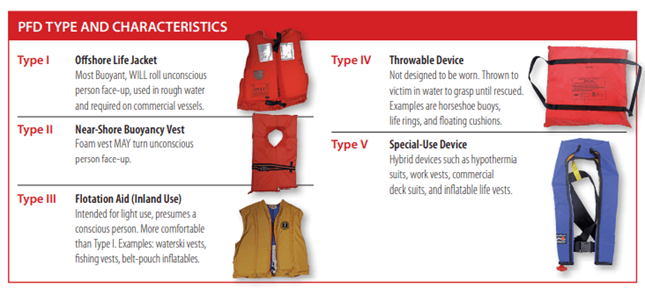
Types of Personal Flotation Device. Source: American Sailing
When there is a small crew, passengers may be briefed on emergency communication procedures. In maritime emergencies such as a capsized boat or a person in the water, VHF radio is a critical communication tool. Different channels serve specific purposes to ensure effective coordination and rapid response:
VHF Radio Channels Used in Emergencies
Channel 16 (156.8 MHz) – Distress, Safety, and Calling
- Primary channel for emergencies, including capsizing or person in the water.
- Used to issue a MAYDAY (immediate danger to life or vessel), PAN-PAN (urgent situation not immediately life-threatening), or SECURITÉ (navigational safety messages).
- All vessels are required to monitor Channel 16 at sea.
- After initial contact, communication may shift to a working channel.
Channel 70 – Digital Selective Calling (DSC)
- For vessels equipped with DSC-enabled VHF radios
- Sends automated distress alerts with vessel information and GPS position
- After sending a DSC distress alert, voice communication should follow on Channel 16
Channels 6 and 22A (US) / 67 (International) – Coordination with Authorities
- Channel 6: Intership safety communications and coordination with rescue boats or aircraft
- Channel 22A (U.S.): Used by the US Coast Guard to relay marine safety information and communicate with vessels after initial contact on Channel 16.
- Channel 67: Similar purpose in some international jurisdictions (especially Europe), used for safety and coast guard coordination.
Typical Emergency Communication Flow
- Initial distress call on Channel 16: “MAYDAY, MAYDAY, MAYDAY... This is [vessel name], [position], we are capsized/have a man overboard...”
- If equipped, send DSC alert on Channel 70.
- Wait for Coast Guard response and follow instructions—they may direct communication to Channel 22A or another working channel.
When a person falls into the water, swift, coordinated action is vital.
- Any witnesses should immediately shout "Man Overboard", “Crew Overboard”, “Person in Water”, or “Person Overboard” and alert the captain. At the same time, mark the location by throwing a buoy and maintain visual contact with the person in the water.
- The vessel should begin search and rescue maneuvers immediately, and if needed, the captain should alert coastal rescue authorities for support.
- If you have gone overboard alone, or are far from other people in the water, it is recommended to assume the Heat Escape Lessening Position. (H.E.L.P.) If considering swimming to safety, each person must assess their physical capabilities, location, available resources, and chances of rescue. If swimming to safety is chosen, it should be done as quickly as possible to avoid physical limitations brought on by cold stress.
- If a person is separated from the boat in a fast-moving river, they should float on their back with their feet pointed downstream.
- If multiple people have gone overboard, crew and passengers should form a huddle in the water, staying close together while wearing their PFDs. This conserves body heat, reduces energy loss, and increases visibility for rescuers.
- In a capsizing incident, staying calm and keeping the group together is critical. Small boats often remain afloat, serving as a lifeline and increasing visibility to rescuers. Unless drifting toward danger, staying with the vessel is the safest option.
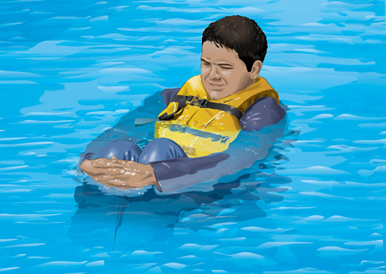
H.E.L.P. Position. Source: Boat-Ed
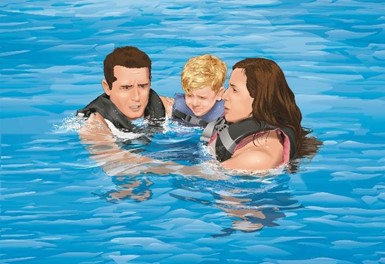
Huddle Position. Source: Boat-Ed