Rock climbing is a fantastic way to stay healthy, meet like-minded members of the community, and engage with nature and the world around us. Indoor rock climbing is a great way to try out the sport in a more controlled environment, or when outdoor rock climbing venues are not readily accessible. More than 600 gyms are open across the US, with more on the way. A recent study out of University of Vienna and the Swiss Federal Technology Institute of Lausanne notes concerns about air quality in rock climbing gym from climbing shoes creating rubber particulates. This study focused on the small particles generated by the friction of rubber shoes on climbing holds. Levels of particulate matter from rubber derived compounds, or RDCs, were found to be equivalent to sitting in heavy traffic in a large city. The comparison is likely favored because our largest other source of RDC exposure is from rubber tires.
The health effects of RDCs are still being characterized and are a topic of active research around the world. Whatever they do, they add to the already-known risk of chalk inhalation on a climber’s lungs. Climbing chalk is classically composed of magnesium carbonate (MgCO3), and has already been shown to be harmful to human health. Participants in a climbing gym were shown to have an acute reduction in lung function over the course of a climbing day and even the day after, with concern that it was due to exposure to particulate matter. While climbing chalk is certainly a possible contributor, these RDCs may also be part of the picture, or have their own risks that are yet to be characterized.
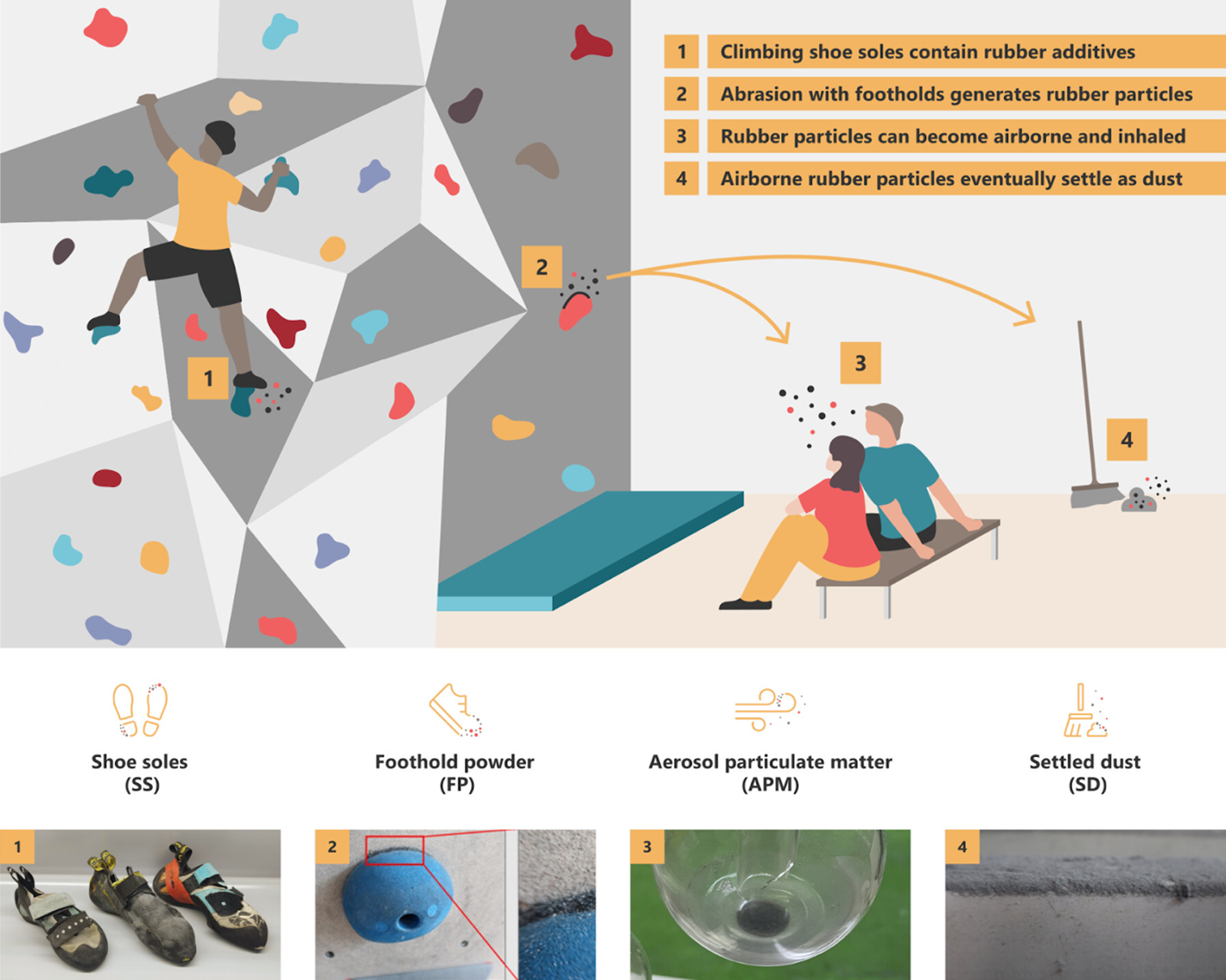
Figure 1: Different ways in which RDC exposure can occur in a rock climbing gym. [Source: ACS Publications]
Reducing the use of harmful RDCs in climbing shoes (and in general) is an appealing option to curb exposure to aerosolized RDCs. The study looked at 30 different brands of climbing shoes and found some (but not all) of them contained types of RDCs that are specifically known to be harmful to human health. It might not be possible to stop all RDC generation or friction between shoes and holds, but there’s no reason to expose ourselves if better options exist.
RDCs and other microplastics may contain or leach out chemicals like PFAS (Per- and polyfluoroalkyl substances, typically found in stain-resistant fabrics or Teflon cookware). These are of concern on their own, and the harmful effects of both may be even worse. What to do about microplastics once in the body is also not well known. PFAS has a recent unorthodox solution for elimination from the body: blood and plasma donation. In a study of firefighters and their blood PFAS levels, donating blood and plasma both reduced blood PFAS levels (with plasma donation having a slightly stronger effect). Microplastics are also found in the bloodstream, though it is unclear if they are reduced after blood or plasma donation.
The best solutions are structural and systemic, rather than individual. Rock climbing gyms are already large spaces with lots of ventilation requirements, so increasing air flow to either remove or aggressively filter particulates can help. Many climbing gyms use air filtration devices that filter out chalk particles or use advanced technologies like electrostatic particle separation. In a dream world, existing ventilation infrastructure could simply be fine-tuned to also filter out RDCs. As research on RDCs progresses, it would behoove gyms to stay up to date on particulate filtration technologies and climbers to be aware of the materials in their shoes and their exposure times to particulates from shoes in chalk in poorly ventilated facilities.