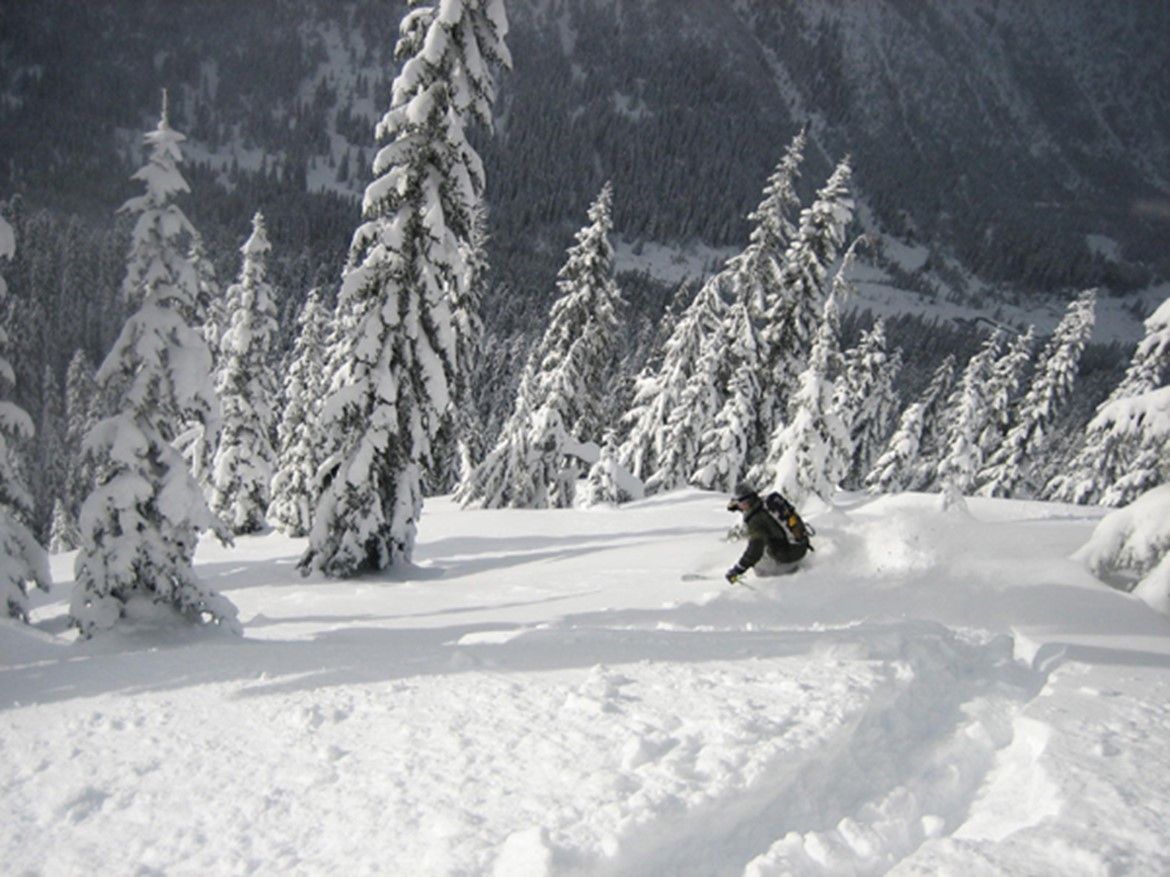
Stevens Pass backcountry. Source: feedthehabit.com
On January 22nd, 2025, a group of backcountry skiers was rescued from the Stevens Pass area in Washington’s Cascade mountains. After becoming stranded on the mountainside, one of the skiers transmitted an SOS signal from his Apple Watch, alerting authorities to their distress and whereabouts. The Chelan County Sheriff’s Office received the alert and requested the King County Sheriff’s Air Support team. Two helicopters were dispatched just after sunset to find the lost skiers. One helicopter used heat sensors to identify the lost men, and another got into position directly above them, lowering rescue crew members with a hoist. A video posted by King County Sheriff Air Support showcases the rescue, from thermal identification through the lift of all three skiers.
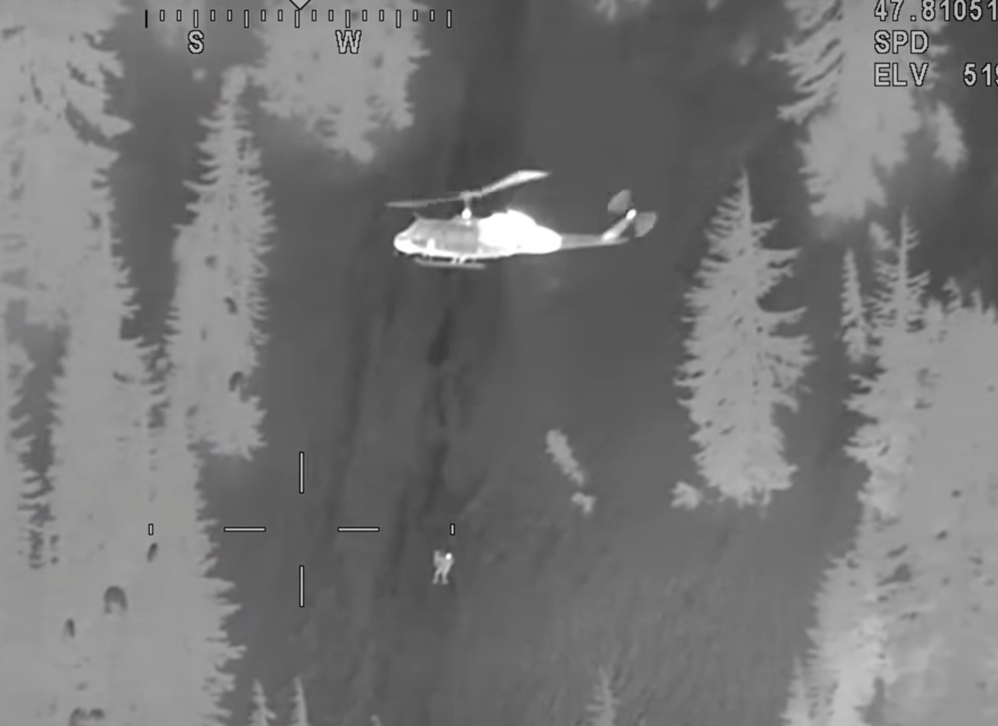
King County Sheriff’s Air Support hoists skier. Source: youtube
In the initial SOS, deputies only knew that a skier had fallen 1,000 feet and injured his leg. During the rescue, crew members learned that two of the three skiers were hurt and unable to walk. One of them had a broken leg, and another had a twisted knee and a broken wrist. At that point, a decision was made to lift all three skiers.
The skiers were recreating near Union Peak, located in the backcountry of the Cascade mountain range and well outside cellular service. Sgt. Jason Stanley of the King County Sheriff’s Office stated, “Without some sort of satellite communication device, this story could have a very different ending, a very tragic ending because of the temperatures the skiers were skiing in and the distance they were away from any kind of civilization.” From the evening of January 22nd through the next morning, temperatures near Stevens Pass would decrease from 39 to 28 degrees Fahrenheit.
Apple first launched its Emergency SOS satellite connectivity in 2022. As described in an article by WMS member Mary Rosengrant, this was the first time satellite-aided search and rescue capabilities became a public phenomenon. Previously, these were features only seen in expensive devices and equipment owned by remote outdoor enthusiasts. Apple advertises that their Emergency SOS helps to connect you with emergency services “under exceptional circumstances when no other means of reaching emergency services are available.”
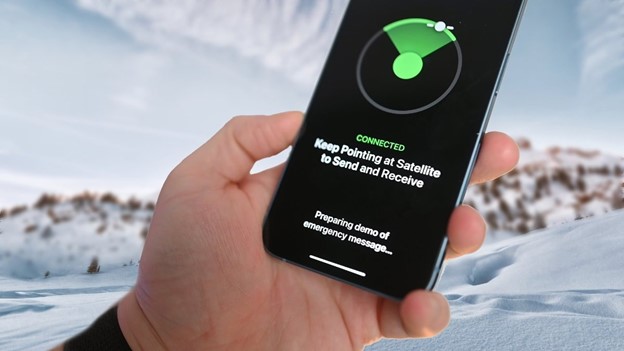
Apple Emergency SOS. Source: appleinsider
Users can manually contact emergency services, or their device utilizes crash or fall detection to notify emergency responders after sensing significant impact and an unresponsive user. While these detection capabilities have saved numerous lives, they’ve also caused unintentional calls for help among skiers and people who participate in high-impact activities. The unaware user might not feel or hear the alert, which stops them from deactivating it in time. This leaves emergency services workers stuck sifting through potentially hundreds of false Apple-related calls every month.
Unintentional calls notwithstanding, having satellite-aided emergency capabilities in your pocket is an incredible tool to improve safety and preparedness in the backcountry, and its use in the rescue of the skiers underscores the true importance of preparedness and having a plan for communications. For the wilderness medicine provider, patient concerns range from acute trauma to frostbite or hypothermia, even avalanche and nonavalanche snow-burial. However, if no one is notified that an accident took place, no amount of medical management will do any good.
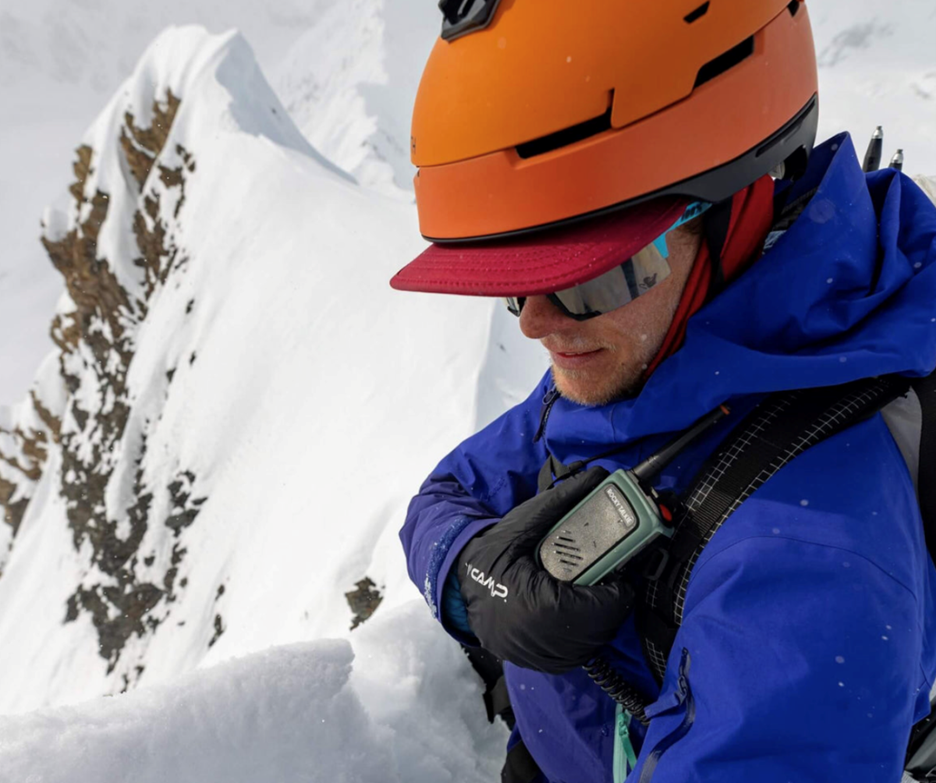
Skier using radio in the backcountry. Source: powder.com
In the military, preparedness is described with the acronym “PACE,” which stands for Primary, Alternate, Contingency, and Emergency. A PACE plan is just a conscious and deliberate means of identifying the ideal way you plan to do an activity, followed by three backup methods should each previous method fail. PACE plans are vital for communication but can be applied to various systems, especially in austere situations. Your primary plan might be to call or text in an emergency, but there should be a next step once cell service is lost. Alternate and contingency plans could include satellite communication devices (iPhones or devices specifically marketed for remote satellite communication), personal locator beacons, or radios. A good emergency plan should work when all other methods fail. For example, tell a friend who isn’t going on the trip that you will contact them by a certain time. Even if all other methods of communication are unsuccessful, there is still someone who knows where you are and can direct emergency services.
For the Washington skiers who were rescued, preparedness and an understanding of their equipment likely saved their lives. While it’s easy to examine an incident like this one and wonder what went wrong, the fact is that accidents happen, and injuries do occur. Understanding what to do in these events is instrumental for survival. Rather than consider the possible mistakes that led to this accident, it’s more appropriate to look at this as a success and a scenario in which technologies appropriate for wilderness emergencies led to the rescue of everyone involved.
*It’s important to note that while the articles state that the skier’s Apple Watch signaled emergency responders, Apple Watches can’t utilize satellite SOS capabilities on their own. Apple Watches employ crash and fall detection but, in the absence of a cellular or Wi-Fi connection, cannot dial emergency services without an iPhone. On their support site, Apple gives iPhone users a step-by-step demo on how to acquire satellites and contact emergency services so they know exactly what to do if the worst should happen.