Wongchhu Sherpa Memorial Hospital (WSMH) was established in the memory of the late Mr. Wongchhu Sherpa, who was nationally recognized for promoting responsible tourism in Nepal and community projects for the people in the lower Everest region. One of his dreams was to build a health care facility in his home district, but unfortunately, he became ill with cancer and died before the hospital was finished. He had worked on projects, including the Everest ER, and travel in Nepal with some of our WMS founding members who committed to finishing the project. Dr. Paul Auerbach, Dr. Luanne Freer, and Dr. Eric Johnson partnered with the Himalayan Yokpu Foundation (HYF), the Himalayan Rescue Association, the Wilderness Medical Society (WMS), Musa Masala Foundation, and several other Nepali foundations to bring the vision to reality. Additional information and several videos of the hospital are available at https://www.himalayanyokpufoundation.org/.
Construction began in 2017 on land donated by residents. The government provided an emergency license to begin services as a primary hospital during COVID with full approval in February 2022. It now operates through a public-private partnership as an outpatient and inpatient facility. Currently, the hospital services and capabilities include outpatient, 24/7 emergency service, inpatient care, laboratory, ultrasound, X-ray, maternal care and delivery, pharmacy, patient transportation, and more.
Wongchhu’s daughter Lakpa oversees the hospital through the Himalayan Yokpu Foundation as well as the trekking business (Wongchhu Peak Promotion, [email protected]). Ngwang Phuri Sherpa is the on-site operations manager and administrator. The WMS has remained very engaged as one of the hospital’s largest sources of financial support.
The hospital is located on the top of a ridge at about 2500m in an area of steep “foothills” to the high Himalayan peaks of the Everest region, which are visible from many locations. The trip to the hospital is arduous by car (see Patient Referrals below); for most volunteers it is usually a combination of vehicle and trekking. There is a small airport in Phaplu, which is a 2 hour drive from the hospital, but there is no regularly scheduled air service.
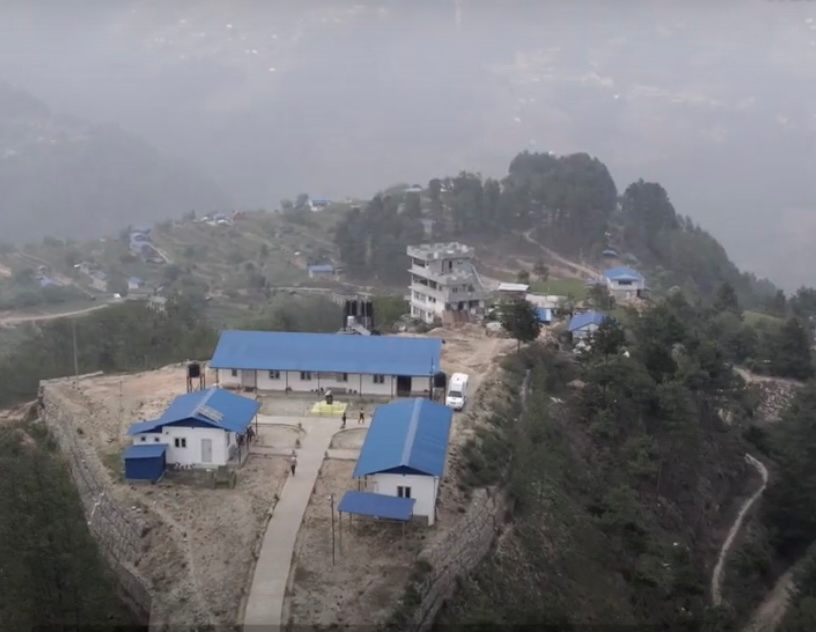
WSMH lies in the foothills of the Himalayas (photo from Himalayan Yokpu Foundation)
Staff and Resources
There are now 14 staff: one general practice physician, one staff nurse, two Assistant Nurses who are also certified Birth Attendants (midwives), three health assistants, one ambulance driver, one X-ray tech, one lab tech, two housekeeping personnel, and one on-site administrator. The health assistants also help to transport patients in an ambulance when needed. Most of the staff, including the doctor and nurses, live on site and are available 24/7. There is no pharmacist, so one of the medics dispenses prescriptions.
The WSMH grounds house four buildings that include:
- The main hospital building
- Emergency department with 3-4 beds, also used for overnight stays or families of inpatients
- One outpatient clinic room with the doctor’s desk and an exam bed and stools
- Inpatient room with two beds
- Procedure room with one exam table
- Storage room
- Supply room
- Sterile processing room
- Laboratory
- Radiology
- Separate building with OB delivery room and 2 bed post-delivery or labor room
- Separate building with the Pharmacy and a single large room for the administrative office
- Separate building with sleeping rooms for staff doctor and nurses
- Current plans include construction of a new building that will expand clinical and administrative space to meet future needs. It is an ambitious project that will require repurposing much of the current space.
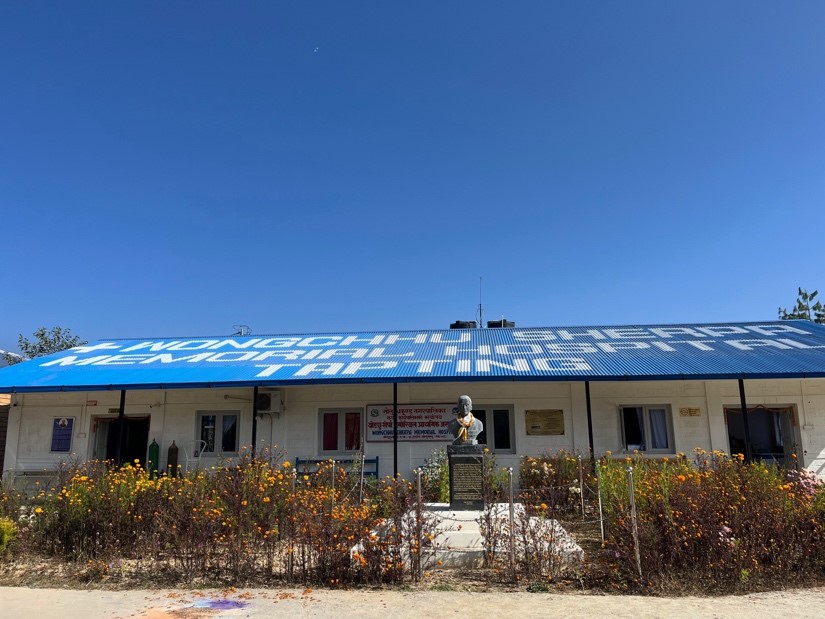
Outside view of WSMH (Credit: Howard Backer)
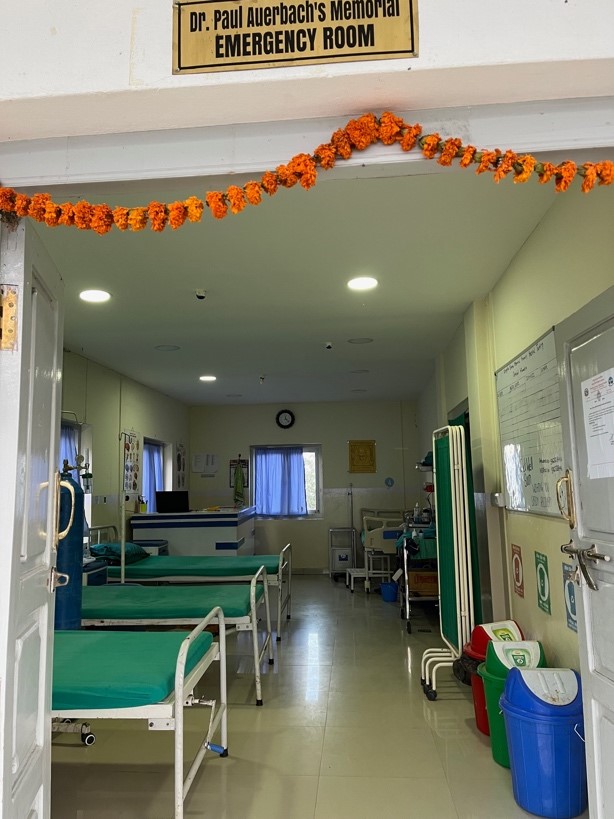
Paul Auerbach memorial Emergency Department (Credit: Howard Backer)
Major equipment currently available:
- Cardiac monitor
- Monitor defibrillator/ AED
- X-ray unit
- Ultrasound
- Autoclave
- Lab analysis equipment
- CBC; electrolytes; common metabolic tests; liver function; lipid profile; urinalysis; microscopy of blood, urine, and stool, sputum AFB; 12 serology tests
- Baby warmer and phototherapy
- Computers and printer
- Projector
- Power generator
- Ambulance
The hospital has running water, Wi-Fi, and power with generator backup, but no heat—therefore most staff wear a down jacket.
Budget
The income for operation from all sources for the 2022-2023 fiscal year was $886,890 USD, with the largest contribution from the WMS. This does not include patient billing, which is minimal. Much of the funds are being used for ongoing construction, capital equipment, or special projects. The Nepal government, through the district health budget, pays the salaries of the medical staff, but otherwise does not contribute to the operating budget. The government provides a formulary of free medications.
Operations and Services
Clinic hours are from 10AM to 4PM, but emergency and OB is 24/7. Outpatient volume can be quite busy during clinic hours, especially in the morning. All patients seen after hours are seen in the emergency department, as well as people during clinic hours who may require acute care. In triage, outpatient clinic, and emergency, nurses do not have the same degree of autonomy or practice by protocol as they do in the US.
According to the 2023 year-end report, there were nearly 4,000 outpatient visits plus 607 emergency department visits, and 18 deliveries. While there are clearly discrepancies in the report for this first full year of patient care, the data collection and reporting are anticipated to become more reliable. The EMR can generate multiple reports of patients seen for various services. In addition, hospital staff collects manual data on visits for specific types of chief complaints. Some of the most common adult outpatient problems are hypertension and falls/injury. Cardiac cases are rare despite the prevalence of hypertension.
There are several special services provided periodically. Vaccination clinics are held twice a month. Once a month, nutrition clinics are held to evaluate children for malnutrition. If identified, child and mother are referred to a nutrition center where they can stay for one month for supplemental feeding. Nurses do community outreach to check on elderly who cannot easily get to the clinic and to provide medication refills. The doctor has gone to local schools to provide the children with education about oral hygiene and to provide toothbrushes. Once or twice a year, the hospital sponsors a dental or ophthalmology and cataract surgery clinic with specialists from Kathmandu who donate their time.
Six female community health workers, who are part-time volunteers, check on pregnant women and provide family planning education in their own village and nearby. They can distribute condoms but refer to the nurse midwives for other birth control methods. The community health workers come to the hospital once a month for training. See the description of this nationwide program at: https://mohp.gov.np/program/female-community-health-programme/en
The estimated service population currently is approximately 2,500 persons. All utilization is rising steeply as the district learns of the facility and new services are initiated. Patients walk an average of 1 ½ hours and some up to three hours over steep mountain terrain to come to the hospital. A few arrive by vehicle or motorcycle.
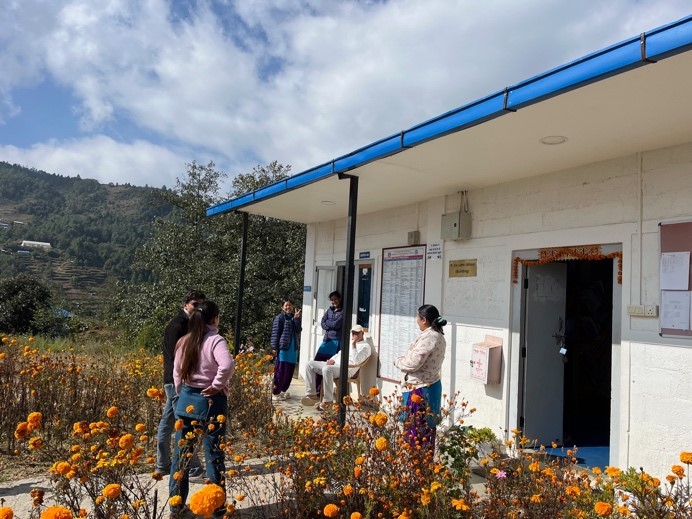
Hospital staff in front of pharmacy/administration (Credit: Howard Backer)
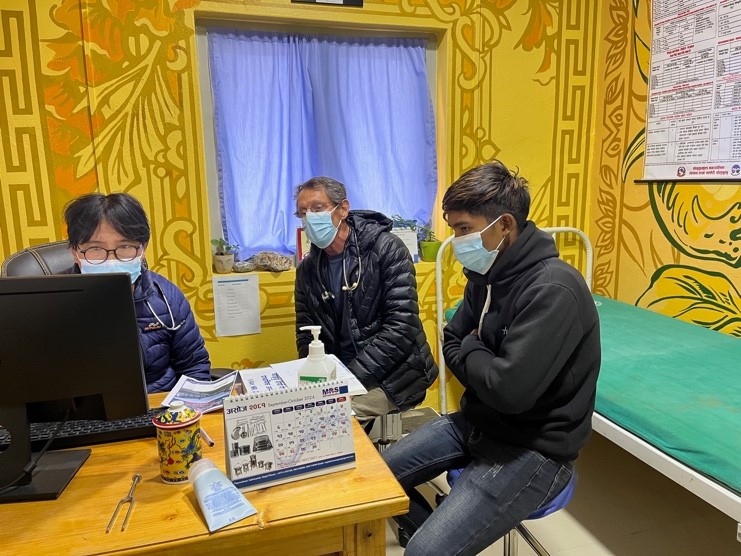
Dr. Gyaltsen and Dr. Backer in outpatient exam (Credit: Ngwang Sherpa)
Patient Referrals to Higher Level of Care
There are two commonly used referral hospitals. Both are about two hours travel by jeep, half of which is very rugged road. The district government hospital in Phaplu is larger and has additional services, including a dental clinic and some surgical capability. There are four government doctors who are general practitioners and do basic surgery like caesarean, appendectomy, and cholecystectomy; unfortunately, they rotate frequently. The preferred referral site is a mission hospital in Okhaldunga, two hours in a different direction, that has an obstetrician, orthopedist, general surgeon, ICU, and a dental clinic.
Essentially all specialties are available in Kathmandu, where there are government and private health facilities. The drive to Kathmandu is normally eight hours, partly on unpaved extremely rough road and partly on paved road. The drive has increased significantly due to flooding that has washed out portions of the highway and resulted in thousands of landslides along the route, turning the road into dirt and destroying the pavement.
The ambulance is for transport and carries no drugs other than oxygen. The ambulance personnel are referred to as Paramedics but do not have the training and scope of a US paramedic. Their training is local and protocols are by the resident doctor.
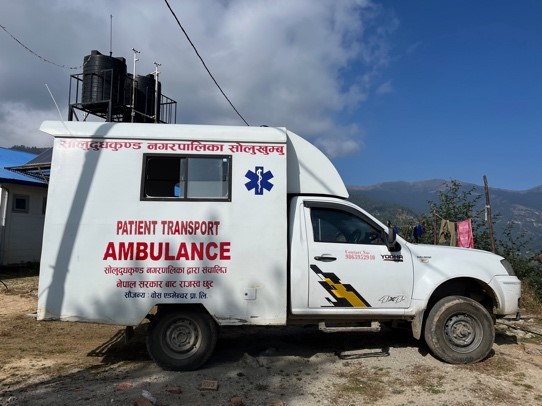
Hospital transport ambulance (Credit: Howard Backer)
WSMH has a helipad but few can afford the flight to Kathmandu. The government pays for helicopter transport in only a few cases - one is obstetrical and the other is wild animal attacks since the animals are protected.
Many patients take a fatalistic approach rather than make the 8-12 hour drive to Kathmandu or pay for a helicopter to obtain expensive, sophisticated diagnostics and treatment.
Hospital QA/QI initiatives
When evaluated by requirements for rural health facilities of the WHO (SARA) service availability and readiness assessment, WSMH meets all criteria except a few that are not applicable based on their patient needs.
The Nepali government has extensive standards for different levels of healthcare facilities. WSMH has increased its score from 42% to 59% with a goal to reach 65% within its classification of primary hospital.
For those interested in finding areas they may support QI, the requirements lists are in a book in the administrative office.
Volunteering at WSMH
There is currently a program to send Wilderness Medicine Fellows to work in WSMH for a couple of weeks, directed by Tony Islas at the University of Reno, Nevada (UNR). The patient population is local residents, not tourists. Although you will not likely see typical mountain medicine problems like altitude illness, hypothermia, and frostbite, you may see problems of low-income countries such as TB, malnutrition or vitamin deficiencies, vaccine preventable diseases, and intestinal protozoa and helminths. Regardless of the specific patients you see, the experience is highly pertinent to wilderness medicine, because you are working in a very remote environment with difficult clinical decision-making due to limited resources for diagnosis and treatment and arduous transportation to a higher level of care.
There is also an opportunity for other experienced medical providers from the WMS to volunteer. The specialties that are most helpful are Family Practice, Emergency Medicine. Internal Medicine, OB-Gyn (especially a female provider), and an Ophthalmologist could also be useful. Dentists would be very valuable but would do mostly extractions unless they could bring equipment to do other procedures. The hospital can organize specialty clinics if the healthcare provider is available to evaluate and treat on site. Nurses can assist with clinical work, nursing education, promoting policies such as infection control and other projects around the hospital. Non-medical personnel can find ways to be useful with data or other projects, depending on their skills and interests.
To work in any hospital in Nepal, permission from the government is required. For short-term volunteers, the government must approve foreign doctors to work under the supervision of a Nepali doctor for a certain period. This is not a work permit, but permission for volunteer medical professionals. To work at WSMH, volunteers submit a copy of their medical license and certifications to the HYF and these are submitted with all needed information to the District Health Officer. When approved, the HYF will issue permission stating that you will be working at the hospital under the supervision of a Nepali doctor.
Since you will work under the resident doctor’s license, initially you may see patients with him/her to learn how they provide care in their facility and to learn the EMR. Subsequently, you will decide together how to best collaborate to provide optimal care or to work independently and consult as needed.
The EMR is easy to learn, and documentation is minimal compared to the US. One challenge is that all the medications have different names, even though they have the same ingredients that we know and use. Outpatient clinic patients also carry a small hand-written record in a paper pamphlet that records vital signs, diagnosis, and prescriptions with patient instructions for taking the medications.
For long-term medical volunteers, a work permit or medical license is needed to work in Nepal. This involves a lot of paperwork and takes much longer than expected, not days, but 3 - 4 months.
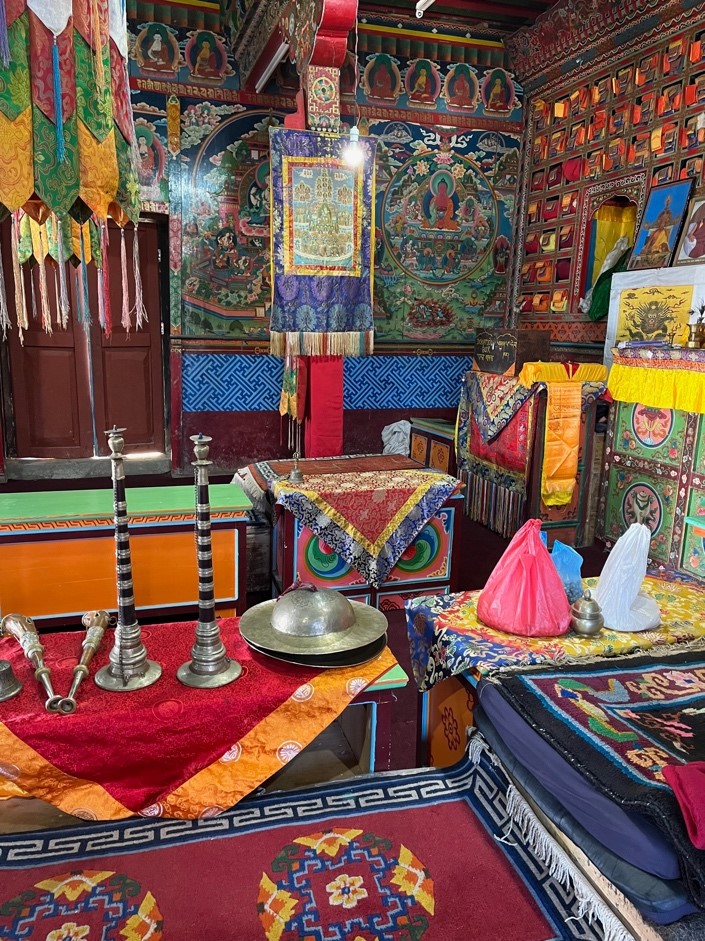
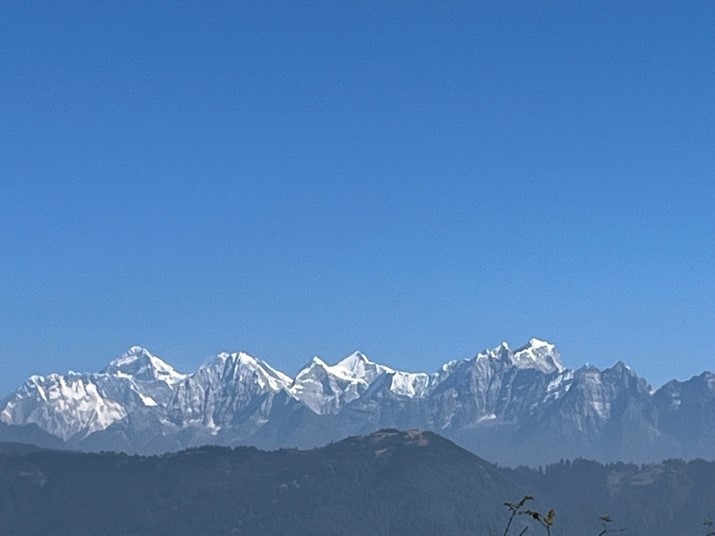
Outside and inside view of monastery about 1.5 hour climb from hospital (Credit: Howard Backer)
Potential Special Projects
In addition to patient care, volunteers are encouraged to take on special projects according to your interests and their needs to help advance the care at WSMH.
Some of the current needs as discussed with Dr. Gyaltsen Gurung are:
- Education
a. Training, especially for the “paramedics”: Doctor will suggest current needs and each fellow can provide one session
b. Community health workers would like training in wound care and first aid kits.
c. Nurses
are also very open to education
d. Fellows could each prepare a topic for other volunteers pertinent to the practice.
- Data extraction, collection, analysis: there is a major need to help the WSMH collect pertinent patient care data and document the work they are doing.
- Select a quality measure that is feasible but has not yet been met and work with the staff and hospital to achieve it.
- Dr. Gyaltsen is interested in research and publication.
I suggested the fellows could help with ideas and study design, his staff could do data collection, and UNR or the sponsoring health system could provide any necessary statistical support.
- Develop the business case for a full-time community health worker, including specific types of cases they could see in follow up. A motorcycle would be required to extend their reach. Another consideration is to train someone already on staff without another major role, potentially the ambulance driver “paramedic”.
- Posters for various conditions that can be displayed on the wall for patient education
a. HTN
b. Diabetes
c. Cataract
d. Glaucoma
e. Rabies
f. Management of shoulder dystocia during delivery (staff instruction poster)
If you go to Nepal to volunteer at WSMH, you need an open mind and flexibility to appreciate and contribute to a very different medical system. You will never work with people who show more appreciation and respect. Moreover, you will have a unique window into the culture, lifestyle, and medical needs in rural Nepal.
For more questions or information, you can contact any of the following:
Tony Islas [email protected]
Howard Backer [email protected]
Luanne Freer [email protected]
Eric Johnson [email protected]