The world can be a scary place. Full of uncertainty. Wars. Turbulent elections and widespread unrest. Infectious disease pandemics. Terrorist attacks - many of which can lead to public health emergencies. When the emergency is caused by a chemical, biological, radiological, or nuclear threat (CBRN), wilderness medicine providers can help use their existing skills or be specifically trained to play a crucial role in response, especially in remote or austere environments where medical resources and infrastructure may be unavailable or destroyed.
Medical Countermeasures (MCMs)
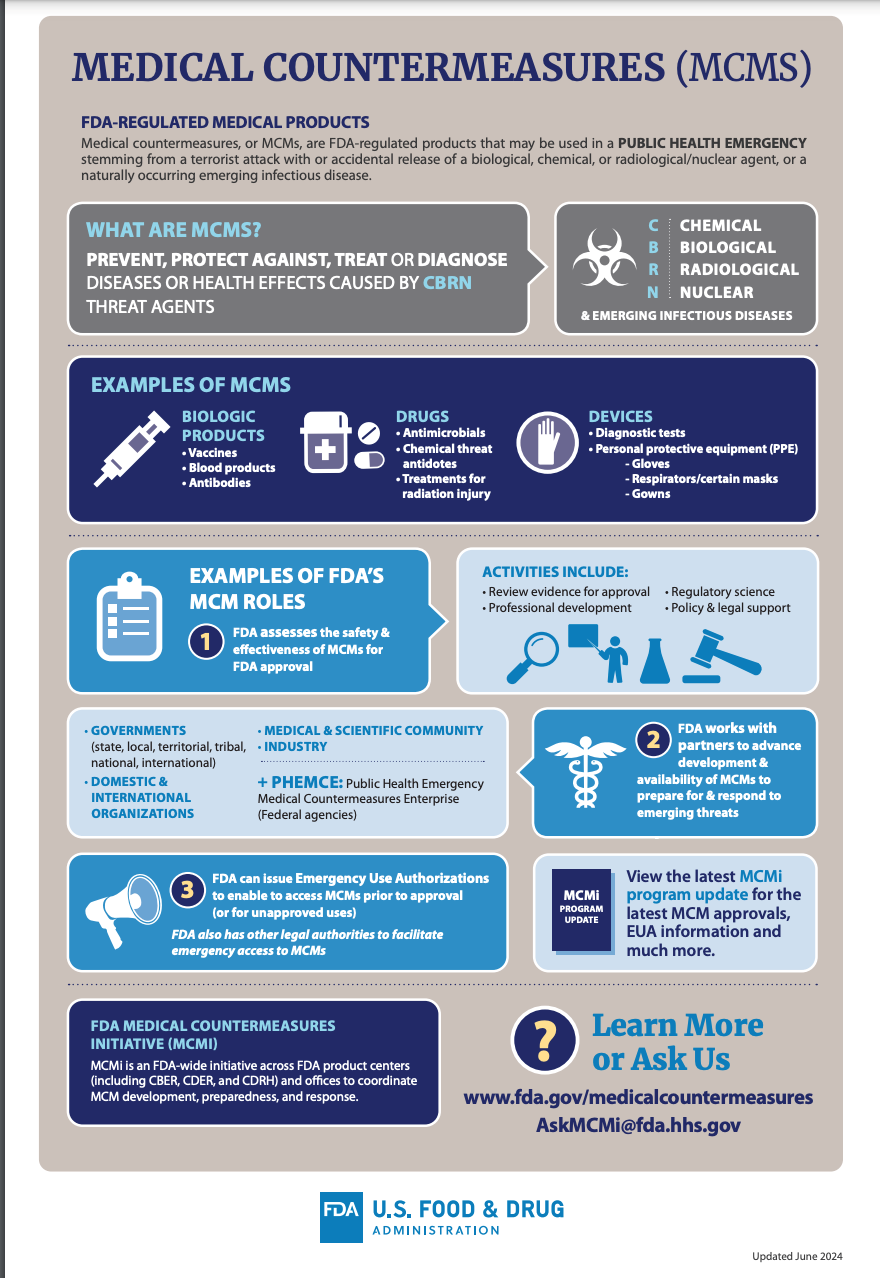
To address these emergencies, the US Government’s Biomedical Advanced Research and Development Authority (BARDA) has a mission to develop medical countermeasures (MCMs) that are widely available and readily deployable to respond to CBRNs. MCMs also include development of responses to future pandemics and epidemics, as evidenced by the response to COVID-19. Many MCMs are medications and biologics, but also include devices such as diagnostic testing kits and supplies, personal protective equipment, vital sign monitoring devices, ventilators, and other non-consumables.
Chemical weapons have been the most widely used threats in recent years, especially in conflict zones like Syria, Iraq, and Ukraine. Biological weapons have been less commonly used as they are more difficult to produce. However, the COVID-19 pandemic and recent rise of H5N1 bird flu cases have raised concerns about the potential toll of infectious agents on human health and life, and the need for a quick and effective response. Nuclear and radiological threats (i.e., “dirty bombs”, attacks on nuclear power plants) are very concerning, especially in war-torn areas like Ukraine. Despite the development of international treaties like the Chemical Weapons Convention, the Biological Weapons Convention, and the Nuclear Non-Proliferation Treaty, risks remain high due to difficulty enforcing these agreements, the persistent presence of non-governmental terrorist organizations, global political instability, and the rise of more sophisticated technology for manufacturing CBRN agents.
Examples of Recent Widespread CBRN Incidents
- Biological:
- COVID-19 (2020-Present) – a natural biological event, but the global pandemic raised concerns for the potential impact of weaponized biological agents
- Iran's Suspected Biological Weapons Program (ongoing)
- Chemical:
- Novichok nerve agent poisonings (2018) of former Russian double agent Sergei Skripal and his daughter Yulia
- Sarin (nerve agent) gas attacks in Syria (2013, 2017) killing hundreds
- Tokyo subway system sarin attack (1995) killing 13 and injuring over a thousand, perpetrated by the religious group, Aum Shinrikyo. In addition to Sarin, the group has also attempted to use biological agents (anthrax and botulinum toxin) for mass attacks
- ISIS (2015-2016) in Syria and Iraq (mustard gas, chlorine)
- Radiologic/Nuclear
- Ukraine (2022-Present) – potential use of radiological weapons or accidents at nuclear power plants
However, not all threats are intentional - a tsunami destroyed the Fukushima Daiichi nuclear facility releasing radioactive material (although no persons were sickened or killed, many were evacuated); there have been accidental train derailments dumping hazardous materials, or accidental lab leaks of infectious pathogens.
Distributing MCMs During a Public Health Emergency
If there is a public health emergency, MCMs may be provided through the Strategic National Stockpile (overseen by the Administration for Strategic Preparedness and Response) or state and local stockpiles, and are dispensed or administered under emergency response protocols by health care workers and public health responders. An MCM can be fully approved by the FDA, receive an exceptional use via an Emergency Use Authorization (EUA), or have an extension in expiration date. MCMs are included in the US Essential Medicines list (see previous article on the EML).
Development of FDA-Approved MCMs
To increase its efficiency, the FDA has a number of partners to develop MCMs: these include the Department of Health and Human Services Public Health Emergency Medical Countermeasures Enterprise, various NGOs, numerous public-private partnerships, regulatory science collaborations, projects with the Department of Defense, and state, tribal, local, and territorial public health departments, as well as international organizations.
|
THREAT AREA
|
EXAMPLES (drugs or biologics)
|
SIGNIFICANCE
|
|
BIOLOGICAL
|
|
Antimicrobial resistant bacteria
|
- Eravacycline, plazomycin, meropenem/vaborbactam
- Ceftobiprole
|
- Treatment of urgent antimicrobial-resistant threats
|
|
Anthrax
|
- Anthrax Vaccine Adsorbed, Adjuvanted [CYFENDUS]
- Anthrax Vaccine Adsorbed [Biothrax]
- Anthrasil Anthrax Immune Globulin Intravenous (Human) and raxibacumab, obiltoxaximab(monoclonal antibodies)
|
- Prophylaxis (pre- and post) and treatment of anthrax
|
|
Botulism
|
- hBAT®Botulinum heptavalent antitoxin
|
|
|
COVID-19
|
- Spikevax (COVID-19 Vaccine, mRNA)
|
- COVID-19 disease prophylaxis
|
|
Filoviruses (these include Ebolavirus, Marburgvirus)
|
- Ebola Zaire Vaccine, Live [ERVEBO]
- Ansuvimab/mAb114 [Ebanga], atoltivimab, maftivimab and odesivimab-ebgn [Imnazeb ]monoclonal antibodies
|
- Ebola virus disease prophylaxis and treatment
|
|
Influenza
|
- H5N1 Influenza A (H5N1) Monovalent Vaccine, Adjuvanted) [AUDENZ]
|
- Pandemic vaccine developed for quick response
|
|
Sepsis
|
|
- Rapid diagnosis of infectious agents
|
|
Smallpox
|
- Tecovirimat [TPOXX].
- Brincidofovir [TEMBEXA].
- Smallpox and Monkeypox Vaccine, Live, Nonreplicating [JYNNEOS]
|
- Treatment of smallpox if used as biological warfare agent (even though smallpox is considered eliminated, samples are housed in research labs)
- Prophylaxis of smallpox and monkeypox
|
|
Zika
|
|
- Screen US blood supply for potential Zika infectivity ensuring safe use by pregnant women and their partners
|
|
CHEMICAL
|
|
Various agents
|
- Nalmefene (opioid receptor blocker) nasal spray [OPVEE].
- Sterile, non-adherent, knitted nylon that delivers antimicrobial silver ions in the dressing when activated by moisture [Silverlon]
- Midazoloam injection [Seizalam]
|
- Emergency treatment of opioid overdose.
- Treatment of sulfur mustard-induced cutaneous injuries
- Treatment of nerve agent (e.g., organophosphates) caused status epilepticus
|
|
RADIOLOGICAL/NUCLEAR DETONATION
|
|
Radiological
|
- Filgrastim [Neupogen)] Sargramostim [Leukine], GM-CSFpeg [Neulasta]
|
- Increases survival in patients acutely exposed to myelosuppressive doses of radiation
|
|
Nuclear detonation
|
- Anacaulase-bcbd topical gel [Nexobrid]
- Romiplostim [Nplate]
|
- Enzymatic debridement agent for removal of dead or damaged skin in serious burns
- Thrombopoietin receptor agonist treatment for thrombocytopenia caused by radiation injury
|
Source: https://medicalcountermeasures.gov/barda/fdaapprovals
Role of Wilderness Medicine Providers in Responding to a CBRN Incident
In addition to possessing general skills for emergency response, most wilderness medicine providers receive training for responding to natural and human-caused disasters (whether accidental or intentional) in challenging and remote environments. When responding to a large public health emergency in these types of situations, their quick and sometimes necessary improvisational adaptability make them exceptional team members or even leaders. Roles these providers can play include:
1) Initial assessment and triage
2) Decontamination support including removing contaminated clothing, flushing eyes or skin, creating makeshift decontamination zones
3) Clinical management of injuries and exposures
- Chemical (e.g., nerve agents, industrial chemicals): administer antidotes such as atropine or pralidoxime for nerve agent exposure or manage burns caused by chemical agents
- Biological: provide supportive care, isolate patients, and monitor for signs of infection (fever, respiratory symptoms, etc.).
- Radiological and nuclear exposure: provide initial treatments for radiation sickness or injuries (e.g., burns, radiation poisoning)
4) Stabilization and evacuation: wilderness medicine providers are experts in moving patients, especially through varied terrain and with limited resources; as well, they can train other providers when working in challenging environments.
5) Search and Rescue support: for events in remote or inaccessible areas like forests or mountains
6) Psychological First Aid: mental health support to address the psychological impact of exposure to CBRN agents
7) Resource management: using minimal resources and improvisation with available tools, creating field treatments, managing medical supplies, assisting in logistics, and developing alternative care strategies
8) Collaboration with other medical and emergency teams such as emergency medical services (EMS), military personnel, public health agencies, and CBRN specialists
9) Training and preparedness: training of first responders, outdoor recreation professionals, and the public on basic CBRN awareness and initial response measures, including exercises and simulations to enhance preparedness for CBRN incidents
Conclusion
In addition to large-scale climate and environmental disasters, which seem to be happening on a daily basis all over the planet, citizens of the world have had to live with the increasing specter of CBRN threats from bad actors or the fallout from unintended serious accidents, Thankfully, the good actors from cooperating governments in many countries work tirelessly to prevent or mitigate these threats as much as they are able to keep the world feeling safe and more secure.
References:
https://www.fda.gov/media/134232/download
https://www.tandfonline.com/doi/epdf/10.1080/21645515.2022.2129930?needAccess=true