As many WMS members are familiar, searching for a lost or distressed person in the wilderness is both challenging and resource-intensive. Traditionally, wilderness search and rescue (SAR) teams deploy ground searchers, dogs, trackers, and other resources to assist in locating the person of interest. When available, a helicopter can help deploy searchers into the field or visually search the area from above. More recently, drones have been used as a tool to allow visual search from the air. While any of these search methods can bring results in the right conditions, ground resources are limited in the area they can cover. Visual search from the air also poses difficulties, with an individual person often being nearly impossible to spot in a large area, especially if one is wearing muted colors or is obscured by tree cover.
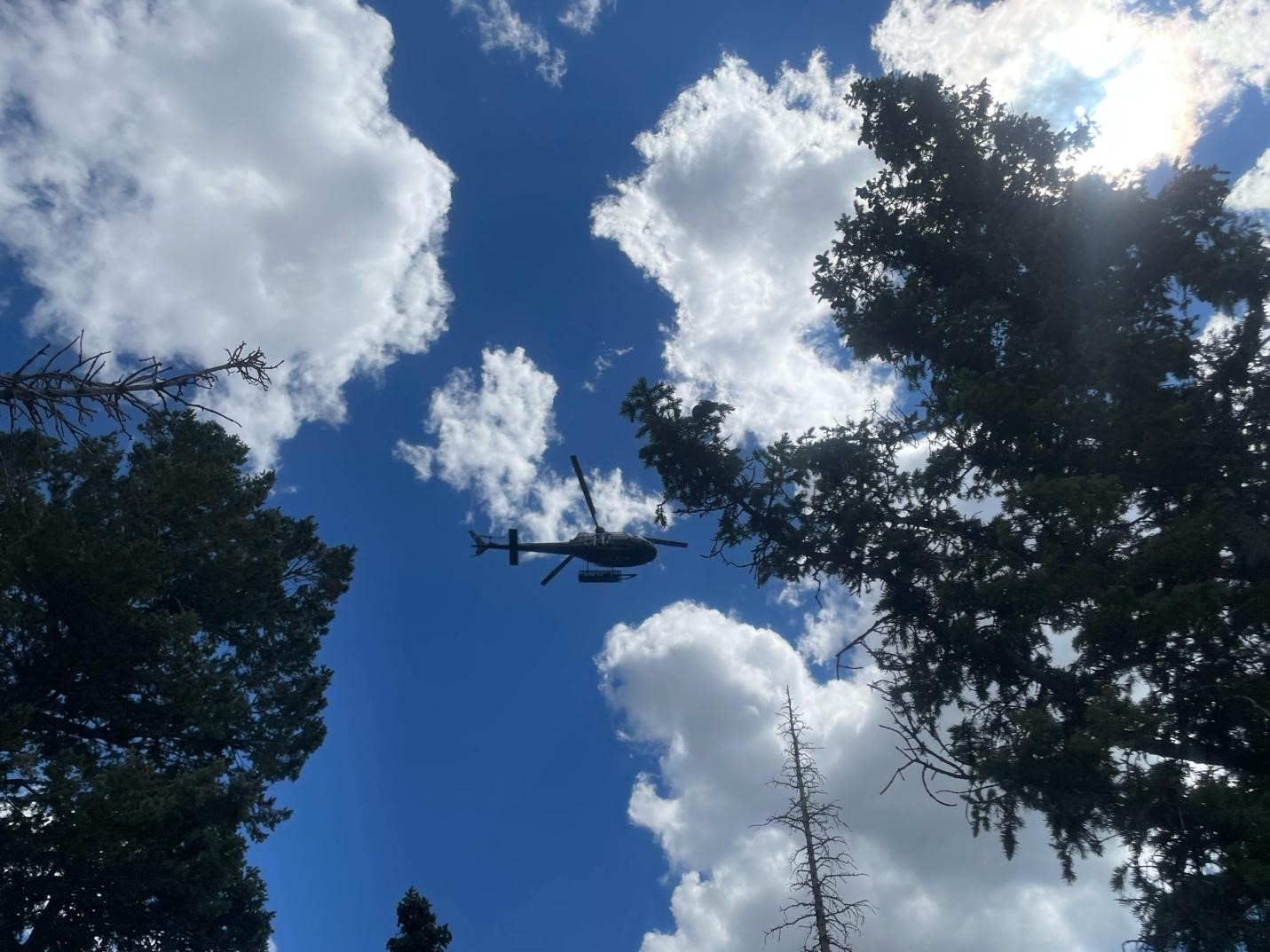
Helicopter with Lifeseeker onboard. (Photo by Tim Durkin, DO)
With these challenges in mind, a team in Colorado is working with a Spanish company, Centum RT, to pilot a new technology that can rapidly locate a missing person over a vast area by detecting their cell phone. While this system is currently deployed with many air rescue programs in Europe, it is not yet widely available in the United States. The technology, called Lifeseeker, works by allowing a SAR helicopter to emulate a cell phone tower. As the helicopter flies over the search area, the lost person’s phone affiliates with the Lifeseeker in the helicopter. Once detected and affiliated, the system can quickly pinpoint the lost person’s phone to within a 30-40 meter radius within a few minutes of flying around the area. The system is functional even when there are no towers or cellular service in the area as well as during inclement weather.
In order to detect a phone with Lifeseeker, the phone must be turned on and not in airplane mode. No special app download or user action is needed and the system works regardless of the brand or carrier of the phone. Once the helicopter enters a search area with no cellular coverage, detection of the phone typically takes less than a minute. In an area with cellular coverage, detection may take longer, as the helicopter has to get close enough to present a more appealing signal than the cellular towers in the area.
During a typical search, Lifeseeker is configured to seek the phone of the missing person. This is done by entering the electronic serial number of the phone into the system. This serial number data can be obtained by a 911 dispatch center with the phone number of the missing person. Alternatively, Lifeseeker can be configured to search for all phones in the area. This may be useful in a disaster situation where there are multiple distressed parties but their specific identities are not yet known.
In addition to the ability to detect and locate a cellular device of interest, Lifeseeker can communicate with the phone by text message or voice call. This can allow rescuers to give instructions to the distressed party or gain information about their predicament. The Lifeseeker can also send out broadcast messages to all phones in the area, alerting those in proximity to look out for the missing person, or to warn the public about a hazardous situation.
As previously mentioned, in order to successfully detect, locate, and communicate with the lost person’s phone, the phone must be on and not in airplane mode. This has implications for public education in areas where this capability exists. Many outdoor safety public education programs and wilderness web resources suggest keeping your phone in airplane mode or turned off in the backcountry to save battery. However, modern phones are generally “smart” enough to conserve battery when off network, so keeping the phone turned on in the wilderness should not rapidly deplete the battery as it could in an older model. For adventurers with older model phones, or a preference for hiking with the phone off or in airplane mode, it is important to remember to return to full functionality during a search and rescue situation.
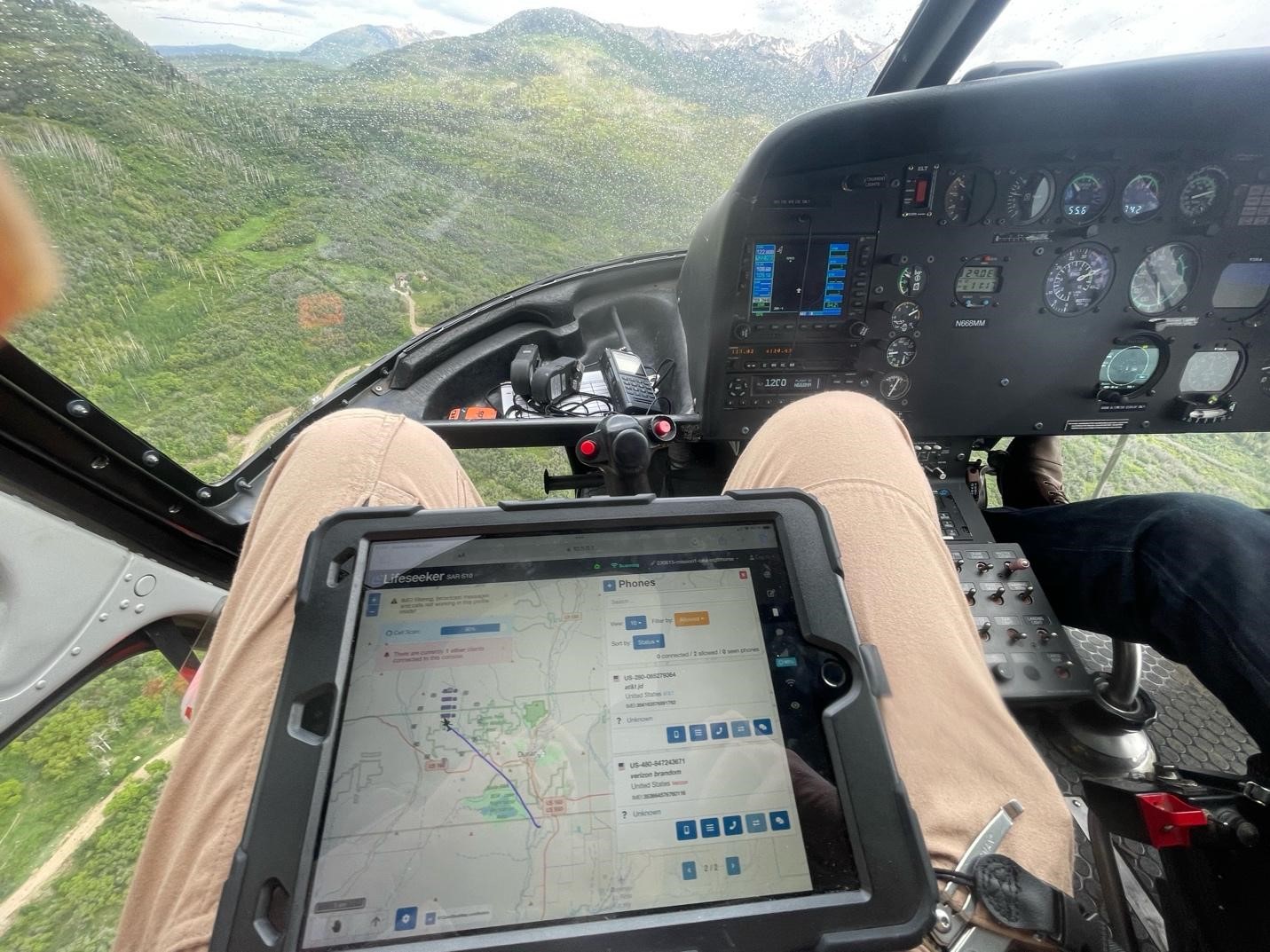
Tablet interface of Lifeseeker system. (Photo by Tim Durkin, DO)
The Lifeseeker system works through 3 small antennas installed on the helicopter. The rescue specialist and pilot can control the system and view information about the subject’s location on a standard laptop or tablet computer.
In simulated search missions, SAR aircrews at Colorado Highland Helicopters (CHH) have been able to detect and locate multiple subject phones in just a few minutes. These tests have included large, rugged mountain areas with no cellular coverage where past SAR efforts have taken days and not been consistently successful.
CHH is a helicopter company located in Durango, CO. They provide flight instruction, search and rescue, and other helicopter services for southwest Colorado. CHH has partnered with Centum RT to make SAR cellular detection capability available to their region prior to the system being approved for sale in the US by the Federal Communications Commission, which must approve all radio-based technology prior to sale. It is hoped that the helicopter Lifeseeker system will be approved and available for other agencies in late 2024.