In July 2024, I set out on a journey that would transform me—the ascent of Mount Kilimanjaro, the world’s highest free-standing mountain. Located in Tanzania, Kilimanjaro’s peak rises to 5,895 meters above sea level. As one of the Seven Summits, Kilimanjaro attracts thousands of climbers yearly, each seeking not just to reach its summit but to challenge themselves. This year, I joined their ranks with three other climbers—strangers at first, friends for life by the end. Over eight days on the Lemosho Route, the mountain pushed me to my limits, offering lessons far beyond the physical. From the patience required in the slow climb to the mental resilience needed to push through altitude sickness, Kilimanjaro became a powerful teacher. Here are the key insights I gained from my time on the mountain.
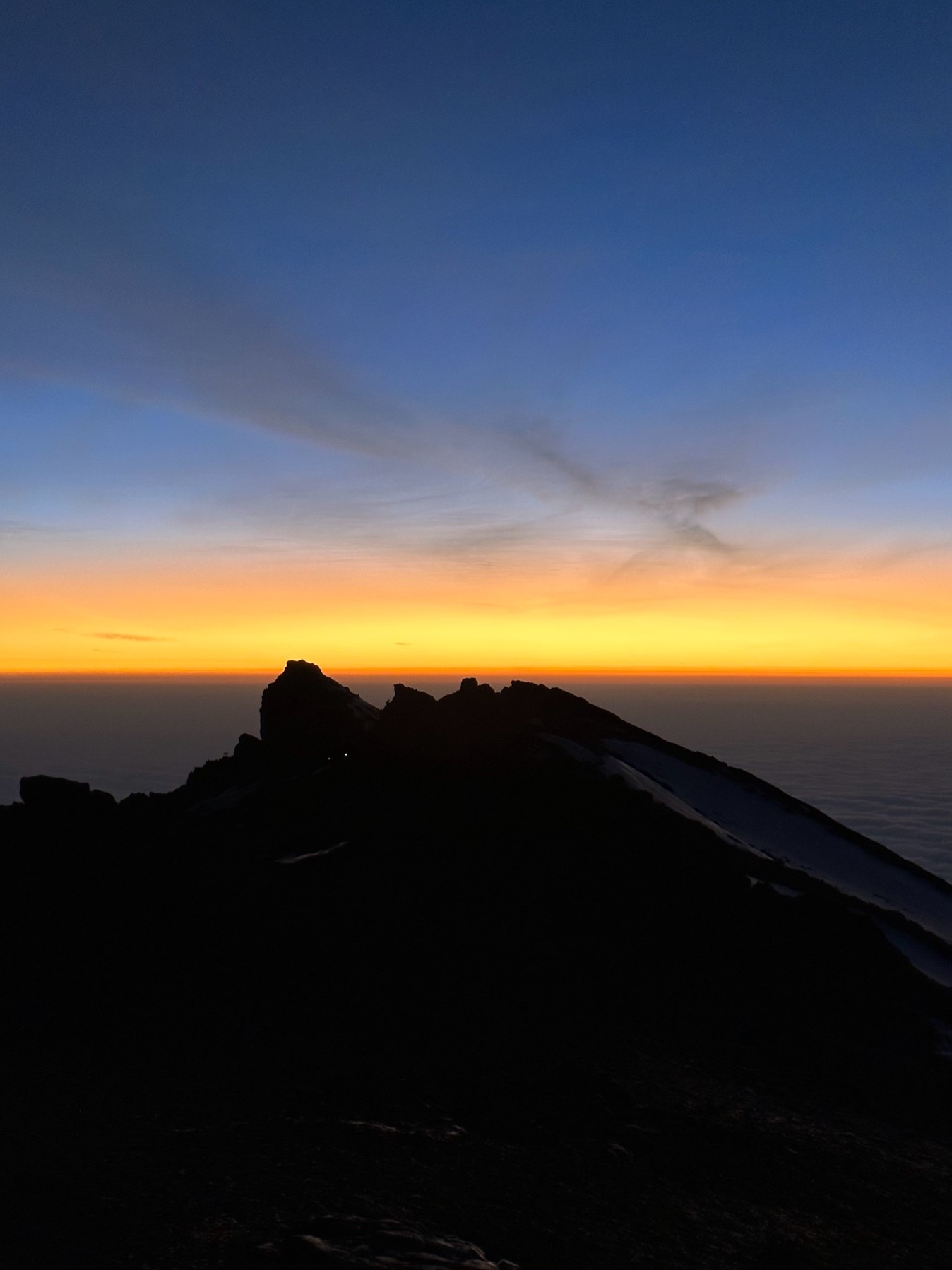
Watching the sunrise during the last bits of our summit push, truly unforgettable. (Kacylia Roy Proulx)
The Mountain Humbles All: Embracing Smallness in the Face of Greatness
No amount of training can fully prepare you for the humbling reality of Kilimanjaro. As I took my first steps into the mist-shrouded rainforest, the thrill of the unknown filled each stride. But as I climbed higher, the mountain revealed its true character. The lush greens gave way to rocky paths and thinning air and, suddenly, the confidence I initially had felt insignificant. By the alpine desert, my lungs strained and each step was a battle against gravity. Having experienced high altitudes before—at 5,200 meters on Vinicunca in Peru and 5,897 meters on Cotopaxi in Ecuador—I felt confident in managing altitude sickness and harsh mountain conditions. Yet Kilimanjaro quickly humbled me. The mountain forces you to confront your vulnerabilities, slow down, and respect its rules. It doesn’t matter how prepared you think you are; the mountain always decides. On the sixth night, during our final summit push under the full moon of July 22nd, with the wind howling and the cold biting through my layers, I realized how powerless I was against the elements. It was in these moments that humility took root—not in reaching the summit, but in recognizing my insignificance in the mountain’s vastness. Mother Nature is the great equalizer, indifferent to ambition. True strength lies not in defiance but in the quiet acceptance of our place within the untamed world.
Climbing Together: The Unseen Power of Teamwork
The mountain demands respect; extending far beyond the physical climb. Respect means honoring the untouched landscapes and embracing the journey’s ups and downs. Most importantly, it’s about respecting the people who make the ascent possible. Our team of 23 local guides, porters, and cooks were the heart and soul of our expedition. From the moment we set foot on the trail, they were there, carrying heavy loads of tents, food, and water, often outpacing us to set up camp before we arrived. I watched in awe as they balanced gear on their heads, moving with grace and strength. One evening, as we arrived at camp exhausted, we found our tents set up, warm soup waiting, and the reassuring smiles of our guides greeting us. Their support went beyond the physical—the encouraging words, the song “Jambo Bwana” they sang on repeat to lift our spirits, and the quiet strength they exuded propelled us forward. Reaching the summit of Uhuru Peak was a collective triumph, the result of every person who had carried, guided, and cheered us on. Kilimanjaro teaches you to see beyond yourself and recognize that every step you take is supported by many unseen hands.
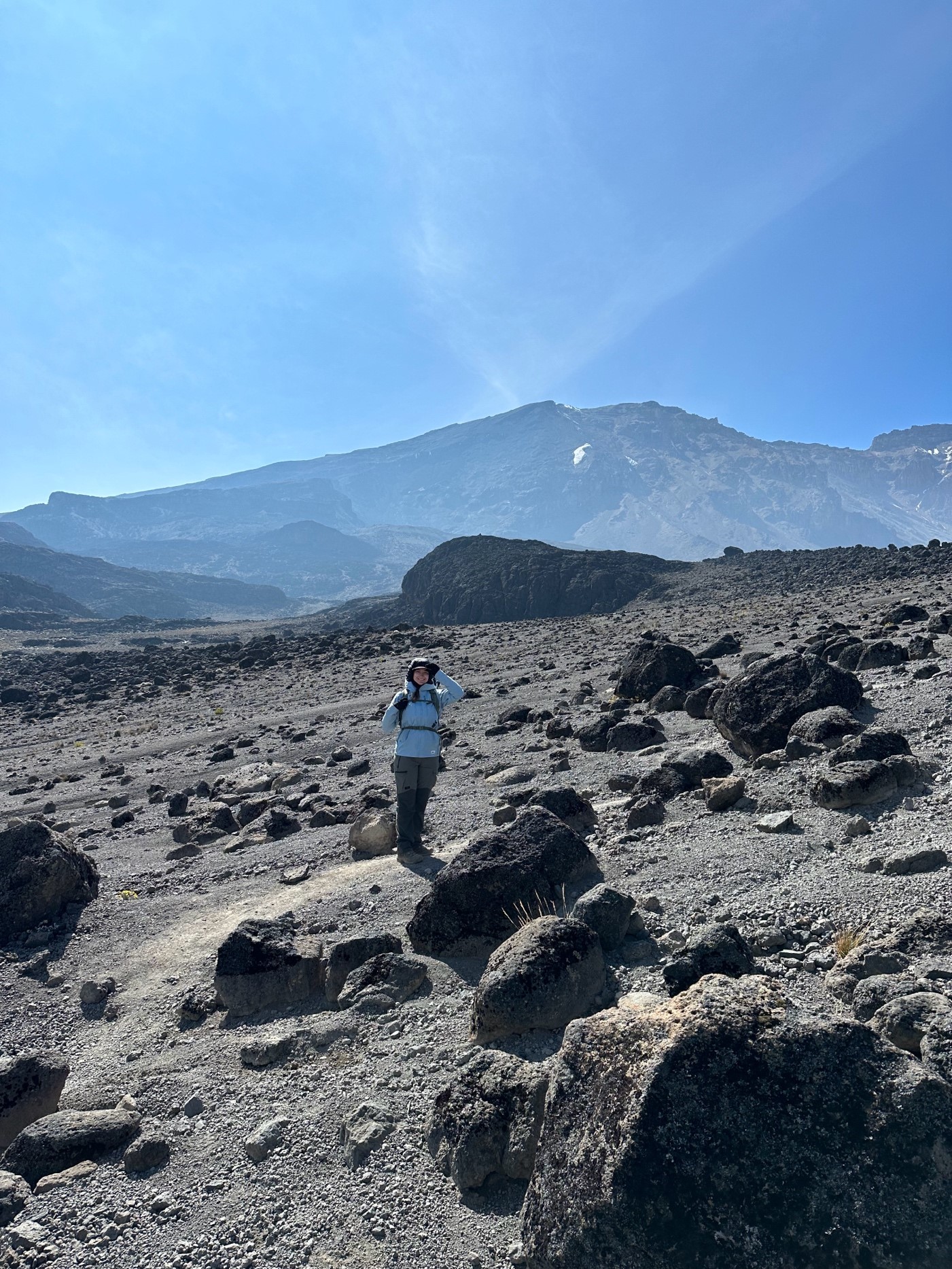
Feeling small and humbled in the face of the mountain. (Kacylia Roy Proulx)
Mind Over Mountain: The Power of Mental Grit
Kilimanjaro is often called a trek of endurance, but the real battle lies within. The thin air, numbing cold, and relentless ascent challenge your mental fortitude. On summit night, we began our final push at 1 am under a blanket of stars, each breath labored in the icy air. After seven exhausting days of trekking six to eight hours daily, my legs ached, and my head throbbed from the altitude. Three hours into the ascent- halfway to our goal- doubt crept in. My fingers were freezing and every breath demanded more effort than I thought I had left. The thought of giving up flickered my mind, but then I recalled the mantra of the expedition: “Pole pole”—slowly, slowly in Swahili. At that moment, I knew I had nowhere else to be and nothing else to be doing. My sole task was to place one foot in front of the other, focusing on a steady rhythm. Kilimanjaro taught me that true strength is often invisible, residing in the persistence to keep going when every fiber of your being wants to stop. It was here, on this steep, scree-covered slope, that I learned to master the mind’s narratives. Each step became a testament to the resilience of the human spirit, proving that mental fortitude can triumph over physical exhaustion and environmental hardship.
Nature’s Masterpiece: Finding Beauty in the Ascent
Kilimanjaro is not just a climb; it’s a moving canvas of nature’s most picturesque landscapes. Each day on the mountain feels like entering a new world. The first few days transport you into a rainforest reminiscent of “The Jungle Book”. As you ascend, the lush trees give way to semi-arid grasslands dotted with lava rocks. By the fifth day, you reach the high alpine zone, dominated by barren rocks. The lack of vegetation and the near-absence of insects signal that oxygen levels have dropped significantly compared to the lower regions. Finally, you enter the glacier zone, where the beauty of ice and snow contrasts sharply with the previous ecosystems. One of my strongest memories of the ascent was on one of the coldest mornings, at Baranco Camp. We woke to a sunrise that bathed the landscape in shades of pink and gold, illuminating the glaciers with an ethereal glow. It was a sight so breathtaking that it made us forget the biting cold and the challenge ahead, the famous Baranco Wall, a near-vertical scramble that tested our nerves. Kilimanjaro’s beauty lies not just in its grand vistas but in the details: the rustling leaves, the frost patterns on rocks, and the quiet stillness above the clouds. The mountain reminded me to pause, look up, and appreciate the raw, unfiltered beauty that exists in the world.
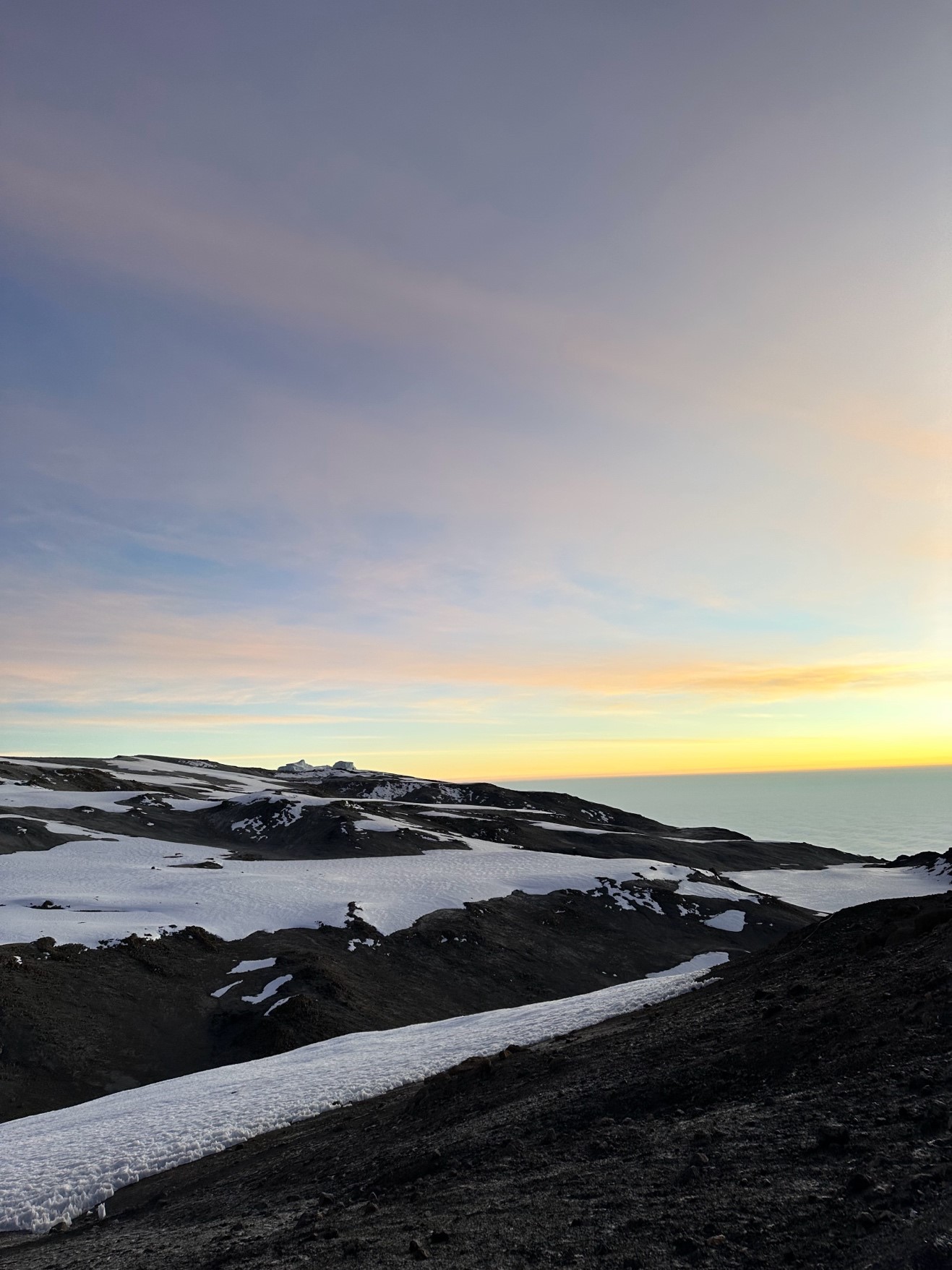
Views from Uhuru Peak, knowing I was exactly where I needed to be in that moment. (Kacylia Roy Proulx)
Patience in the Climb: Trusting the Journey Over the Destination
One of the most valuable lessons from Kilimanjaro is the importance of being present. In today’s world of alpinism, the spotlight often shifts to records. Every climber seems to be chasing something—whether it’s the fastest known time, a new route, or another summit to tick off the list. The simple joy of being on the mountain, of moving slowly and savoring the experience, is often overshadowed by the relentless drive to achieve. Kilimanjaro strips it back to basics. It reminds you that climbing is not just about reaching the top; it’s about the journey, the moments that define each step, and the patience it takes to get there. The mantra of “Pole pole”—slowly, slowly—teaches you to move with the mountain, to sync with its rhythm rather than impose your own. It calls you to slow down and appreciate the small wonders of the climb—the shifting landscapes, the conversations, and the quiet moments of reflection when you pause to catch your breath. Climbing Kilimanjaro is not a race; it’s an invitation to reconnect with the joy of simply being on a mountain. It’s a chance to rediscover why we climb—not for glory or accolades, but for the love of the journey itself. After all, you climb for eight days only to spend eight minutes at the top.
As I descended from the summit of Kilimanjaro, the lessons continued to resonate. The mountain taught me that resilience is built one step at a time, that true strength lies in our ability to keep moving forward even when the air feels thin, and that the most significant journeys are not about conquering nature but connecting deeply with it. Kilimanjaro reminded me that we are all capable of more than we believe—if only we dare to take the first step. The mountain may stand still, but it moves us in ways we couldn’t imagine. As I reflect on this unforgettable climb, I am reminded that the real summit is not the peak but the person you become along the journey.
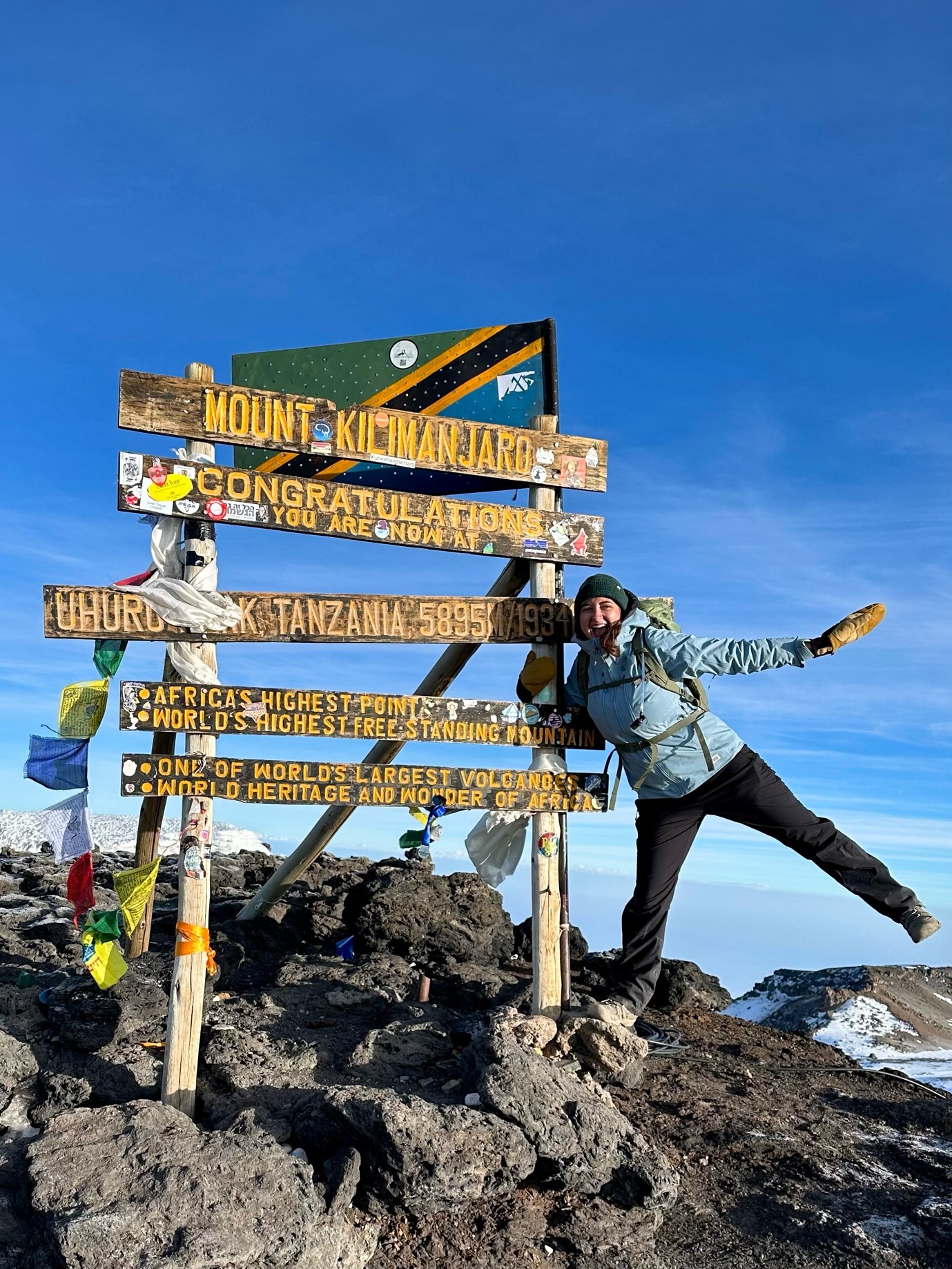
Reaching Uhuru Peak at 5895 m on the 7th day. (Kacylia Roy Proulx)