Over 200 types of mosquitos exist in the United States, with 12 types being able to cause viral diseases such as West Nile, dengue, chikungunya, and Eastern Equine Encephalitis, among others. It is difficult to distinguish between types of mosquitoes, so it is important to take steps to protect yourself and others from bites. West Nile is the most common mosquito borne illness in the US. However, there have been cases of dengue and chikungunya in Florida, California and Texas. Eastern Equine Encephalitis has been found throughout the Atlantic Coast, Gulf Coast, and Great Lakes regions.

Persons infected with West Nile Virus (WNV) may have an asymptomatic presentation or may present with fever, headache, myalgia, arthralgia and weakness. WNV can cause meningitis, encephalitis, flaccid myelitis, or, more rarely, myocarditis or optic neuritis. Patients often recover but may have lingering fatigue, malaise, or neurologic deficits. Mortality is higher for those who develop encephalitis or myelitis versus meningitis. After an infection with WNV, that person will have life-long immunity. Read about Dr. Anthony Fauci’s recent battle with a serious case of WNV.
Dengue presents as a fever with nausea, vomiting, rash, myalgia, arthralgia and pain behind the eyes, however, up to 75% of infected persons may be asymptomatic; about 0.5-5% will develop severe disease, the risk of which increases with a second dengue infection. Symptoms usually begin with two weeks and last 2-7 days with recovery for most people within a week. Warning signs for severe disease include: persistent vomiting, severe abdominal pain, mucosal or other signs of bleeding, liver enlargement, or fluid accumulation. There are four types of viruses responsible for infection, therefore, a person may be infected multiple times throughout their life.
Common symptoms for chikungunya virus infection include high fever, severe joint pain and swelling and rash. Joint symptoms are usually bilateral and debilitating. Rare manifestations include myocarditis, hepatitis, nephritis, cranial nerve palsy and bullous skin lesions. Unlike other mosquito-borne illnesses, most of those infected with chikungunya become symptomatic, typically within 3-7 days with resolution of symptoms within 7-10 days. Some patients may have persistent or relapsing joint pain for months to years.
Eastern Equine Encephalitis is a rare but serious disease with only a few cases per year in the US. Symptoms include fever, headache, vomiting, seizures, drowsiness and altered mental status. There is as high as a 30% mortality rate in those who develop encephalitis from the virus within 2-10 days of symptom onset. However, only about 4-5% of those with the infection develop encephalitis. Those who do recover from neurologic disease are usually left with lifelong neurologic issues including intellectual disability, seizure, cranial nerve dysfunction or personality disorders. Febrile illness without neurologic disease typically lasts 1-2 weeks and has full recovery.
Unfortunately, there are no antivirals available for treatment of any of the mentioned mosquito borne illnesses; treatment is largely supportive. The key is to avoid becoming infected with one of these viruses. Persons who may be exposed and at risk of mosquito bites should use a repellent approved by the Environmental Protection Agency (EPA), which has proven safe and effective. Repellents come in a variety of types, not just those applied to the skin. Wearable products with a fan or other mechanism to disperse the repellent near your body exist, as do special repellents which use a heating mechanism to disperse the repellent in an outdoor area. These products vary in the total coverage area, effect of wind and build-up time. Any product approved by the EPA is considered safe in pregnancy, including skin-applied repellent.
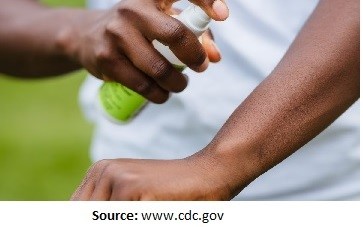
Skin-applied repellents may be made from catnip oil, oil of citronella, DEET, oil of lemon eucalyptus, picaridin, and others. Before skin repellents come to market, they must be approved by the EPA and show they’re safe for human use as well as effective. The EPA has made some exceptions for products shown to pose only minimal risk which include: citronella oil, cedar oil, geranium oil, peppermint oil and soybean oil. When it comes to utilizing skin applied repellents in children, some considerations include: not applying it to hands to avoid it getting their eyes and mouths, ensuring to wash all treated skin and clothes upon returning indoors, and avoiding lemon eucalyptus products in children under 3 years old due to lack of safety data. According to the EPA, DEET is approved for use in children without age restriction or percentage of DEET restriction and use is supported by the American Academy of Pediatrics, however, it is recommended to use the lowest effective percentage. In order to maximize effectiveness, re-apply the repellent according to labeled directions and apply enough per the label as well without overusing. Several factors can influence effectiveness including: physical activity, water exposure, air temperature and sunscreen. It is recommended to avoid products that combine sunscreen with the repellent as the sunscreen may need to be applied more frequently leading to larger amounts of repellent than needed. Sunscreen should be applied first followed by the repellent. It is important to know that DEET applied over sunscreen may decrease the effectiveness of sunscreen by one-third. You should wait at least 10 minutes for the sunscreen to absorb completely and allow it to provide its full UV protection.
When choosing a skin applied repellent, DEET and non-DEET products have shown similar efficacy, but DEET products may be preferred due to their ability to provide protection for a longer duration. The amount of time DEET provides protection for is dependent on the concentration of DEET with 30% lasting up to 12 hours. Picaridin 20% offers similar efficacy to DEET 20% for up to 12 hours and is less malodorous. Other recommended products include: IR3535 or oil of lemon eucalyptus.
In addition to using repellents there are other things one can do to in order to reduce the chance of mosquito bites including: wearing long sleeves, socks and pants, choosing tightly woven fabrics, wear clothing treated with permethrin, wear loose fitted clothing, utilize screens and nets to protect indoor spaces, prevent laying of eggs (get rid of or properly care for and store items that hold water such as tires, buckets, toys, bird baths, flower pots, etc.), avoid standing water, avoid attracting mosquitos with use of soaps, detergents, and perfumes, and avoid activities outdoor at dusk when many types of mosquitos are most active.
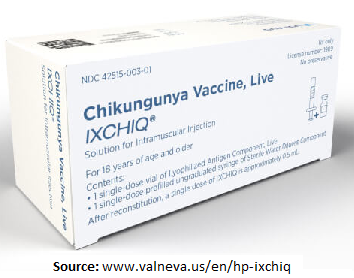
Additionally, vaccines are available to prevent dengue and chikungunya disease. Dengvaxia®, the only FDA approved dengue vaccine, was approved in 2022 for use in children and adolescents aged 9-16 years old who have confirmed previous dengue virus infection and live in an endemic area. However, since then, the drug company announced it will discontinue its manufacturing due to a lack of global demand. Qdenga®, another dengue vaccine, is approved but not available in the US, and a third vaccine is currently in late-stage development by National Institutes of Allergy and Infectious Diseases (NIAID) in the United States. The vaccine for prevention of chikungunya, IXCHIQ®, is available in the US and approved for use in adults. IXCHIQ is recommended for adults traveling to an area with a current outbreak and may be considered for those traveling to an area without a current outbreak but with known viral transmission within the past 5 years and who are > 65 years old with underlying medical conditions likely to have moderate exposure (at least 2 weeks) or persons staying for 6 months or more.
Mosquito-borne illnesses, including those not discussed, can have serious consequences including long term sequalae, death, and high health-care costs. They can be difficult to differentiate from one another, and often, no specific treatment exists and is centered on supportive care. It is important to take steps to prevent bites, whether within the US or abroad, and to investigate endemic mosquito-borne diseases and prevention methods for
areas you may be traveling to.