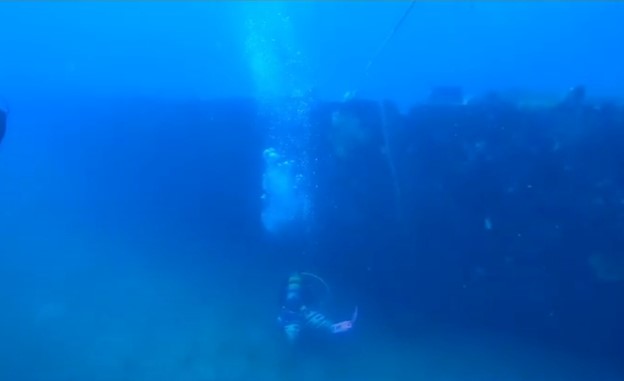
Diver descends to the hull of the Liberty a sunken World War II ship turned artificial reef off the coast of Destin,Florida. Photo Credit: Brian Laverentz, DO.
Scuba Diving and Certification for Beginners
So, you want to get scuba certified. Many looming questions make you uncertain that it will be a reasonable objective. I was certified as a medical student in San Antonio, Texas, and I’m here to tell you it is possible. In between classes, board exams, and late night studying I still found time to get certified. When I finally got into open water and inhaled that sweet canned air, I was hooked. On my first certifying dive I swam past a 100-year-old sunken car and through 20-30ft submerged trees that looked like an underwater forest with fish resembling birds as they commuted the submerged canopy. It was absolutely worth the schedule manipulation, and while I know my situation does not necessarily reflect everyone’s, I did want to answer some common questions that could make this goal seem more obtainable.
But I don’t live near the ocean or any salt water and can’t travel for this!
I didn’t either, and I never left San Antonio. Many people think in order to learn how to dive you need to have access to the ocean. This isn’t true. You do need a natural body of water in which to dive in, however it need not be an ocean or sea. Rivers, lakes, quarries, springs, and more are all places diving takes place! Not to mention that you need to spend time in a confined (read pool) environment before getting out to a dive site.

Group of divers including myself returning from a dive at Clarks Hill Lake (Thurmond Dam) on the “South Carolina side.” Photo credit: Ellen Veals.
I don’t really have free time in the summer – or – I live in a really cold place!
There is good news on that front! There is gear designed to meet all the environmental conditions you can imagine. If you live in a place that is always cold, it is likely your local dive shop will have everything you need to ward off the elements so you can enjoy your dive. Remember, there are people out there who go diving around glaciers and in frozen lakes without being chilled to death. If you live in a warmer place, the training schedule may slow down in the winter, but it does not necessarily stop. Some benefits to getting certified in the cooler months include more one-on-one time with instructors because there are less students and dive sites are less likely to be packed.
I don’t have a lot of time to commit to this!
This can be a challenge for many, but most dive certification programs have moved to online didactic training meaning you can work at your own pace on the necessary knowledge to be a safe diver. You will still have to set aside at least a day or two to get in the water and practice practical skills, but this can be coordinated with your instructor and need not be done all at once!
I’m nervous and don’t know if diving is something I’ll enjoy!
Well, this is an all-too-common concern. Many dive centers offer opportunities to try diving in a controlled pool environment as a way of getting your feet wet. Pun intended. Even if you do go straight to the certification, just like any other beginner training course, you will be gradually stepped up to the big moment you when you enter open water.
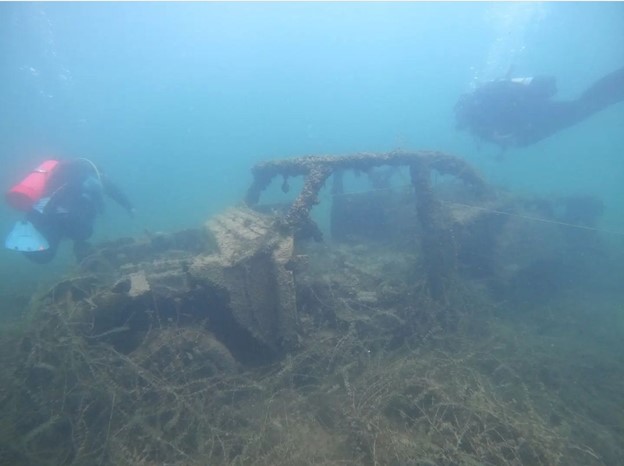
Two divers navigate around a sunken car in Canyon Lake, North Park Campground, Canyon Lake, Texas. Photo Credit: Brian Laverentz, DO.
I’ve heard diving is expensive, can I even afford it?
Up-front cost of the course and equipment can vary quite a bit. However, the course itself is typically a
couple hundred dollars, but then you will also need gear, as this is a technical sport. Most anywhere you train will offer rental gear and they may even bundle or discount that cost as a part of the course. Purchasing dive gear can be anywhere from a little over one thousand to several thousands of dollars. Most people don’t spend thousands up front and slowly piece together their own gear over time. I recommend renting your gear in the beginning; try some things on and see what you like before you buy. I’d say expect to spend between $600 to $1000 for both your certification and combination of rental or purchased gear.
Where do I go to get certified?
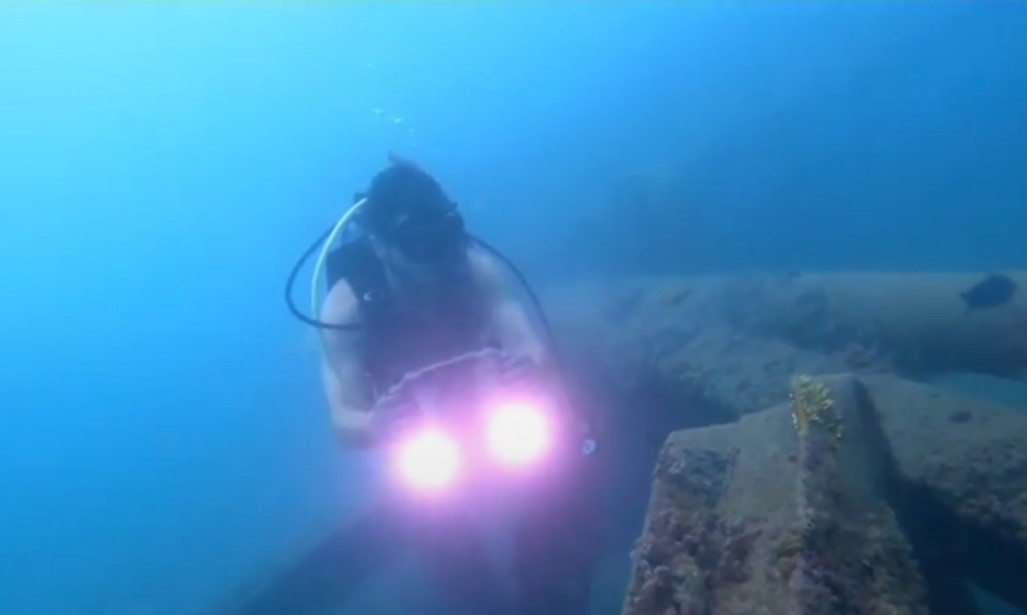
Diver and FAWM candidate Christian Otero, MD takes video at Crash Boat dive site in Puerto Rico. Photo Credit: Brian Laverentz, DO.
Is the course work challenging?
This depends on the individual, but as medical professionals and trainees you have a leg up! Much of the classroom learning focuses on dive physiology. While the details may be foreign, the material should be easy for you to digest. There is, of course, dive physics where you revisit Boyle’s law, which you likely haven’t seen since undergrad, but again, this shouldn’t be foreign to you. What will likely be most unfamiliar is the equipment and technology portions, which are not earth shatteringly difficult things to learn. Remember, the course is providing a foundation, not making you an expert. It is okay if you don’t know everything all at once.
Is there anything more I can do after being certified?
Absolutely! There are entire training paths from all the major certifying agencies for all types of specialty dives (PADI, SSI, NAUI). You can get involved in conservation efforts. You can become an instructor or diving tour guide. As a medical professional, avenues for medical coverage or response are also available. The opportunities for exploration related to diving are endless. If there is water, you can dive it.
Of course, you may still have questions or these challenges may not be things you can address or navigate effectively right now. I totally get it, but if the opportunity ever presents itself to you, I recommend you take the plunge. I’m also available to answer your questions or point you towards someone who can.