Every year, thousands of Hindu and Buddhist pilgrims visit the holy site of Gosaikunda in Nepal for the Janai Purnima festival. Located at an altitude of 4,380m, most of them take the rapid ascent in 1-2 days from Dhunche, which is at an altitude of 1960m, and stay for only one night to take a holy dip in Lake Gosaikunda on the occasion of the festival. Previous studies have reported cases of acute mountain sickness (AMS), high altitude headache (HAH), high altitude cerebral edema (HACE), and high altitude pulmonary edema (HAPE) among pilgrims. The Himalayan Rescue Association (HRA), a non-profit non-governmental organization, has been running a temporary clinic near the lake with medical doctors every year for over 25 years during the festival to provide care to the pilgrims and manage many high altitude illness cases. During the August 2023 festival, as a medical student, I had the opportunity to work alongside a team of five doctors stationed in the HRA clinic.
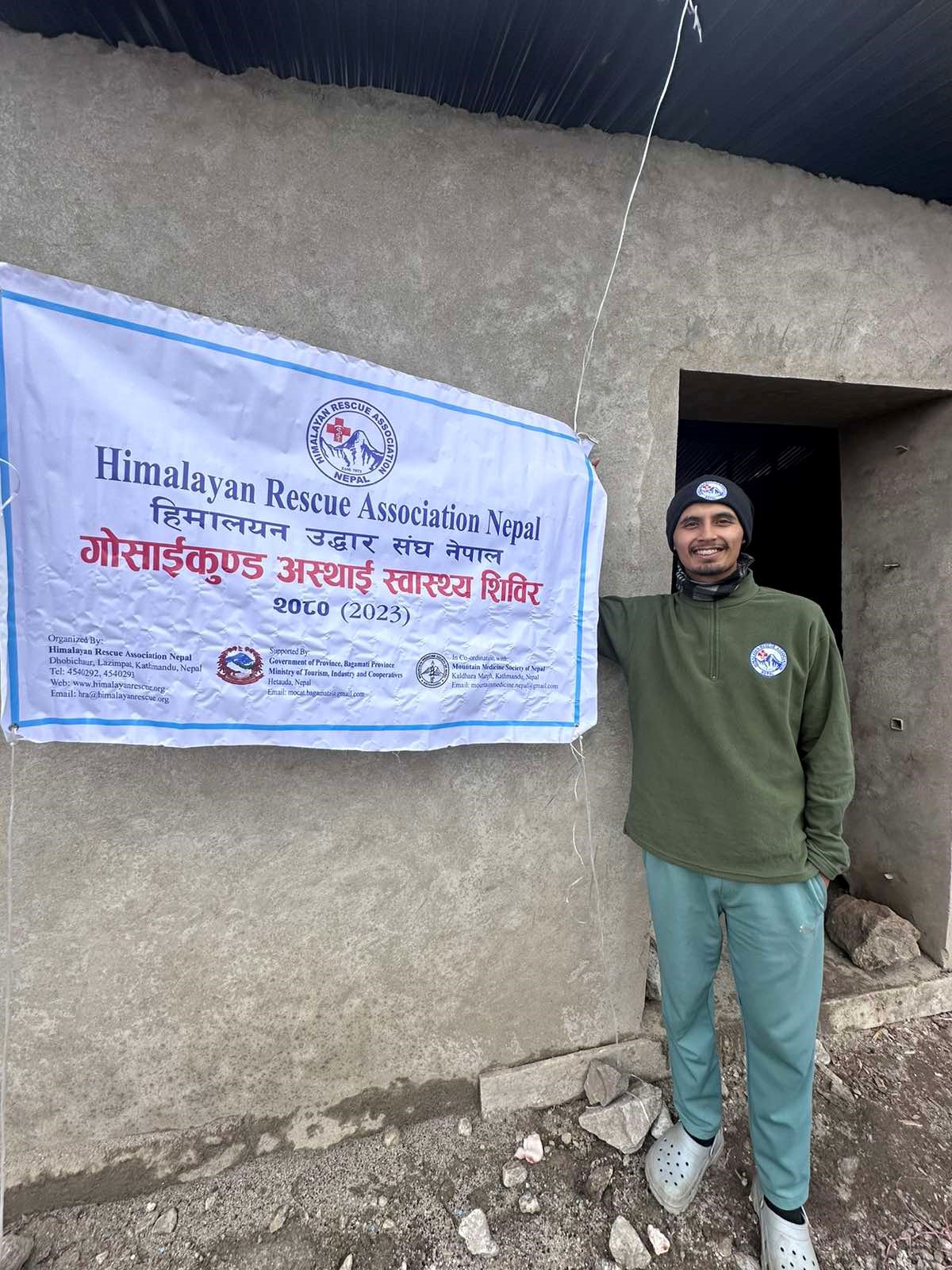
This is me standing in front of our clinic. The temporary medical clinic is situated inside this structure. (Photo Credit: Sachet Subedi)
Our journey started in Kathmandu. We went to Dhunche in a jeep, staying that night at 1960m. We spent the following nights in Chandanbari (3300m), Lauribina (4610m), and finally on the fourth day, we reached Gosaikunda (4380m). As we traveled, our team worked to spread essential awareness about AMS to ascending pilgrims. We advised the trekkers whom we met on our way to ascend slowly and take prophylactic acetazolamide to reduce the risk of AMS.
On the day of our arrival at the lake, we set up the clinic, and I was assigned to measure patients' vitals and keep proper records of age, sex, residence, date of ascent, and diagnosis. Our leader and other members of the team managed the clinical cases. As the resources were very limited, there was a judicious distribution of medicine to the pilgrims.
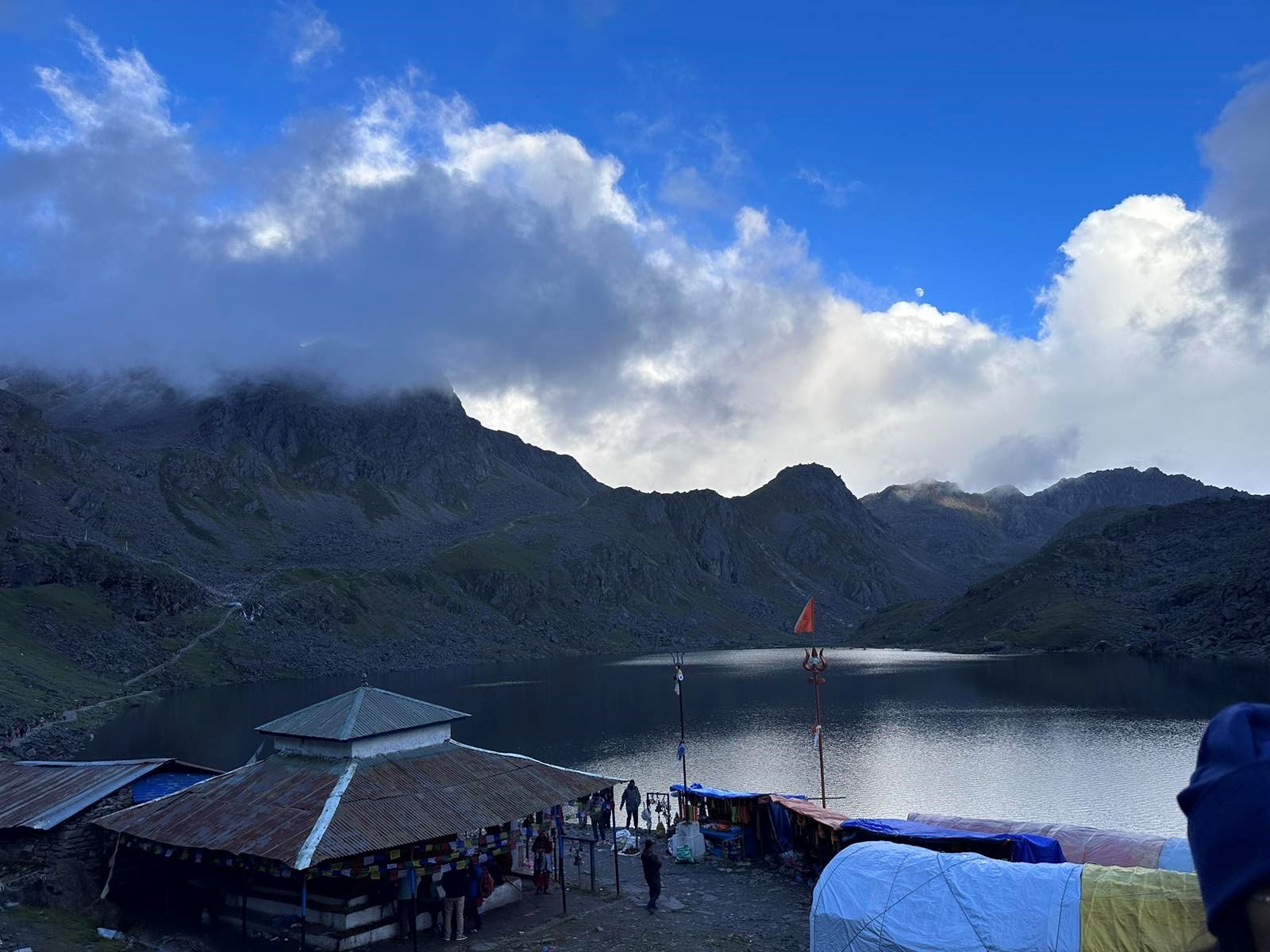
View of Holy Gosaikunda Lake from HRA clinic (Photo credit: Sachet Subedi)
More than 5,000 pilgrims visited the holy site on Janai Purnima that year. During recordkeeping, I found the ascent profile of pilgrims had not changed much. As in the past, most pilgrims ascended quickly in 1-2 days to the holy site. We found the majority of our patients in the clinic were suffering from mild to moderate AMS. During my stay, I got a close look into the management of two high altitude cerebral edema cases, four probable high altitude pulmonary edema cases, a fall injury due to an alcohol-induced hangover, and tinea corporis in a five year old child of a local family. The four cases of high altitude cerebral edema were immediately administered intramuscular dexamethasone and descended promptly. The severe AMS patients descended by porters carrying them on their backs as helicopter rescue wasn’t feasible due to dangerous weather conditions. In the clinic, I also encountered several pilgrims who had taken prophylactic acetazolamide, now complaining about a tingling sensation in the limbs, and frequent urination.
In the clinic, I saw a firsthand example of how religious dynamics affected patients’ compliance with our medical advice. There was a middle-aged man with moderate AMS. He was in no state of comfort, and our medical team advised him to descend as soon as possible. He resisted and took one extra hour to take the dip before starting to descend. Fortunately, he was able to descend on time and his symptoms resolved. This made me realize that we should always consider religious values when thinking about patients’ compliance with our medical advice and deciding what is best for patients.
This immersive experience has deepened my understanding of high altitude medicine and ignited my passion for mountain medicine. I think opportunities to work in a team in high altitude settings are invaluable in nurturing the next generation of wilderness medicine practitioners and enthusiasts worldwide. Diving into the divine water at Gosaikunda and experiencing a real scenario of wilderness was a major takeaway from this trip.
I would like to thank Himalayan Rescue Association and Mountain Medicine Society of Nepal for the opportunity to work in such a setting. I am grateful to the medical team for their constant guidance during my stay in the clinic.