A 26-year-old female trail runner notices she is more fatigued and doesn’t have as much energy to complete her workouts as compared to a few months ago. She has been increasing her mileage as planned with a safe 10% volume increase per week while training for a 50K trail race in the mountains. She has had a couple upper respiratory viral infections over the past few months but feels like she recovered with no residual symptoms. She’s otherwise healthy with no medical problems and not on any medications. She denies any recent weight loss, fevers, easy bruising, or history of autoimmune diseases. She can’t remember when her last menstrual period was but states it’s “always irregular and comes every few months.” She also rock climbs, mountaineers, and snow skis depending on the season.
Athletes are driven by both internal and external pressures to succeed and achieve optimal performance. Many times, either intentionally or unintentionally, athletes alter their energy intake or exercise energy expenditure to achieve this. The wilderness athlete may have an even more innate desire to push her or his physical limitations to conquer nature in whatever form she throws at you. In addition, altitude, elements, terrain, and additional gear, all necessitate additional fuel to sustain exercise. While this trail runner’s description of symptoms may be vague and nonspecific, her constellation of symptoms describes a more serious underlying pathology due to chronically low energy availability (LEA) known as Relative Energy Deficiency in Sport (REDs). REDs is defined as a “syndrome of impaired physiological and/or psychological functioning experience by female and male athletes that is caused by exposure to problematic (prolonged and/or severe) low energy availability. The detrimental outcomes include, but are not limited to, decreases in energy metabolism, reproductive function, musculoskeletal health, immunity, glycogen synthesis, and cardiovascular and hematological health, which can all individually and synergistically lead to impaired well-being, increased injury risk and decreased sports performance.”
Problematic LEA exists on a continuum and is associated with a variety of adverse health outcomes impacting essentially every system in the body:
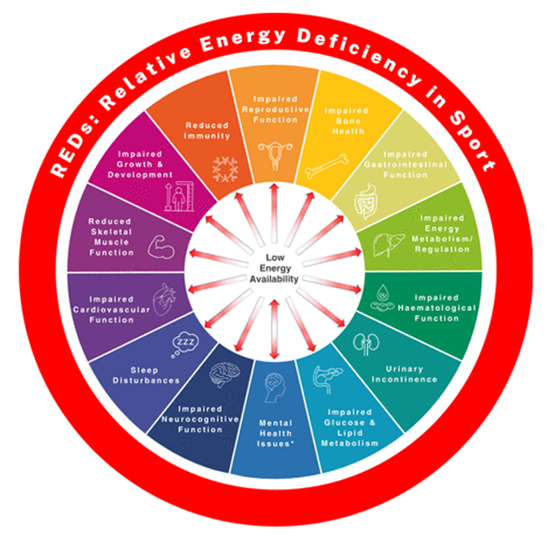
Figure 1. REDs Health Conceptual Model. The effects of LEA exist on a continuum. While some exposure to LEA is mild and transient termed adaptable LEA (arrow depicted in white), problematic LEA is associated with a variety of adverse REDs outcomes (arrow depicted in red). *Mental Health Issues can either precede REDs or be the result of REDs. (Source: https://bjsm.bmj.com/content/57/17/1073)
Performance outcomes are also greatly affected, and many times athletes notice these first:
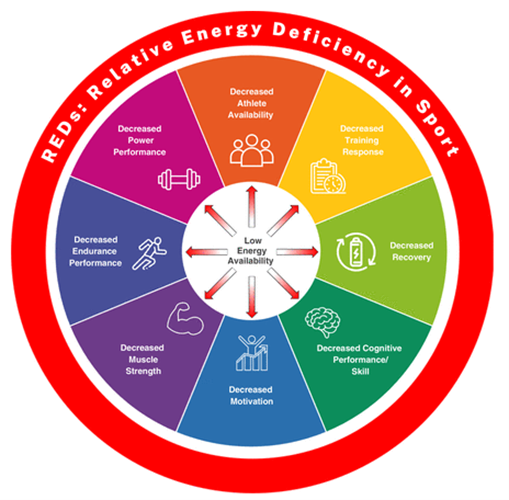
Figure 2. REDs Performance Conceptual Model. The effects of LEA exist on a continuum. While some exposure to LEA is mild and transient, termed adaptable LEA (arrow depicted in white), problematic LEA is associated with a variety of adverse REDs performance outcomes (arrow depicted in red). (Source: https://bjsm.bmj.com/content/57/17/1073)
Given the potentially serious outcomes of disordered eating behaviors and problematic low energy availability, prevention, early identification, and treatment should be prioritized.
Disordered eating behaviors can include caloric, macro or food specific restrictions; following a fad diet such as low fat, keto, or gluten free (in those who don’t have diagnosed celiac disease); or even simply “eating healthy”. Other symptoms of disordered eating include frequent dieting, anxiety associated with specific foods, or meal skipping, weight fluctuations, rigid routines surrounding food and exercise, preoccupation with food or weight and body image that negatively impacts quality of life, and compulsive eating habits. Disordered eating behaviors can lead to more serious outcomes including diagnosis of an eating disorder such as anorexia nervosa or bulimia nervosa as defined by the American Psychiatric Association or other health and performance consequences such as those listed above including bone loss, gastrointestinal disturbances, electrolyte and fluid imbalances, bradycardia and hypotension, increased anxiety, depression and social isolation.
If you suspect you may be underfueling, meeting with a sports medicine provider and registered sports dietitian are a good first step. REDs is a diagnosis of exclusion, and your doctor will want to rule out other diseases as a cause of your symptoms. Typically, this involves blood tests and occasionally some imaging or other tests performed by specialists depending on your symptoms. For example, an x-ray may be performed to further evaluate for a stress fracture, or a bone density scan called a DXA may be ordered to assess your bone mineral density to further stratify the severity of REDs and guide treatment. In other cases, those with GI distress may see a gastroenterologist to further evaluate their abdominal pain and change in bowel movements.
There’s no single approach to treating REDs as all treatment is individualized and focused on nonpharmacologic treatment. A sports dietitian is especially helpful in restoring optimal energy availability and figuring out personalized energy needs. Treatment involves either increasing energy availability (i.e. increasing caloric intake), reducing energy expenditure (i.e. exercising less), or a combination of both. Keep in mind, energy needs frequently change based on volume of training, sport or activity you’re training for, and the wilderness factors involved (altitude, terrain, length of stay in the backcountry, etc.). Thus, frequent monitoring of energy availability is crucial to successful treatment of REDs and prevention of further long-term health and performance sequelae.
Treatment of REDs sequelae are also specific to the athlete. Iron deficiency may occur due to lower dietary intake, lower bioavailability, reduced absorption such as with a vegan diet, or having elevated hepatic hepcidin levels post-training. It’s also more common in females generally due to losses from menstruation. Thus, supplementation with 325 mg ferrous sulfate (65 mg elemental iron) daily in combination with vitamin C (such as taking the pill with orange juice) to help absorption can be recommended to achieve ferritin levels >20 mg/L to treat iron deficiency anemia and a multivitamin with iron daily is helpful to achieve ferritin levels >30 mg/L to help performance. For those with increased susceptibility to respiratory viral infections, low carbohydrate availability may play a role, and thus, ensuring adequate carb intake can help mitigate this. You may also want to supplement with probiotics, vitamin C, and vitamin D. Studies also show that cardiovascular sequelae of bradycardia, orthostatic hypotension, and endothelial dysfunction with high total and LDL cholesterol improve with resumption of regular monthly menses in females. (If you’re using hormonal contraception, menstrual periods and female hormone levels by blood tests are invalid as tools for assessing general energy availability.) A mental health professional (psychologist, psychiatrist, or both) is also a crucial member of the treatment team to assist in treatment of the comorbid conditions associated with REDs and/or further help identify disordered eating as causation.
Whether you’re training for your next ultra-trail race, a 10-day backcountry adventure, or bagging your next peak, ask yourself a few questions in addition to “do I have all the gear I need?”:
- Do I have a natural monthly menstrual period [if not on hormonal contraception]?
- Have I suffered any stress fractures, recurrent mild injuries, been sick more frequently, or just more tired generally?
- Has my performance decreased or have I put in more training with no gain?
If you’ve skipped a few periods or answered yes to the subsequent two questions, think about your energy availability and if you may be underfueling. Discussing your symptoms and concerns with a sports medicine physician who treats REDs and/or a sports dietitian may be helpful. It may be difficult to consume or even carry the calories you need to fuel appropriately as a wilderness athlete. Thus, having the knowledge as well as practical advice to eat efficiently and maximize your performance will help you better enjoy your adventure.
Additional information:
Mountjoy M, Ackerman KE, Bailey DM, et al. 2023 International Olympic Committee (IOC) consensus statement on Relative Energy Deficiency in Sport (REDs). British Journal of Sports Medicine 2023;57:1073-1098.
What Is Disordered Eating? (eatright.org)