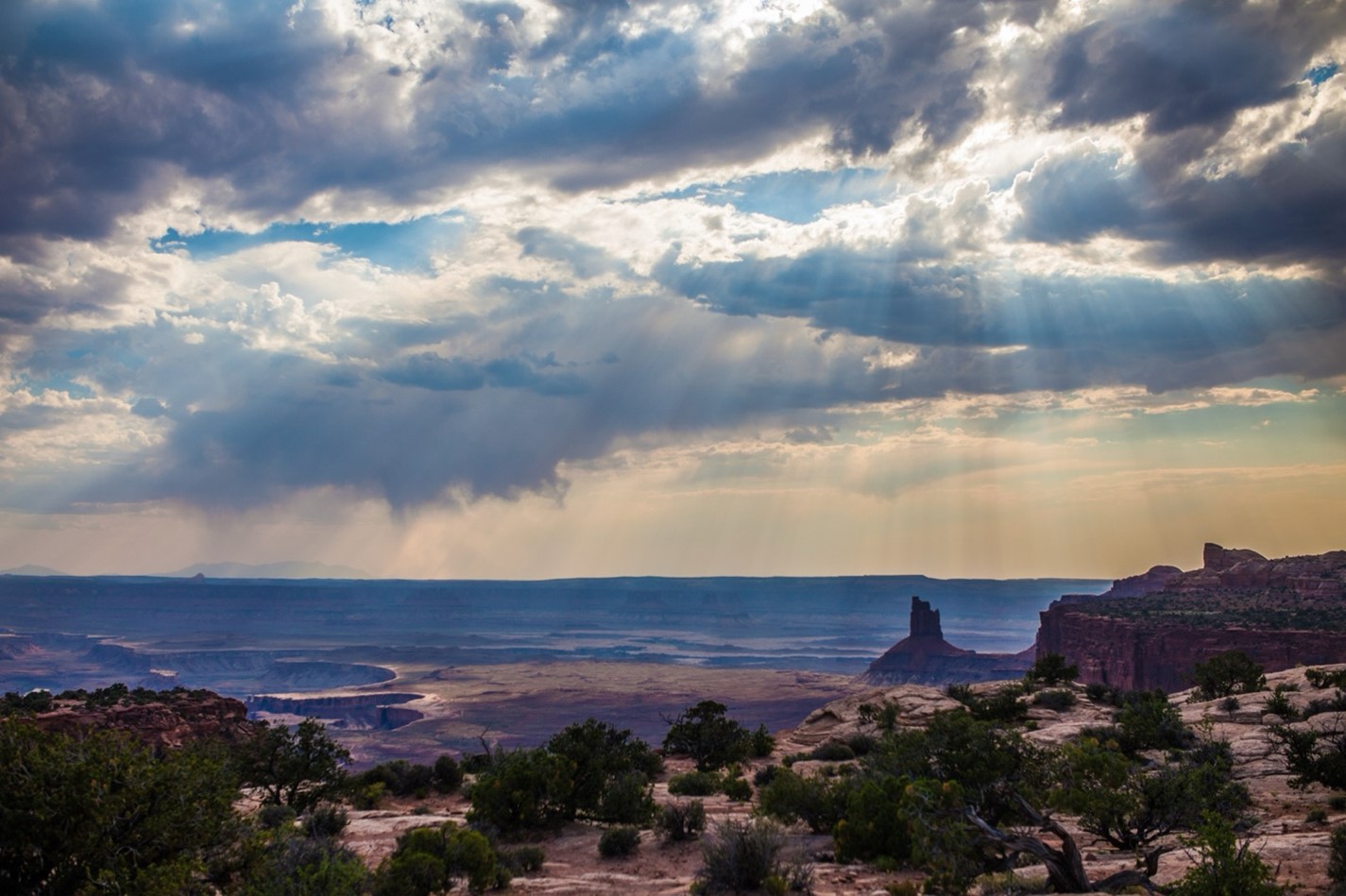
Island in the Sky. Source: nps.gov
On Friday, July 12, 2024, Utah Public Safety officials received 911 text messages from two hikers inside Canyonlands National Park. They were lost and had run out of water. By the time National Park Service (NPS) rangers mounted a search operation in the Upheaval Dome area, it was too late, and the pair were found dead secondary to suspected heat-related illness. The two hikers, Albino Herrera Espinoza, 52, and his daughter, Beatriz Herrera, 23, were visiting from Green Bay, WI. Albino and Beatriz set out to hike the Syncline Loop Trail. This 8.1-mile hike, which amounts to 1,516 ft in elevation change, is described as “the most challenging trail in the Island in the Sky district, and most park rescues occur on this trail.” Rather than an easily navigable path, Syncline has steep switchbacks and boulder fields that require climbing and scrambling to traverse. Simply put, this is an unforgiving place to be caught unprepared on a day when temperatures peaked at 106F.
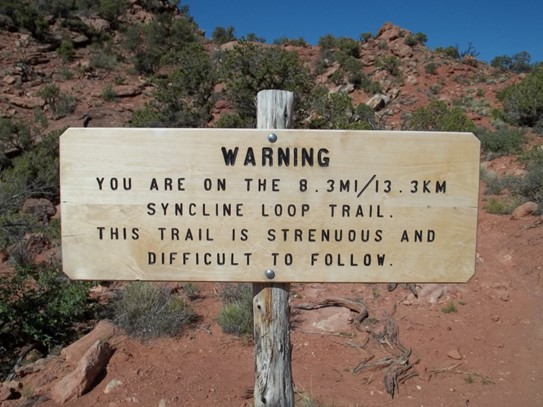
Syncline Loop Trail Sign. Source: gjhikes.com
Heat illness exists on a continuum that ranges from minor to severe. While it may be more lethal in some populations (e.g. the elderly, those with chronic diseases, individuals who take medications that make them susceptible) it is still of great concern for even healthy individuals who operate or recreate in hot environments. At the more concerning end of this continuum are heat exhaustion and heat stroke. Both are caused by exposure to elevated temperature with or without accompanying exertion. The pathologies differ in the victim’s core temperature: heat exhaustion core temps can be normal or elevated but will remain <40C (104F), while those with heat stroke have core temperatures ≥40C (104F). Individuals suffering from heat stroke will also have some amount of central nervous system (CNS) involvement. The presence of altered mental status, seizure, or coma in the context of strenuous activity and elevated ambient temperatures should be an immediate red flag that a patient is suffering from heat stroke.
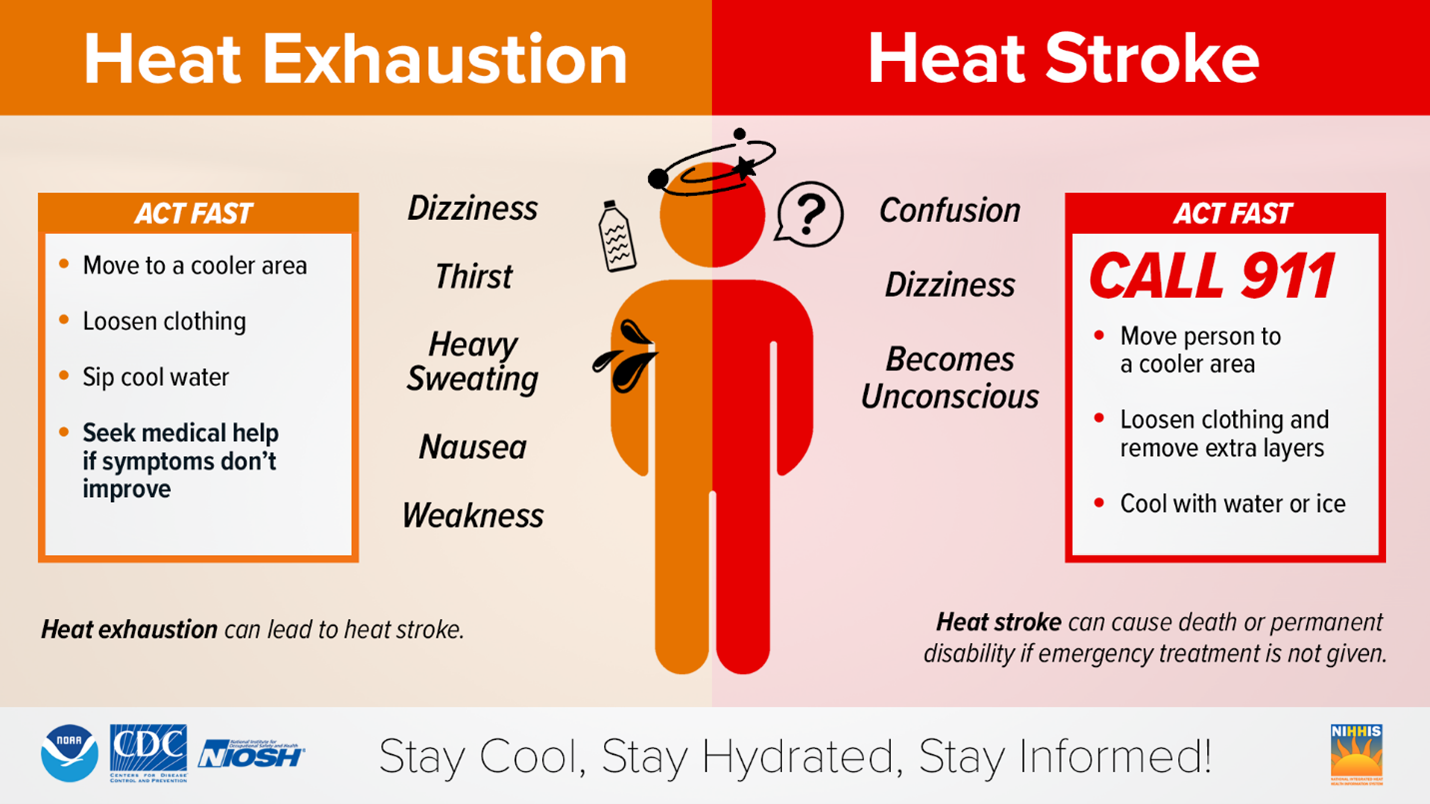
Heat Exhaustion and Heat Stroke. Source: National Weather Service
The definitive treatment for heat illness is immediate removal from the heat source followed by methods of cooling that range from passive, such as moving the patient to the shade, fanning, and loosening their clothing, to more aggressive, such as cold pack placements and cold-water immersion. Addressing the victim’s hydration status via oral or IV replenishment is also essential. Although patients who suffer heat stroke still must be evaluated and managed in a critical setting, simple cooling and fluid replenishment methods can make an exceptional difference in their outcomes. The only problem is that aggressive cooling methods are not a reality for those who recreate in remote areas where ambient temperatures are highest. The solution to a heat-related tragedy may be best solved long before you step off on your hike.
Since the paucity of cold-water immersion stations along hiking routes is no reason to stay indoors, it’s essential to understand how to reduce risk and the preventive factors that offer protection from heat. Acclimatization to the heat is likely the most critical strategy in reducing risk. An individual who plans to visit somewhere with a hotter climate can decrease the physiologic strain caused by the heat through gradual exposure after they arrive. Evidence shows that someone traveling from a cooler area can improve their heat tolerance through overdressing, sauna use, periodic activity, and heat exposure prior to departure. These artificial methods of adaptation are referred to as “acclimation.” A significant suspected benefit is increased plasma volume and similar sweat capacity which help cool the body through evaporation.
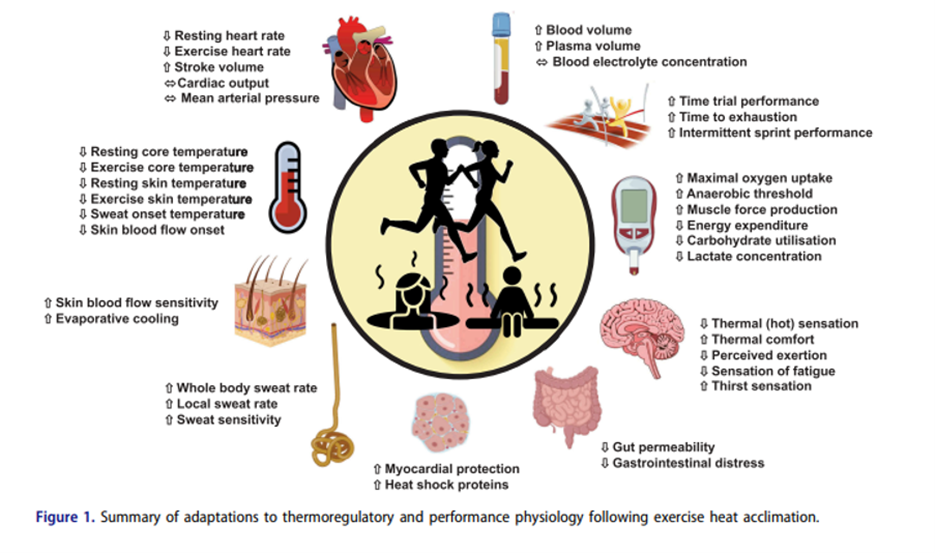
Heat Acclimation. Source: Gibson et al.
Achieving and maintaining an appropriate level of hydration is crucial. A hiker should have water and an effective means to carry enough water. The NPS recommends taking 1 gallon of water per person on the Syncline trail. This means multiple water bottles likely in addition to a hydration bladder. Maintaining appropriate hydration can’t completely stave off heat injury, but it may reduce some of the increased risk that accompanies dehydration, such as decreased sweat rates and increased core temperatures. Even modest fluid losses (2-3% of body weight) can raise core temperatures. Even slightly depleted volume can increase the risk of heat injury through core temperature elevation and compromise previously earned benefits of acclimation.
Another poorly understood group of contributors to heat acclimation are heat shock proteins (HSP). HSP aid in cellular protection from forms of stress such as heat, oxidative stress, UV radiation, ischemia, etc. In individuals suffering from heat stroke, HSP are unable to protect against thermal denaturation of structural proteins and enzymes. This leads to end-organ damage and, along with an exaggerated acute phase response, is responsible for some of the lethal components of the cellular and systemic responses to heat stroke. Just as heat injury alters HSP expression, research shows that exposure to sub-lethal environmental temperatures improves an individual’s heat tolerance and increases HSP expression . Increased presence of HSP may allow individuals to become tolerant to some of the inflammatory processes encountered in severe heat injury.
At this time, it is unknown how long Albino and Beatriz were lost or what other factors may have affected their outcome. In a summer that claims to be the hottest for approximately 100 cities in the US , heat-related illnesses and deaths like theirs are unfortunately not uncommon. For those who decide to go afield, understanding the risks and what factors they can directly impact are more important than ever.